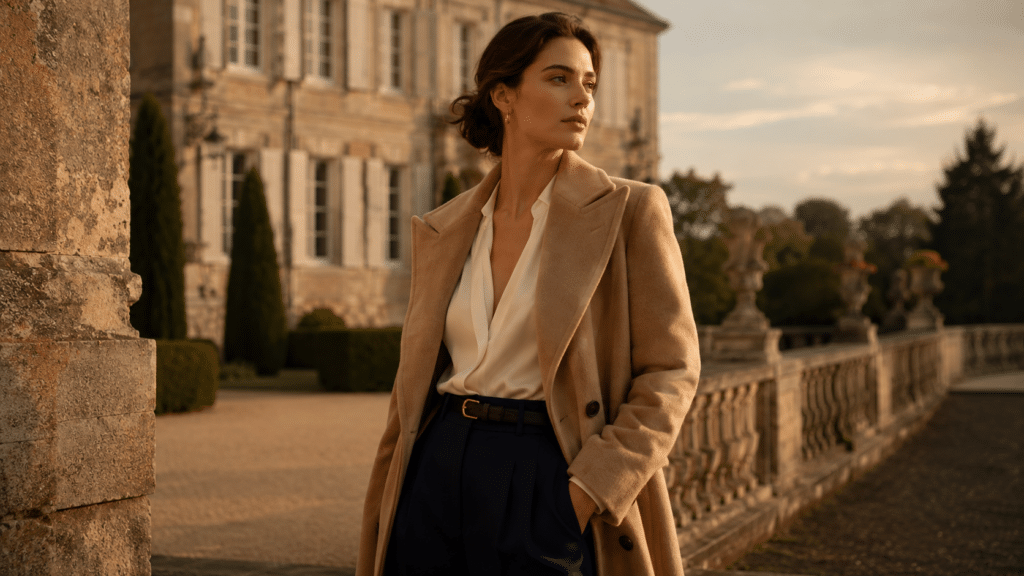
The old money aesthetic is a fashion trend built on high-quality, logo-free clothing that signals wealth through materials and craftsmanship rather than visible branding.
It’s also called quiet luxury or stealth wealth, and right now it’s one of the most commercially powerful forces in American fashion.
The core idea is simple: the less a garment advertises itself, the more exclusive it feels to the people who can recognize it.
This isn’t just a style preference.
It’s a business model.
Brands like Loro Piana and Brunello Cucinelli have built billion-dollar businesses on the premise that removing logos actually increases price tolerance.
Meanwhile, millions of consumers are building old money wardrobes on every budget, from estate sales to high-end consignment.
The old money look has moved well beyond the Hamptons and Ivy League campuses where it originated.
The old money mindset treats clothing as long-term investment rather than seasonal consumption.
That shift in thinking has created a market that rewards discretion, rewards quality over quantity, and punishes anything that feels like new money showing off.
Understanding how that market works, from the pricing strategy of heritage brands to the resale economy that makes the old money lifestyle accessible, tells you a lot about where fashion is heading.
Why The Look Sells
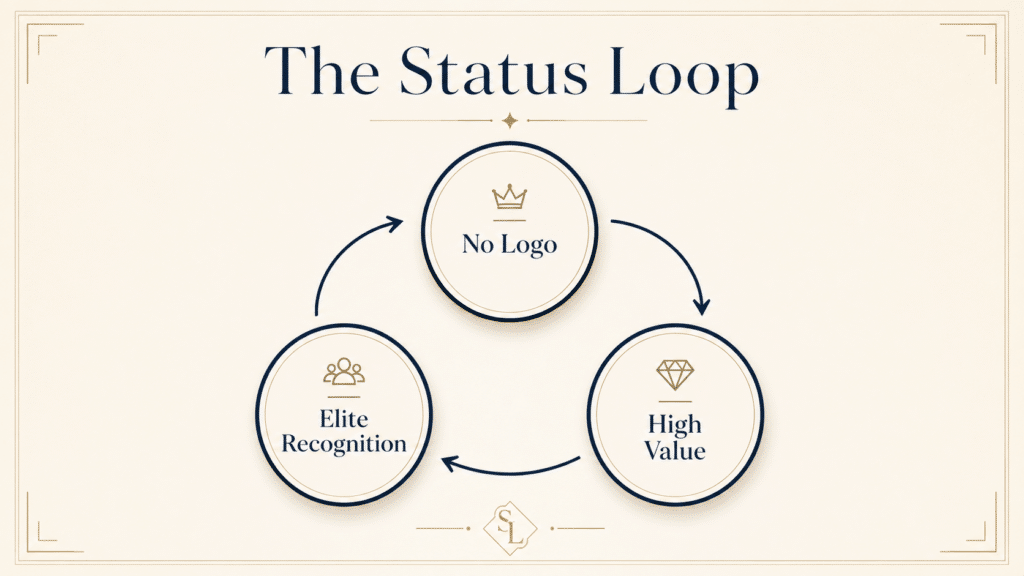
The commercial power of quiet luxury brands rests on two things working together: the elimination of obvious status markers and the careful cultivation of cultural associations that make the absence of logos feel more prestigious than their presence.
How Logo-Free Design Creates Stronger Status Signals
When you remove a logo, you don’t remove the status signal.
You redirect it.
A plain cashmere sweater from Loro Piana retails for over $1,000, but nothing on the outside of that sweater tells you that.
Only someone who already knows the brand, knows the fabric weight, and knows the price recognizes the signal.
That’s the point.
This is the economics of stealth wealth: by making a product legible only to a small, informed audience, brands shift the social reward away from mass recognition and toward elite recognition.
A monogram visible to everyone is worth less to a certain buyer than a fabric quality recognizable only to a few.
The old money aesthetic exploits this psychology deliberately.
Understated elegance signals that you don’t need external validation.
That’s a more powerful status message for a specific type of consumer than any logo could deliver.
Why Scarcity And Heritage Support Premium Pricing
Heritage brands use their history as a pricing asset.
Brunello Cucinelli ties its pricing directly to its philosophy of “humanistic capitalism,” connecting its cost to artisan labor and ethical production.
That narrative justifies a $600 polo shirt in a way that a trend-driven brand simply can’t replicate.
Scarcity reinforces this.
Limited distribution, long lead times, and minimal wholesale partnerships all restrict supply.
When you can’t easily buy something, its perceived value rises.
These brands don’t run sales in the traditional sense, and that restraint is itself a signal.
Understated luxury brands also benefit from low marketing costs relative to revenue.
Word of mouth and cultural association do the work that advertising budgets do for mass-market brands.
How Cultural Fantasy Turns Taste Into Demand
The old money lifestyle carries specific cultural associations: tennis, sailing, opera, literature, etiquette, table manners, inherited houses, and the kind of ease that only comes from never having worried about money.
Ralph Lauren built an entire empire selling that fantasy to people who weren’t born into it.
The TV show Succession renewed this cycle for a new generation.
Shiv Roy’s understated power suits became a reference point for what old money fashion looks like in 2025 and 2026.
Cultural products create demand that brands then fulfill.
The Hamptons aesthetic, the sailing aesthetic, the prep school aesthetic: these aren’t just backdrops.
They’re brand equity.
The Wardrobe As Economic Signal
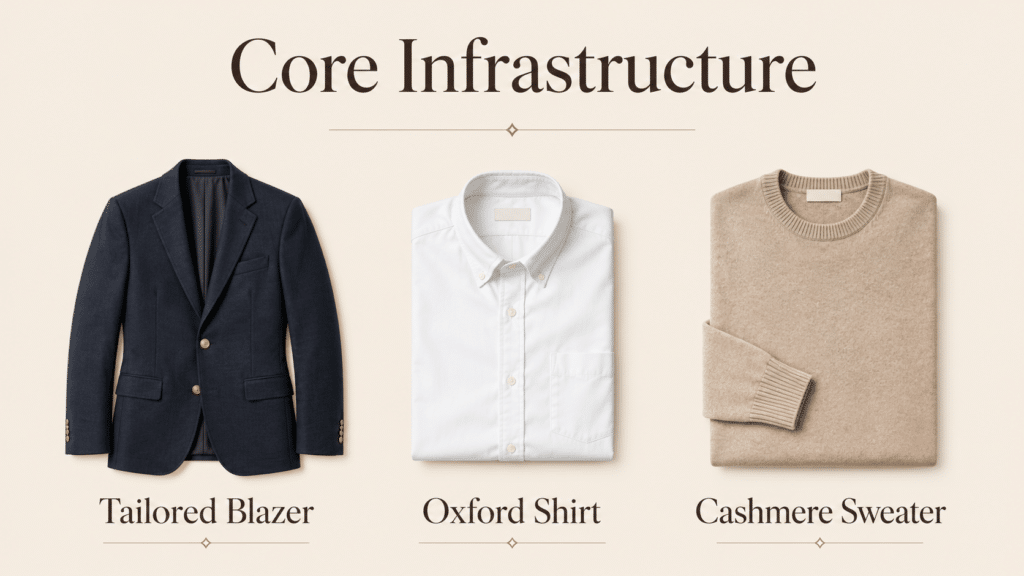
The old money wardrobe works as a system.
Individual pieces matter less than how they interact, and the investment in impeccable tailoring and quality fabric is what separates the look from a costume.
Core Pieces That Communicate Wealth Quietly
The old money wardrobe is built on pieces that last years, not seasons.
These aren’t fashion items.
They’re infrastructure.
Key pieces that carry the signal:
- A tailored blazer, either a navy blazer or a double-breasted blazer in wool or a wool blend
- Tailored trousers or tailored wool trousers in a neutral palette, worn with a clean break at the ankle
- Oxford shirts, particularly a white oxford shirt or white button-down, worn tucked or layered under knitwear
- Cashmere sweaters, including a cashmere crewneck or cashmere cardigan, ideally in ivory, camel, or navy
- Chinos and corduroy trousers for weekend layering
- Polo shirts in cotton pique, worn without irony
- Silk blouses and A-line skirts for a more feminine register
- A trench coat or camel coat as the primary outerwear anchor
- A waxed cotton jacket from Barbour, which carries decades of landed-gentry association
The capsule wardrobe model is both economically smart and aesthetically consistent with old money style values.
Why Fabric And Fit Matter More Than Logos
Fit is the single most important variable in the old money look.
A well-fitted $80 blazer from a thrift store reads as more polished than an ill-fitting $800 one.
Impeccable tailoring signals attention and care, two things old money culture values above flash.
Fabric is the second variable.
Natural fibers, wool, cotton, cashmere, and silk, drape differently than synthetics and age better.
The old money style is built on the premise that quality shows over time.
A cashmere sweater that pills after six months tells a different story than one that holds its shape for three years.
Layering amplifies both signals.
A cashmere sweater draped over the shoulders of a classic outerwear piece like a camel coat reads immediately as studied nonchalance, which is the whole point.
Accessories That Keep The Signal Subtle
Understated accessories complete the system without overwhelming it.
A minimal watch, a structured leather bag, a silk scarf folded in a jacket pocket, these additions reinforce the message rather than compete with it.
The rule is restraint.
One or two considered accessories carry more weight than several competing ones.
The goal is coherence across the whole outfit, not individual statement pieces.
Buying In Without Overspending
The old money aesthetic has an inherent accessibility that most luxury trends don’t.
Because the look deprioritizes logos and brand recognition, the same effect can be achieved at dramatically different price points.
Where Resale And Vintage Fit Into The Trend
Vintage and heirloom pieces aren’t a compromise within this aesthetic.
They’re actually consistent with its values.
Old money families wore inherited clothing.
Shopping vintage and heirloom pieces mirrors that practice directly.
The RealReal is a strong starting point for authenticated pre-owned pieces from heritage brands at significant discounts.
Estate sales are worth exploring for accessories, outerwear, and knitwear that may have decades of quality construction behind them.
Consignment shops in affluent neighborhoods often carry the exact pieces that anchor old money aesthetic outfits, navy blazers, wool trousers, silk blouses, at a fraction of original retail.
Neutral palettes make thrifting easier.
Because old money outfits rely on ivory, camel, navy, cream, and tan, pieces from different eras and brands tend to coordinate naturally.
How To Judge Long-Term Value Before You Buy
Before buying any piece for a quiet luxury wardrobe, ask three questions.
First, is the fabric natural?
Wool, cashmere, cotton, silk, and linen all signal quality and age well.
Synthetics generally don’t.
Second, does the fit work now or with minor tailoring?
A cheap tailor adjustment can transform an inexpensive find.
Third, will you still wear it in five years?
Checking for quality construction means looking at seam allowances, button quality, and how the fabric behaves when you move.
These details matter more in a logo-free aesthetic than anywhere else, because the fabric and construction are the signal.
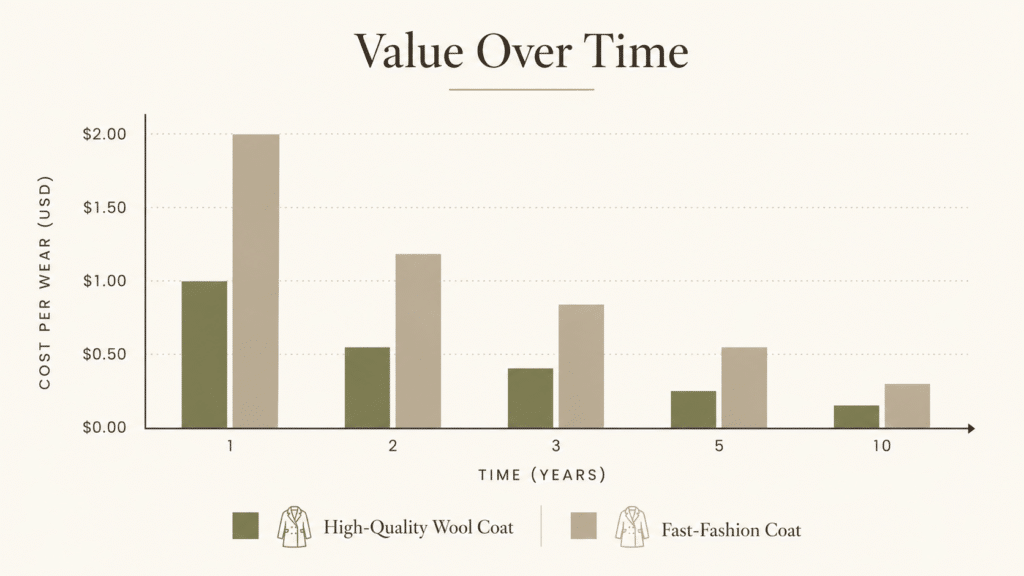
Cost-per-wear is the right mental framework.
A $200 cashmere cardigan worn 150 times costs less per use than a $40 synthetic one worn 15 times.
Why Sustainability Strengthens The Appeal
Sustainable fashion and old money style align naturally.
Buying fewer, better pieces and keeping them for years reduces consumption.
That’s both environmentally sound and aesthetically consistent.
Reformation has built a significant share of this market by combining sustainable production with the clean tailoring and neutral palettes that fit quiet luxury outfits.
The overlap between environmental consciousness and old money values, specifically quality over quantity and resistance to trend-chasing, makes sustainability a genuine selling point rather than a marketing add-on.
For Gen Z in particular, the anti-trend stance of the old money aesthetic feels like a direct response to fast fashion fatigue.
You get a coherent, lasting style without contributing to disposable consumption cycles.
Finishing Touches That Preserve The Message
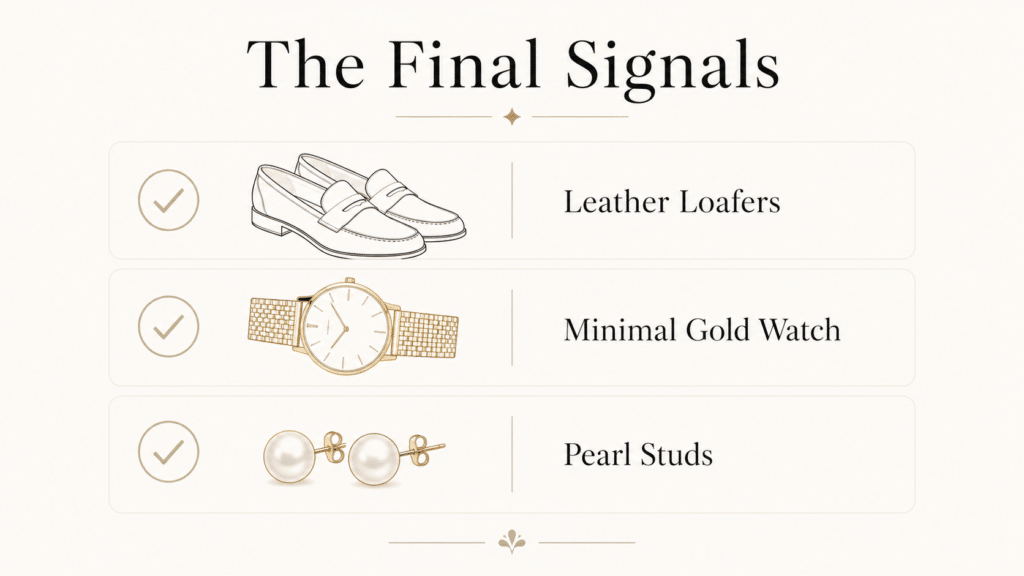
Accessories and finishing details are where the old money look either holds together or falls apart.
The right choices reinforce everything built through tailoring and fabric.
The wrong ones undercut it immediately.
Footwear That Signals Polish Without Flash
Quality footwear is one of the clearest signals in this aesthetic. Shoes are expensive enough that cheap ones read as cheap.
They’re visible enough that good ones register immediately.
Core footwear choices:
- Leather loafers and penny loafers in tan, brown, or black
- Ballet flats and leather flats in neutral leathers
- Pumps in a classic silhouette for more formal contexts
- White sneakers in a minimal, clean style for casual layering
The standard rule is real leather, a classic silhouette, and no visible logos.
Quality footwear in this aesthetic is meant to look slightly broken-in and cared for simultaneously.
This is the hallmark of something genuinely well-made.
Jewelry Beauty And Styling Cues
Understated accessories in jewelry mean simple, quality pieces in gold or pearl.
Pearl earrings, including pearl studs, are practically a signature.
Gold jewelry in thin, classic settings reads as inherited rather than purchased.
This is the register you want.
A silk scarf worn at the neck or tied to a bag adds texture and color without visual noise.
Subtle makeup, a clean base, groomed brows, and a neutral lip, reinforces the effect.
The overall message is effort that doesn’t advertise itself.
Little black dress styling in this context means a simple, well-cut silhouette with restrained accessories.
Nothing competes for attention.
Seasonal Extras That Keep The Look Credible
Seasonal pieces extend the aesthetic across the full calendar year without breaking from its logic.
A raffia tote in summer, a panama hat for warm-weather occasions, and heavier classic outerwear like a Barbour waxed cotton jacket in autumn all fit naturally.
These aren’t trend purchases.
They’re contextually appropriate additions that signal the same cultural fluency as the core wardrobe.
Knowing when and where to carry a raffia tote versus a leather handbag is itself a form of social knowledge.
In the old money aesthetic, that knowledge is exactly what you’re signaling.

I spent years working in tech and digital publishing, where I saw how quickly industries, brands, and consumer behavior can change. I created Rich Digest to explore the business behind luxury, from iconic products and influential founders to pricing, scarcity, ownership, and brand strategy. My goal is to make the world of luxury business clear, interesting, and easy to understand.