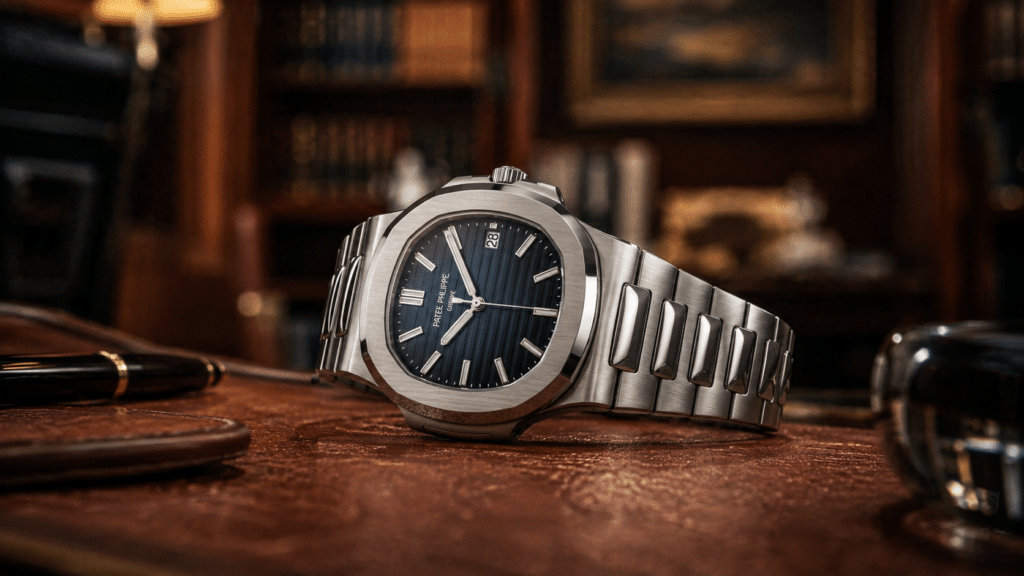
Walking into a Rolex authorized dealer only to be told nothing is available is an experience that defines the brand’s core strategy.
The watch you want exists and the company is actively making it, but you simply cannot have it right now.
Rolex pricing isn’t just about materials or craftsmanship.
It’s the result of a system where scarcity, structural independence, and brand psychology work together to keep demand ahead of supply.
Rolex produces somewhere around one million watches per year.
That’s a large number, yet the brand still manages to feel exclusive.
Understanding how they pull that off shows how luxury pricing works, and why some products become more desirable the harder they are to buy.
This article breaks down the real reasons Rolex watches carry the prices they do.
It covers the structural advantages of foundation ownership and the secondary market premiums that follow the most sought-after references.
How Rolex Protects Pricing Power

Rolex pricing holds up across economic cycles in a way that few brands can match.
A big part of that comes from how the company is structured and what it’s actually optimizing for.
Why Foundation Ownership Changes The Business
Rolex is owned by the Hans Wilsdorf Foundation, a private charitable entity based in Geneva.
That single fact changes almost everything about how the company behaves.
There are no public shareholders demanding quarterly growth.
There’s no pressure to boost production volumes to hit an earnings target.
The foundation structure lets Rolex run the business on a much longer time horizon than a publicly traded company ever could.
When you remove Wall Street from the equation, decisions that would seem irrational to a public company start making sense.
Keeping supply tight, turning down short-term revenue, and refusing to chase trend cycles become viable when your owners measure success in decades rather than quarters.
Why Rolex Can Play A Long-Term Game
Because Rolex doesn’t answer to external investors, it reinvests profits into manufacturing capacity, research, and brand protection at its own pace.
The company builds when it’s ready, not when a shareholder meeting demands it.
That patience is rare in consumer goods at this scale.
Most competitors eventually face pressure to grow faster than their brand can support.
Rolex doesn’t face that pressure in the same way.
How Structural Independence Supports Premium Positioning
When a brand can resist the temptation to flood the market for short-term gain, its pricing stays credible.
Rolex prices have increased over the years, and the secondary market has absorbed those increases without much resistance.
That track record builds confidence in buyers, which in turn supports further price increases.
The cycle reinforces itself because the foundation structure makes discipline possible.
How Scarcity Turns Demand Into Higher Prices
The mechanics of Rolex scarcity are more nuanced than a simple “they don’t make enough” explanation.
Supply decisions, dealer relationships, and buyer psychology all interact in ways that keep demand elevated.
Why Supply Stays Below Demand
Rolex has publicly stated that scarcity isn’t a deliberate strategy, noting that production simply can’t meet demand.
Whether you take that at face value or not, the result is the same.
For the most sought-after steel sports models, supply consistently trails demand.
Publications like WatchPro have noted that much of the Swiss watch industry has been moving toward lower production and higher margins, and Rolex sits at the extreme end of that trend.
The gap between supply and demand doesn’t just limit access.
It actively inflates perceived value.
When something is hard to get, people want it more.
Rolex benefits from this consistently.
How Authorized Dealer Relationships Shape Access
To buy a new steel sports Rolex at retail, you generally need a relationship with an authorized dealer.
In practice, this means a purchase history.
You spend on bracelets, straps, or other watches from the dealer, and over time you earn the right to be offered the model you want.
That process feels unusual for a consumer product.
You’re essentially auditioning for the privilege of spending ten to fifteen thousand dollars.
From a brand perspective, it filters the buyer pool toward committed customers and creates a sense of earned access that deepens loyalty.
Why Scarcity Makes Rolex Feel More Valuable
When you finally get the call that your watch is available, you’ve already invested time, money, and attention.
The watch carries weight before you even put it on your wrist.
That’s a psychological premium built on top of the material one.
The pre-owned Rolex market reflects this; buyers pay above retail partly for the watch and partly for the certainty of getting one at all.
What You Are Actually Paying For
There’s a real product underneath the pricing strategy.
Rolex’s manufacturing choices and material investments are genuine, even if the brand markup sits well above production cost.
Materials, Manufacturing, And Vertical Integration
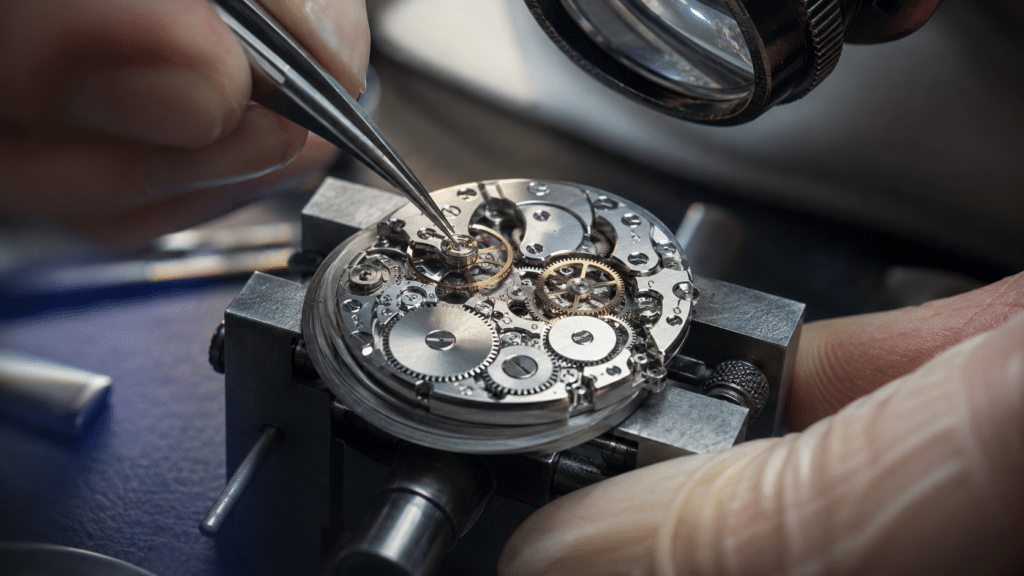
Rolex manufactures at a level of vertical integration that’s rare even at this price point.
The company runs its own foundry, produces its own gold alloys, and sources steel that meets specs tighter than industry standard.
Their proprietary 904L Oystersteel is more corrosion-resistant than the 316L steel used by most competitors.
It’s harder to machine, which adds cost.
The Cerachrom bezel is another example.
Made from ceramic, it resists scratching and UV fading far better than older aluminum inserts.
Rolex developed and manufactures it in-house.
Their proprietary Everose gold is engineered to resist fading better than standard rose gold alloys.
This is relevant if you’re buying something you plan to wear for thirty years.
Movement Quality, Testing, And Reliability
Rolex movements are certified to the COSC chronometer standard, and then tested further against their own tighter in-house standard after casing.
The company calls this the Superlative Chronometer certification, which guarantees accuracy to plus or minus two seconds per day on the wrist.
This is tighter than the COSC requirement.
Their movements are built for decades of service.
The Rolex Oyster Perpetual line has used a self-winding rotor system since 1931.
Successive generations have refined it into something extremely reliable.
Durability matters when a watch costs this much.
Brand Equity, Heritage, And Perceived Status
Brand equity is real value, even if it’s hard to measure.
Rolex has spent decades associating itself with exploration, professional achievement, and sporting excellence.
The Submariner went to the bottom of the ocean.
The Explorer went to the top of Everest.
Those associations stick.
When you buy a vintage Rolex, you’re also buying into a lineage that collectors have valued for generations.
The Rolex Datejust introduced the date display in a waterproof case in 1945.
That kind of history gives the brand a depth that newer competitors can’t replicate by spending money alone.
Which Models Best Show The Pricing Strategy
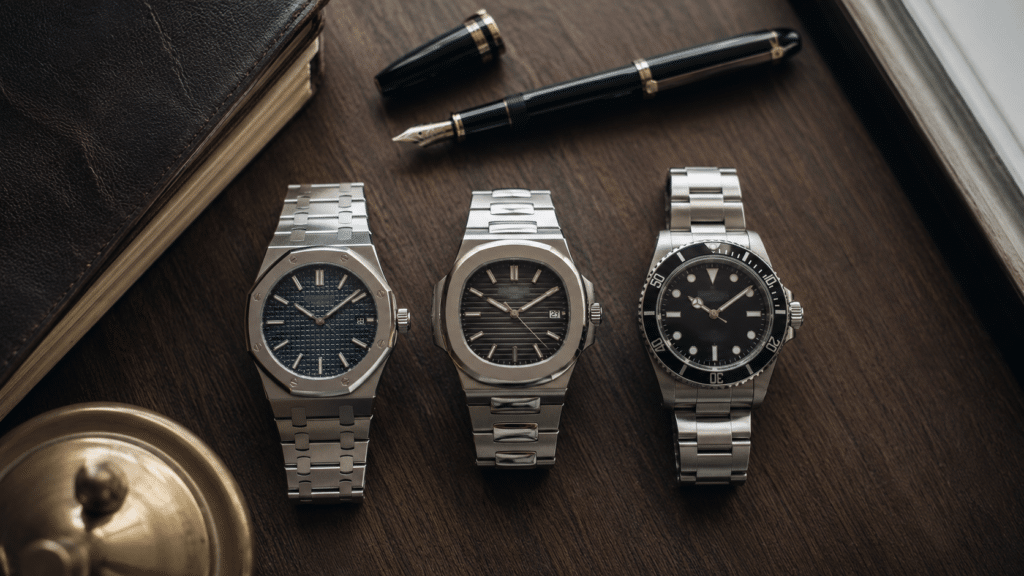
The way Rolex prices across its lineup reveals a lot about the strategy.
Different references create different kinds of demand, and each segment has its own pricing logic.
Steel Sports Models And Waiting-List Pressure
The Rolex Submariner (reference 124060 and the date variant) is the clearest example of controlled scarcity driving premiums.
The same applies to the Rolex GMT-Master II in Oystersteel, the Rolex Daytona in steel, and the Sea-Dweller.
These models routinely sell above retail on the secondary market.
Their retail prices are set below what the market would bear, which keeps the brand from looking overtly greedy while the grey market does the price discovery.
The Rolex Explorer and Rolex Explorer II sit in a similar tier.
Historically understated, they’ve attracted a loyal following that keeps demand firm without the same mainstream hype as the Submariner.
Dress And Everyday References With Broad Demand
The Datejust is Rolex’s volume reference.
It’s more accessible at retail than the steel sports models, and you’ll generally find it available without the same wait.
The Air-King sits at the entry end of the current lineup.
These models bring buyers into the brand ecosystem and create the purchase history that might eventually earn you access to something more restricted.
The Rolex Milgauss, now discontinued, is an interesting case.
Its discontinuation pushed prices on the secondary market upward almost immediately.
Rolex’s decision to cut a model adds scarcity pressure retroactively.
Precious Metal Variants And Collector Appeal
The Sky-Dweller in Everose gold or white gold sits at a different tier, starting well above twenty thousand dollars.
Precious metal variants don’t carry the same grey market premiums as steel sports models because the buyer pool is smaller and the brand doesn’t restrict them in the same way.
Their pricing reflects material cost and complexity more directly.
Collectors and high-net-worth buyers in this segment focus on dial variations, metal combinations, and rarity within specific configurations.
Why The Secondary Market Often Runs Hotter Than Retail
The gap between what you pay at an authorized dealer and what you’d pay on the open market is one of the most revealing parts of the entire Rolex story.
Why Pre-Owned Premiums Develop
When a watch is harder to buy new than to buy used, something unusual happens.
Sellers in the pre-owned Rolex market hold pricing power because they have inventory that the retail channel doesn’t.
According to a Chrono24 analysis, Rolex accounts for 34.2% of global transaction volume on the secondary luxury watch market.
This makes it the dominant brand in that space.
That dominance gives secondary sellers confidence to price above retail.
Buyers who can’t get a watch through normal channels often have no alternative.
Which References Tend To Trade Above List
The steel Rolex Daytona has traded above retail for years.
The Rolex Submariner in steel, the Rolex GMT-Master II “Pepsi” and “Batman” variants, and the Rolex Explorer II have all seen secondary premiums at various points.
The Datejust rarely trades above list because it’s actually available.
The premium follows scarcity, not just desirability.
When Secondary Prices Diverge From Boutique Prices
Secondary premiums aren’t permanent.
When economic conditions soften, discretionary spending drops and grey market prices often fall faster than retail.
This happened noticeably in 2022 and 2023 as watch market speculation cooled.
Secondary prices began stabilizing after a sharp correction.
Retail prices, set by Rolex, didn’t fall.
The gap between the two compressed.
What Rolex Reveals About Luxury Economics

There’s a broader lesson in how Rolex operates, and it applies well beyond watches.
The brand has essentially figured out how to make difficulty of access function as desirability.
How Veblen-Good Psychology Works In Practice
A Veblen good gets more desirable as it gets more expensive.
As noted in the context of Rolex’s scarcity model, choking supply while demand rises turns the product into something people want partly because others can’t have it.
The price signal itself becomes part of the appeal.
This isn’t specific to watches.
It applies to anything where social signaling matters.
The price of a Rolex tells a story to anyone who recognizes the brand.
That story has real value to buyers, and Rolex has been consistent enough over decades that the story stays credible.
Why Withholding Access Functions As Marketing
When you have to build a relationship with a dealer to earn the right to buy a watch, you’re not just making a transaction.
You’re investing time and identity.
That investment makes you more loyal and more likely to recommend the brand.
Rolex gets marketing value from the process of buying, not just from advertising.
The waiting list, the dealership relationship, the grey market premium: all of these function as social proof.
They tell anyone watching that Rolex watches are wanted badly enough that people go to unusual lengths to get them.
That’s worth more than most ad campaigns.
What Other Brands Can Learn From Rolex
The Rolex model only works because the underlying product is genuinely good and the brand has been consistent for a very long time.
Trying to manufacture scarcity without that foundation just looks cynical.
But for brands with real heritage and product quality, the principle holds: in a market where almost anything can be bought instantly, making something genuinely hard to acquire changes how people value it.
Patience and structural independence make that possible.
Most companies aren’t built to exercise either.
Frequently Asked Questions
What actually drives the price of a Rolex compared with other luxury watches?
Rolex pricing combines vertical integration, proprietary materials, tight supply management, and decades of brand equity. The company makes its own steel, its own gold alloys, and its own movements, which adds real cost. On top of that, the brand carries a recognition premium that most competitors can’t match. This justifies a markup well beyond production cost.
How much of a Rolex’s cost is brand reputation and marketing versus materials and craftsmanship?
Community estimates often put actual manufacturing cost at roughly 20-30% of retail price for steel models, though the exact figures aren’t public. The rest reflects brand equity, distribution control, and the premium the market assigns to the name. As discussed in watchmaking communities, even a generous accounting of materials and labor leaves a large portion of the price attributable to brand value rather than physical components.
Do Rolex watches really hold their value, or is that mostly hype?
Steel sports models have historically held or exceeded retail value on the secondary market. The grey market correction of 2022-2023 showed that speculative premiums can deflate. Precious metal and dress models tend to depreciate more predictably. Pre-owned Rolex prices range widely depending on model, condition, and market timing. Value retention is real but not guaranteed across every reference.
Why are some models like the Datejust easier to get than others, and how does that affect pricing?
Availability depends on how much demand exceeds supply for a specific reference. The Datejust is produced in higher volumes and targets a broader buyer pool, so it reaches shelves more often. Sport models in steel are produced in meaningful quantities too, but demand from collectors, grey market participants, and new buyers consistently outpaces supply. Easier availability typically means softer secondary market premiums.
What’s special about Rolex’s materials like Oystersteel, and does it really matter in daily wear?
Oystersteel is a 904L stainless steel alloy that’s more corrosion-resistant and harder than the 316L steel most watch brands use. In daily wear, the difference shows up in scratch resistance and polish retention over time. It’s genuinely harder to machine, which adds manufacturing cost. The finish holds up better after years of regular use. For a watch you’re wearing every day, that’s a meaningful real-world difference.
What are the downsides of owning a Rolex, especially when it comes to servicing and upkeep?
Rolex recommends a full service every ten years. Authorized service costs can range from several hundred to over a thousand dollars, depending on the model and condition. It is becoming harder to find parts outside the official network because Rolex has tightened control over components. Resale value depends a lot on the watch’s condition and whether you have the original paperwork and boxes.

I spent years working in tech and digital publishing, where I saw how quickly industries, brands, and consumer behavior can change. I created Rich Digest to explore the business behind luxury, from iconic products and influential founders to pricing, scarcity, ownership, and brand strategy. My goal is to make the world of luxury business clear, interesting, and easy to understand.