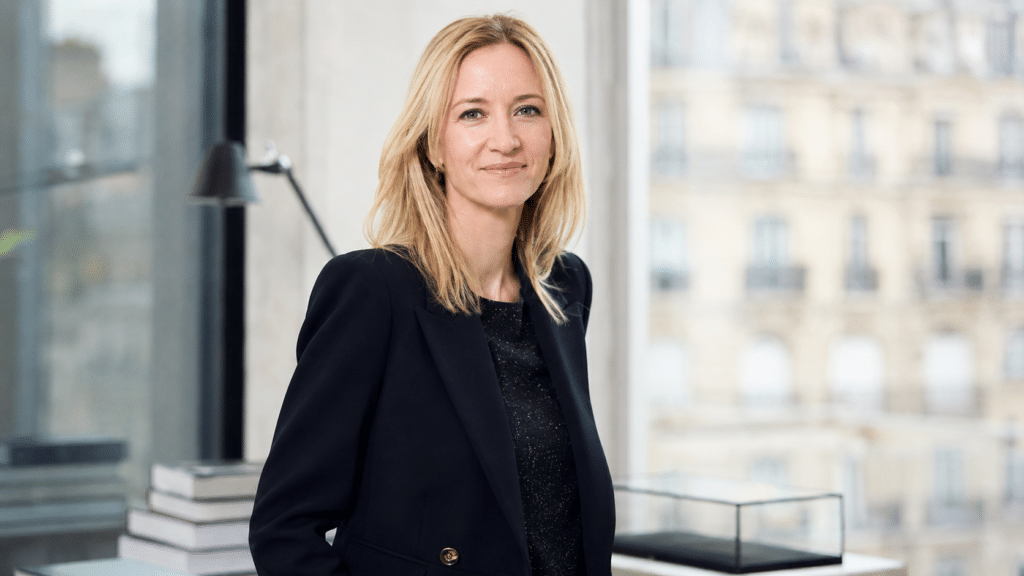
Delphine Arnault is the CEO of Christian Dior Couture and the eldest child of LVMH chairman Bernard Arnault. This puts her at the center of one of the most closely watched succession stories in global business.
Her rise to the top of Dior is not just a family appointment — it is the result of more than two decades of hands-on work across some of the most recognizable luxury brands in the world. She has spent her career learning the LVMH system from the inside.
She moved through strategy, product, and executive leadership roles before taking the Dior chair in February 2023.
If you follow luxury fashion or corporate governance, her name is worth knowing. She shaped the LVMH Prize and helped steer Louis Vuitton’s product direction.
Now, she leads the brand that sits at the emotional heart of French haute couture. What she does at Dior will say a lot about where the entire LVMH group is heading.
Why She Matters At Dior And LVMH
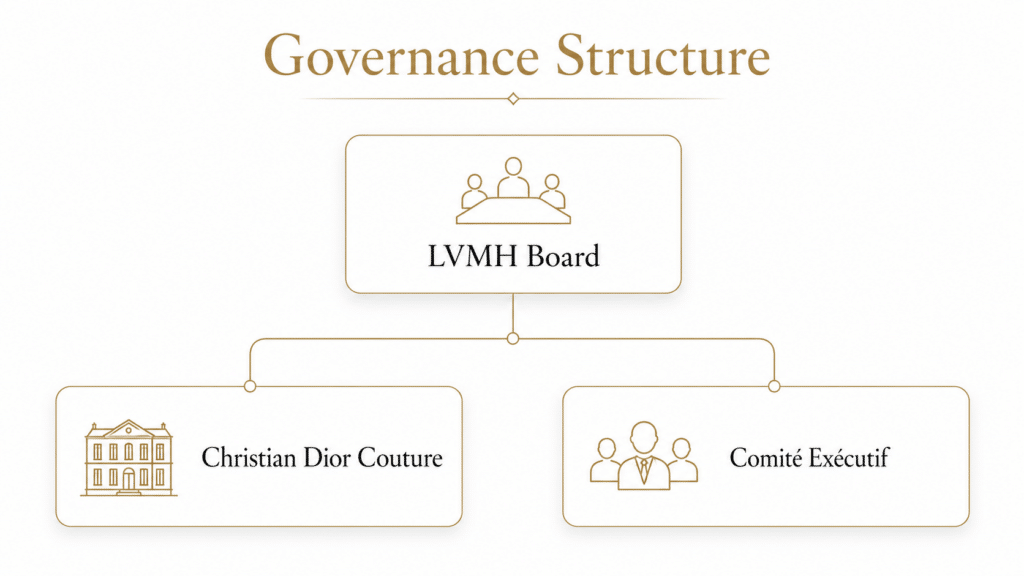
Delphine Arnault holds one of the most strategically significant executive roles in global luxury. Her seat at the top of Dior connects directly to the LVMH board, the comité exécutif, and the broader question of who will eventually lead the group after Bernard Arnault.
Current Role At Christian Dior Couture
Since February 2023, she has served as chairperson and chief executive officer of Christian Dior Couture. This makes her the first woman to hold that title in the house’s history.
The role gives her full oversight of one of LVMH’s most valuable and culturally important brands. Her focus since taking the role has been on quality and creative direction.
In 2025, she appointed Jonathan Anderson as creative director. She described the move as opening a “new chapter” at Dior with quality as the central priority.
Anderson became the first designer since Christian Dior himself to oversee the full women’s and men’s lines.
What Her Position Signals For LVMH Succession
Bernard Arnault has five children, and several of them hold leadership roles across LVMH brands. Delphine running Dior, the group’s second-biggest brand, places her at the top of that sibling hierarchy in terms of brand prestige and visibility.
As noted in analysis of the Arnault family governance structure, she is the eldest at 51, followed by Antoine. Her directrice générale title at Dior and her seat on the LVMH board position her as the most senior of the next generation.
Her Place On The LVMH Board And Comité Exécutif
She has been a member of the LVMH board of directors and the comité exécutif for years. According to LVMH’s governance page, the comité exécutif includes the group’s most senior operational leaders.
She also sits on the board of Moët Hennessy, which spans the group’s wines and spirits division. That cross-portfolio board presence gives her visibility well beyond fashion alone.
Career Moves That Built Her Influence
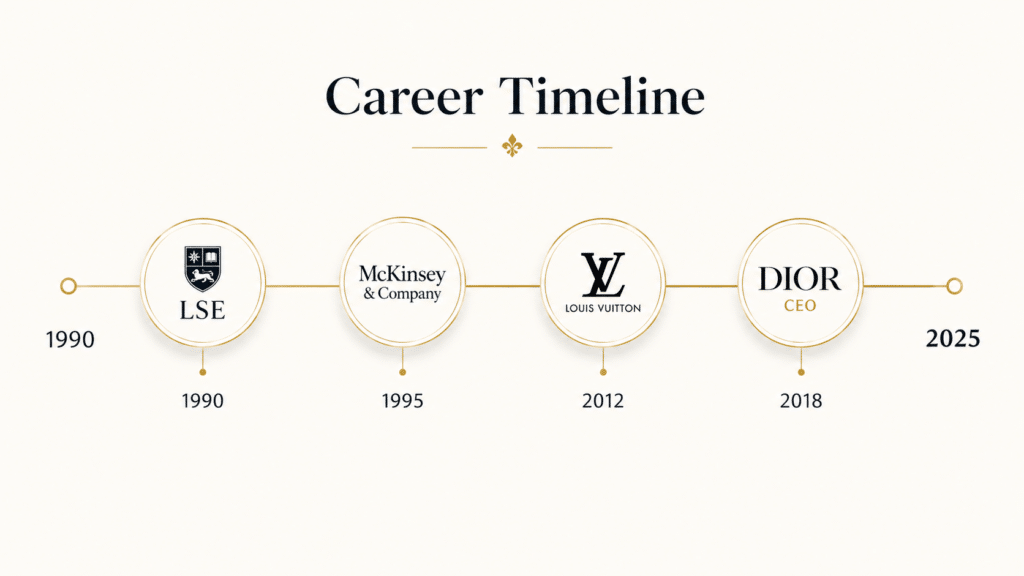
Her career follows a clear arc: structured business training, then direct immersion in fashion operations. Then came rising product and executive leadership.
Each move added a layer of credibility that pure inheritance could not have provided.
Education And Early Training
She earned degrees from the London School of Economics and EDHEC Business School. This gave her both economic theory and applied business strategy as a foundation.
The EDHEC connection has remained active throughout her career. She has spoken with the school about navigating leadership in the luxury sector.
Her academic background was practical from the start. She was not studying fashion history; she was studying how businesses grow.
From McKinsey To John Galliano
Before joining LVMH, she spent two years at McKinsey & Company as a consultant. That kind of stratégie work trains you to read a business’s structure quickly and find where leverage actually lives.
In 2000, she made the jump into the fashion industry directly, joining John Galliano’s own label within the LVMH structure. Working with Galliano at that particular moment in fashion was a real education in creative commerce.
Galliano was central to the mode conversation at the time.
The Dior Years Before Louis Vuitton
By 2001, she was embedded more deeply in the LVMH system. In 2003, she became the first woman and youngest person to join the management board of the LVMH group.
This distinction reflected both her family position and her demonstrated grasp of the business. In 2008, she was named deputy managing director of Christian Dior Couture.
This gave her direct operational exposure to the house she now leads.
Her 2013 Shift Into Product Leadership
In 2013, she made a deliberate pivot. She left her deputy managing director role at Dior to join Louis Vuitton as a director and executive vice president.
At Louis Vuitton, she moved closer to product decisions and brand strategy at the group’s largest and most profitable house. That shift was not a step sideways.
It put her in the room where Louis Vuitton’s product direction was being shaped. This added hard commercial experience to her governance résumé.
Her Leadership Playbook In Fashion
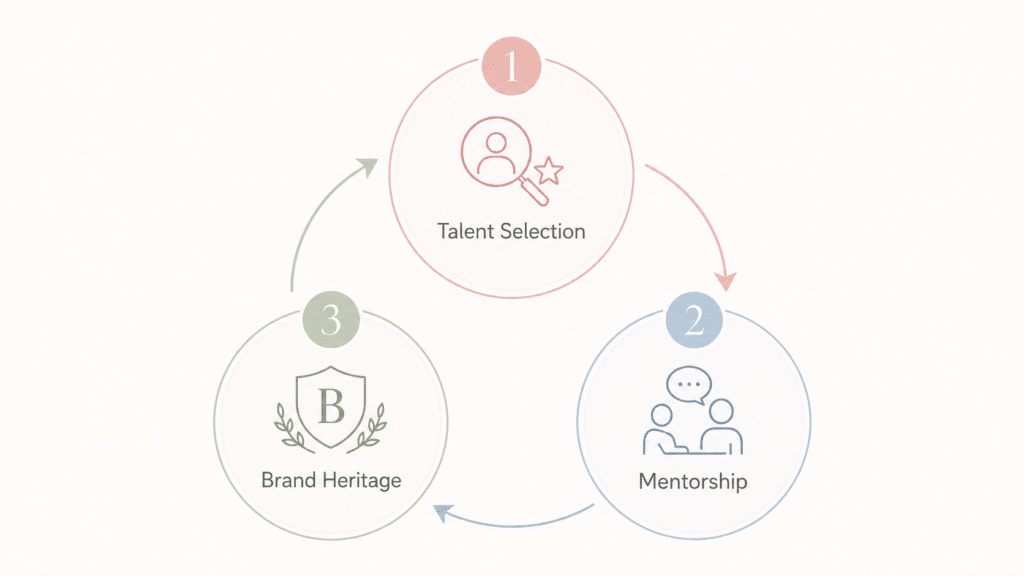
Her approach to leadership centers on one consistent instinct: find the right creative talent, support it early, and give it structure. That pattern shows up across her board seats, her work at Paris Fashion Week, and the program she built from scratch.
How She Spots And Backs Design Talent
Her board positions tell part of the story. She has served on the boards of Loewe since 2002 and Pucci since 2007, two houses with very different creative identities.
Loewe has since become one of the most talked-about brands in global fashion under Jonathan Anderson, the same designer she later brought to Dior. That hire was not a coincidence.
Watching Anderson’s work at Loewe for years before appointing him at Dior is exactly the kind of patient, informed talent selection that defines her approach.
The LVMH Prize As A Strategic Tool
She launched the LVMH Prize in May 2014 while serving as executive vice president at Louis Vuitton. The prize is an international competition for young fashion designers, offering finalists funding, mentorship, and access to the LVMH network.
As she explained at launch, the goal was to recognize talent and creativity while helping designers grow their businesses. The prize has since become a genuine pipeline for emerging talent across Paris and beyond.
The British Fashion Council recognized her for this work. They announced she would receive an accolade at The Fashion Awards 2025 for her commitment to nurturing the next generation.
Balancing Heritage With Modern Luxury Demand
At Dior, she is managing the tension every legacy house faces: how do you stay relevant without losing what made the brand matter in the first place? Her answer, so far, has been to lean into craft and quality rather than chasing short-term trends.
Her decision to appoint Anderson positions Dior for a creative reset while keeping haute couture at the center. That is a long-term bet, not a reactive one.
Family, Network, And Governance Context
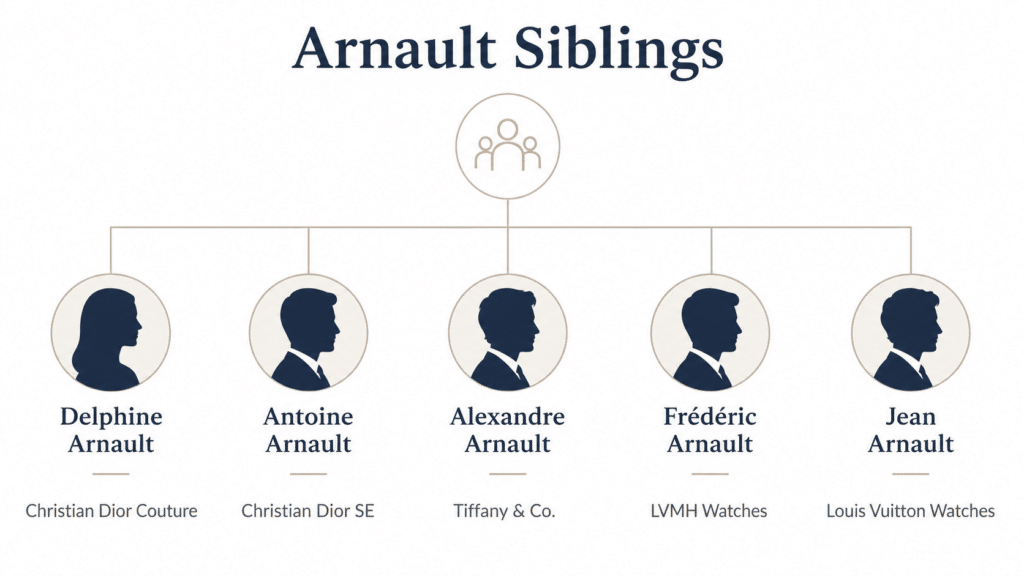
The Arnault family’s hold on LVMH is both structural and strategic. To understand Delphine’s position, you need to understand how the family distributes power and responsibility across the group.
The Arnault Family Power Structure
Bernard Arnault has five children across two marriages. Delphine and her brother Antoine Arnault are from his first marriage to Anne Dewavrin.
His second wife, Hélène Mercier, is the mother of his three younger sons, including Frédéric Arnault.
Each child holds a role within the LVMH ecosystem:
- Delphine leads Christian Dior Couture as chairperson and CEO
- Antoine has held roles in communications and brand leadership across the group
- Frédéric has led TAG Heuer
Delphine is the eldest and holds the most prominent brand role. That seniority, combined with her seat on the LVMH board, puts her ahead of her siblings in the succession conversation, at least by visible positioning.
Relevant Personal Ties And Public Profile
Her first marriage was to Alessandro Vallarino Gancia, heir to the Italian winemaker Gancia, in 2005. They divorced in 2010.
Since then, she has been in a relationship with Xavier Niel, the French tech entrepreneur and founder of Iliad. She has four children in total.
Her public profile has grown steadily with her role at Dior. She attended the state dinner at the White House in December 2022.
She was present at Donald Trump’s second inauguration church service in January 2025, both occasions that reflect her standing in international business and political circles.
She was ranked 45th on Fortune’s Most Powerful Women list in 2023. This was the same year she took the Dior chair.

I spent years working in tech and digital publishing, where I saw how quickly industries, brands, and consumer behavior can change. I created Rich Digest to explore the business behind luxury, from iconic products and influential founders to pricing, scarcity, ownership, and brand strategy. My goal is to make the world of luxury business clear, interesting, and easy to understand.