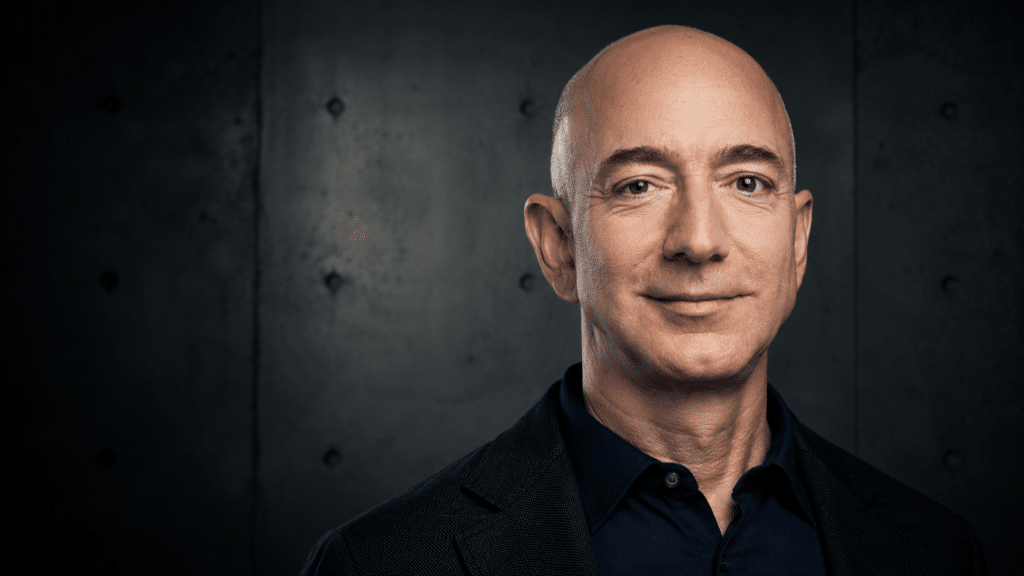
Jeff Bezos founded Amazon in 1994 as an online bookstore operating from a garage in Bellevue, Washington.
As a former hedge fund executive, Bezos recognized the potential of the internet and envisioned a platform capable of offering a comprehensive selection of products.
By the time he transitioned from the CEO role in 2021, Amazon had become a global entity valued at approximately $1.9 trillion, with operations spanning e-commerce, cloud computing, logistics, media, and healthcare.
The growth of the company was the result of intentionally built systems designed to compound over time.
Bezos implemented a leadership style focused on creating leverage that becomes increasingly difficult for competitors to replicate as the business scales.
This approach involved thinking in decades, prioritizing consistent customer needs, and establishing organizational structures that provide a long-term competitive advantage.
The Management Strategy Behind Amazon’s Growth

The rise of Amazon can be attributed to a multi-layered leadership strategy.
Bezos did not adhere to a single management style, instead alternating between different modes based on the requirements of the situation.
He combined visionary planning with an intense focus on operational details, often challenging the logic of executives during meetings to ensure clarity and rigor in decision-making.
His leadership incorporated elements of visionary, transformational, and autocratic styles.
Visionary leadership was evident in long-term investments like Amazon Web Services, Amazon Prime, and the Kindle, which required stakeholders to prioritize future gains over immediate profitability.
Transformational aspects appeared in his efforts to push employees to question established norms and take ownership of complex problems.
An autocratic approach was reserved for maintaining high standards and protecting the “Day 1” mentality from organizational drift.
Several specific traits defined his decision-making process, including curiosity, a reliance on data, and a willingness to be misunderstood by critics.
Bezos maintained steady principles such as customer obsession and high standards while allowing tactical flexibility in how those goals were achieved.
This combination of fixed principles and adaptable tactics allowed the company to build massive infrastructure despite external skepticism.
Day 1 as an Operational Framework

The “Day 1” philosophy serves as a management system to prevent the stagnation that often affects large organizations.
Bezos argued that as companies grow, they risk prioritizing process over outcomes, leading to slower decision-making and a focus on protecting existing revenue rather than innovation.
By treating every day as the first day of the business, Amazon attempted to maintain the agility and urgency of a startup.
Long-term thinking was integrated into how Amazon made investments and communicated with shareholders.
Bezos used annual shareholder letters to emphasize that the company would sacrifice short-term margins to build infrastructure for the future.
Customer obsession was treated as a mandatory rule rather than a vague value, forcing teams to prioritize user needs over ease of implementation or quarterly financial metrics.
In his 2016 shareholder letter, Bezos described “Day 2” as a state of stasis followed by irrelevance and eventual decline.
To avoid this, he established leadership principles designed to ensure that even a large workforce remained focused on customer outcomes rather than internal procedures.
This included a willingness to invest in services like faster delivery that might take years to become profitable.
Prioritizing Permanent Customer Needs

A significant part of the Amazon strategy involved focusing on factors that do not change over time. Bezos noted that customers will always desire lower prices, faster delivery, and a broader selection.
By building the business around these constants, Amazon avoided the risks associated with chasing temporary trends and instead invested in foundational advantages.
The company utilized a “working backwards” methodology for product development.
Teams would begin by drafting a press release for a finished product to determine if the benefits to the customer were sufficiently compelling.
This practice forced employees to focus on real value rather than internal metrics or technological novelties, ensuring that innovation remained aligned with customer satisfaction.
This discipline influenced how the company handled both successes and failures.
When the Amazon Fire phone failed to gain market share in 2014, the company treated the event as a source of data for future development rather than a disaster.
This mindset allowed for continuous experimentation, as the habits of customer obsession were viewed as more important than the success of any single product.
The Flywheel and Structural Advantages

The flywheel concept is a central element of Amazon’s business model, representing a self-reinforcing system of growth.
By operating on thin margins to keep prices low, the company attracted more customers, which in turn attracted more third-party sellers.
This increased selection further improved the customer experience, creating a cycle that generated scale and cost advantages.
As the flywheel gained momentum, the company used its increasing volume to negotiate better terms with suppliers and improve its logistics network.
Amazon Web Services eventually provided a significant profit engine that funded retail investments, while Amazon Prime encouraged repeat purchases by making the platform a default choice for consumers.
Current leadership continues to utilize this playbook to maintain the company’s market position.
Meeting Protocols and Decision-Making Efficiency

Bezos established specific rules for meetings to improve the quality of organizational thinking.
He replaced traditional slide presentations with six-page narrative memos that were read in silence at the start of each meeting.
This requirement forced authors to connect ideas logically and prevented them from using bullet points to obscure gaps in their reasoning.
The “two-pizza rule” was implemented to keep teams small, facilitating faster communication and clearer accountability.
Bezos also distinguished between Type 1 decisions, which are irreversible and require deep analysis, and Type 2 decisions, which are reversible and should be made quickly.
This distinction allowed the company to maintain a bias for action and avoid the delays caused by over-analyzing minor choices.
The principle of “disagree and commit” was used to resolve internal conflicts and prevent endless debate.
Employees were encouraged to argue their positions during the decision-making process, but once a path was chosen, everyone was expected to support the outcome fully.
This approach ensured that the organization could move forward without the friction of lingering disagreements.
Innovation and High-Standard Culture

Amazon’s approach to innovation accepted failure as a necessary byproduct of experimentation.
Bezos argued that if teams are punished for failed bets, they will eventually stop taking risks, leading to a decline in innovation.
The company attempted to judge teams based on their process and logic rather than solely on the final outcome of a project.
The culture at Amazon is characterized by high standards and intensity, which has led to significant results but also a demanding workplace environment.
Bezos replaced the concept of work-life balance with “work-life harmony,” suggesting that professional and personal lives should be integrated rather than viewed as opposing forces.
This perspective reflects the high sense of ownership expected of employees.
Bezos also utilized a regret minimization framework to guide his personal and professional choices.
By considering which decisions would result in the least regret at the end of his life, he was able to prioritize long-term goals over short-term comfort.
This framework contributed to his expansion into other ventures such as Blue Origin and The Washington Post, where he applied similar principles of patience and long-term leverage.
Frequently Asked Questions
What was the balance between autocratic and democratic leadership in the Bezos model?
The leadership style was autocratic regarding standards and expectations but democratic in its encouragement of debate and team-level ownership. While Bezos expected high performance and strict adherence to principles, he also required employees to challenge ideas before a final decision was reached.
Which leadership principles were most central to Amazon’s development?
Customer obsession, long-term thinking, and a bias for action were the primary drivers of the company’s strategy. These were supported by a focus on high standards and a requirement that employees act as owners of the business rather than as temporary staff.
How are decisions made when data is limited?
Bezos categorized decisions based on their reversibility. For reversible “two-way door” decisions, the company favored speed over perfect information. For irreversible “one-way door” decisions, the process was slowed down to include more thorough analysis and oversight.
What traits contributed to his success as an entrepreneur?
Success was driven by a combination of curiosity, a long-term perspective, and a willingness to ignore short-term criticism. He prioritized first principles and used frameworks like regret minimization to manage risk and maintain focus on substantial goals.
How did the company maintain high standards?
High standards were maintained through a culture of intensity and a belief that significant results require substantial pressure. This approach attracted individuals who thrived on ownership but also resulted in a high-stress environment that was not suitable for all employees.
What is the general assessment of his leadership?
The growth of Amazon and the success of divisions like AWS and Prime are cited as evidence of effective strategic leadership. However, critics often point to workplace conditions and a high-pressure culture as significant drawbacks to his management style. He is widely viewed as a highly capable strategist, though his approach to people management remains a subject of debate.

I spent years working in tech and digital publishing, where I saw how quickly industries, brands, and consumer behavior can change. I created Rich Digest to explore the business behind luxury, from iconic products and influential founders to pricing, scarcity, ownership, and brand strategy. My goal is to make the world of luxury business clear, interesting, and easy to understand.