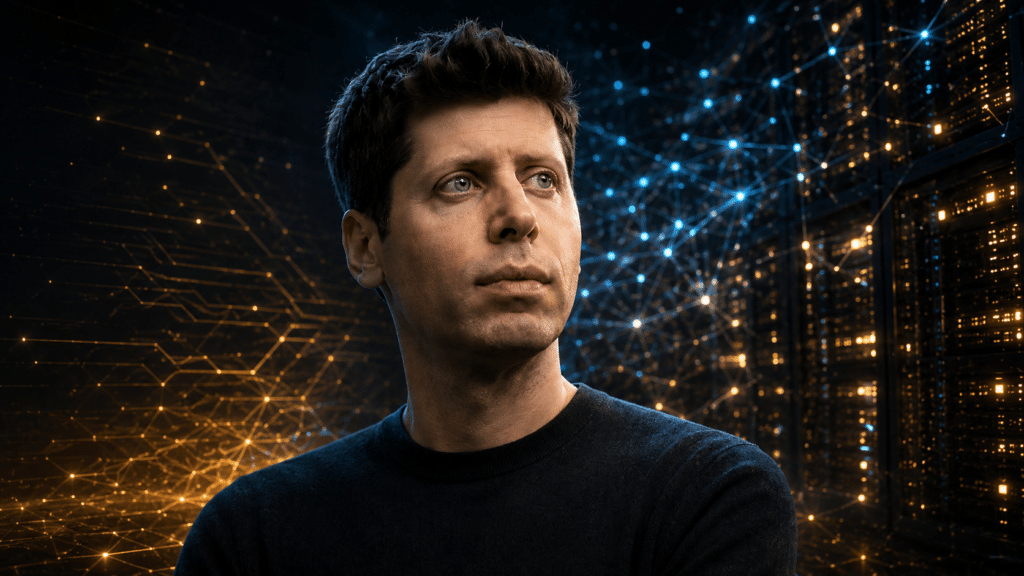
Sam Altman has built a new kind of monopoly. By positioning OpenAI at the center of the AI revolution, he’s secured a grip on modern power that few truly understand.
His career demonstrates that true leverage comes from controlling the underlying infrastructure rather than just building individual products.
While many view Samuel Harris Altman as a standard executive, his history reveals a series of calculated moves. These decisions have built up over time to create a unique form of institutional influence.
Beyond the technology, we can see a clear case study in how modern economic power is engineered and the resulting consolidation.
Why Sam Altman Matters In The AI Economy

Altman carefully engineered his relevance by recognizing early on that large language models and generative AI were far more than interesting research projects.
They functioned as distribution channels, platform businesses, and leverage tools all at once.
From Startup Investor To Platform Builder
At Y Combinator, Altman’s job was to pick winners, and he became excellent at spotting where value would eventually accumulate. However, picking winners is a reactive game where you’re essentially betting on someone else’s vision.
OpenAI represented a complete shift in strategy.
With ChatGPT, GPT-4, and tools like DALL-E, Altman moved from being a spectator to an infrastructure provider. Now, the startups he once funded are building on top of his platform.
This structural change means he’s moved from having equity in companies to providing the layer those companies depend on to function.
Why OpenAI Became Bigger Than A Research Lab
OpenAI started with a nonprofit mission focused on AI safety and research, but Altman realized early that safety research without scale is mostly theoretical. To actually shape how AI develops, you need massive resources, compute, and talent.
The pivot to a capped-profit structure brought in real capital, which funded the model development that made OpenAI a dominant player.
The lab shifted from simply publishing papers to shipping products used by hundreds of millions of people. At that point, it stopped being a research lab and became something closer to a new operating system for knowledge work.
How ChatGPT Turned Influence Into Mass Distribution
When OpenAI launched ChatGPT in November 2022, it hit one million users in five days. This release marked a tipping point where AI development became genuinely accessible to the general public, moving far beyond a simple viral moment.
For Altman, mass distribution changed the game. His audience expanded from investors and policymakers to the public almost overnight.
This gave him a platform most researchers will never have and created a moat for OpenAI that’s incredibly difficult to replicate through technical means alone.
From Loopt To Y Combinator

While his path to OpenAI looks winding, each step increased his ability to operate at a larger scale. Every move was a building block toward achieving widespread impact.
Stanford, John Burroughs School, And Early Signals
Altman grew up in Clayton, Missouri, and attended John Burroughs School, an institution known for academic rigor. He got his first computer at eight years old and started coding almost immediately.
Later, he enrolled at Stanford to study computer science but dropped out after two years to pursue a startup idea he couldn’t ignore.
This willingness to bet on himself is a consistent pattern throughout his career. He has always been comfortable leaving established paths to chase high-potential opportunities.
Loopt, Green Dot, And The First Startup Lesson
At 19, Altman co-founded Loopt, which was part of Y Combinator’s first batch in 2005. He raised over $30 million from top-tier firms like Sequoia Capital, but the market wasn’t ready for real-time location sharing.
As detailed in his startup journey, the company was eventually acquired by Green Dot Corporation for $43.4 million.
The experience was less of a failure and more of an expensive education in timing and market readiness. Altman’s behavior at Loopt is more significant than the actual outcome; he managed a team and navigated intense board pressure while still in his early twenties.
He even survived two attempts by the board to remove him, showing early signs of his resilience.
Paul Graham, Y Combinator, And Silicon Valley Deal Flow
After Loopt, Altman co-founded Hydrazine Capital with an initial $21 million fund seeded by Peter Thiel. Much of that capital went back into Y Combinator companies.
In 2011, he joined YC as a partner and was named president by 2014, replacing Paul Graham. This position gave him visibility into a massive deal flow, including future giants like Reddit, Airbnb, and DoorDash.
He was at the very center of Silicon Valley’s most influential startup accelerator, rather than just watching from the sidelines. This period was crucial because it’s where Altman developed his instinct for spotting platform-level bets, which eventually led him to OpenAI.
Building OpenAI And Chasing AGI

The OpenAI story highlights what happens when a nonprofit mission meets the expensive reality of building transformative technology. The tension between these two forces has defined how the company operates.
The Nonprofit Founding Vision
OpenAI launched in 2015 as a nonprofit research lab with founders like Elon Musk and Greg Brockman. The goal was to develop artificial general intelligence (AGI) that benefits everyone, rather than concentrating power in one place.
The structure was supposed to protect researchers from commercial pressure, but it soon ran into a massive capital problem.
The For-Profit Arm And The Capital Problem
Training frontier AI models costs hundreds of millions of dollars, which is difficult for a traditional nonprofit to raise. To solve this, OpenAI created a capped-profit subsidiary to attract venture funding.
While supporters saw this as a necessary step to stay competitive, critics argued it compromised the original mission.
As OpenAI considers a potential IPO, questions about mission drift and Altman’s interests have grown louder. A New Yorker profile noted that the departure of key figures like Dario Amodei reflected deep ideological fractures within the organization.
AGI, Superintelligence, And The Safety Debate
Altman believes AGI is coming sooner than most people expect. OpenAI has published principles focusing on broad access and safety.
The real debate is whether any commercial organization can be trusted to pursue such powerful technology safely while also competing for market dominance.
The Microsoft Alliance And The New Currency Of Power

Modern power relies on controlling resources that capital alone can’t buy. In the AI world, that resource is compute.
Altman understood this, making the Microsoft partnership a structural necessity rather than just a financial one.
Why Compute Beat Capital Alone
Training frontier models requires specialized computing infrastructure that is often more valuable than cash. Even with billions of dollars, you can still be slowed down by GPU shortages.
Altman’s strategy involves owning or securing enough compute capacity to prevent competitors from catching up through spending alone.
Satya Nadella, Microsoft, And Strategic Dependence
Microsoft has invested over $13 billion in OpenAI. As internal documents show, the partnership reshaped Microsoft’s entire product strategy.
However, the relationship is complicated, with Satya Nadella reportedly worrying about becoming too dependent on OpenAI.
A restructured agreement in 2026 gave OpenAI more flexibility to work with other providers like Amazon. This suggests the power balance has shifted somewhat in Altman’s favor as OpenAI’s importance grows.
Cloud Infrastructure, Scale, And Competitive Positioning
The $500 billion Stargate joint venture is a prime example of Altman’s infrastructure-first strategy. By building massive compute capacity, he ensures no competitor can easily outpace him.
The network surrounding OpenAI, which includes investors like Sequoia Capital and Reid Hoffman, provides access and credibility in addition to funding.
The 2023 Board Crisis And Narrative Control

The five days in November 2023 when Altman was fired and then brought back are a perfect study of modern power. The events showed that formal governance structures often matter less than institutional loyalty and capital dependency.
Why The Board Removed Him
On November 17, 2023, the board fired Altman, claiming he hadn’t been “consistently candid” with them. Board members including Ilya Sutskever and Helen Toner had concerns about the company’s direction regarding safety and commercial goals.
According to Wikipedia, employee safety concerns also played a role in the decision.
Employee Revolt, Investor Pressure, And His Return
The firing backfired almost immediately. Over 700 employees signed a letter threatening to quit unless Altman returned.
Microsoft then offered Altman a job, making the board’s position impossible. As The Guardian reported, investor pressure forced the board to reinstate him within days.
What The Ouster Revealed About Real Control
The crisis proved that legal authority is often secondary to the trust of builders and the confidence of investors. This recurring success suggests he understands that building relationships and dependencies creates more control than any official title ever could.
He has the people and the capital on his side, which is the ultimate form of leverage.
Power, Politics, And The Risks Ahead
Altman’s influence reaches far beyond AI, raising questions about accountability and potential conflicts of interest as he sits at the intersection of several critical global systems.
Musk, xAI, And The Fight Over OpenAI’s Mission
What started as a collaboration between Altman and Elon Musk turned into a major public rivalry. Musk launched xAI and sued OpenAI, arguing they abandoned their nonprofit roots.
Trial testimony from CNBC shows how this conflict is tied to the broader question of who should control the future of AI.
The issue remains unresolved and persistent.
Defense, Governance, And Public Scrutiny
As AI enters government and military use, OpenAI faces tougher questions about its role in national security.
The once-abstract debate over autonomous weapons has become a concrete policy question that OpenAI is now forced to address directly.
A New Yorker investigation recently asked whether any one person should have this much consolidated influence.
Worldcoin, Helion, And The Broader Altman Network
Altman’s investments include Helion Energy and the biometric identity project Worldcoin, which has faced scrutiny over data collection.
He also funds Retro Biosciences and has discussed universal basic income as a fix for AI-driven job loss.
He married Oliver Mulherin in 2024, and they have one child.
The Worldcoin project is particularly noteworthy, as it builds the infrastructure for AI-based identity systems globally.
It’s worth considering whether this is a humanitarian effort or a massive consolidation of personal data before it scales any further.
Frequently Asked Questions
What’s Sam Altman’s role at OpenAI right now?
Altman is the CEO of OpenAI, a role he has held since 2019. He was briefly removed by the board in November 2023 but reinstated within five days following employee and investor pressure.
How much does Sam Altman make per year?
Altman has stated publicly that he did not take a traditional salary from OpenAI for years. His wealth comes primarily from his venture capital funds, particularly Hydrazine Capital, and his personal investment portfolio, which was valued at around $2.8 billion as of mid-2024 according to his Wikipedia profile.
Is Sam Altman married, and who is his wife?
Altman married Oliver Mulherin in 2024. Mulherin is an Australian engineer and entrepreneur. The couple has maintained a relatively private personal life despite Altman’s public profile.
Does Sam Altman have any kids?
Yes, Altman has one child. He has kept details about his family life largely out of the public eye.
What religion (if any) does Sam Altman follow?
Altman was born into a Jewish American family. He has not been publicly vocal about religious practice as an adult, and his public statements tend to focus on technology, economics, and policy rather than personal faith.
Why was Sam Altman briefly removed and then brought back?
The OpenAI board removed him on November 17, 2023. They said he was not consistently honest with the board. This decision caused immediate backlash from employees and investors. Over 700 employees signed a letter threatening to resign. Microsoft offered Altman a senior role. This made the board’s position unsustainable. He was reinstated five days later. The board was also reconstituted.
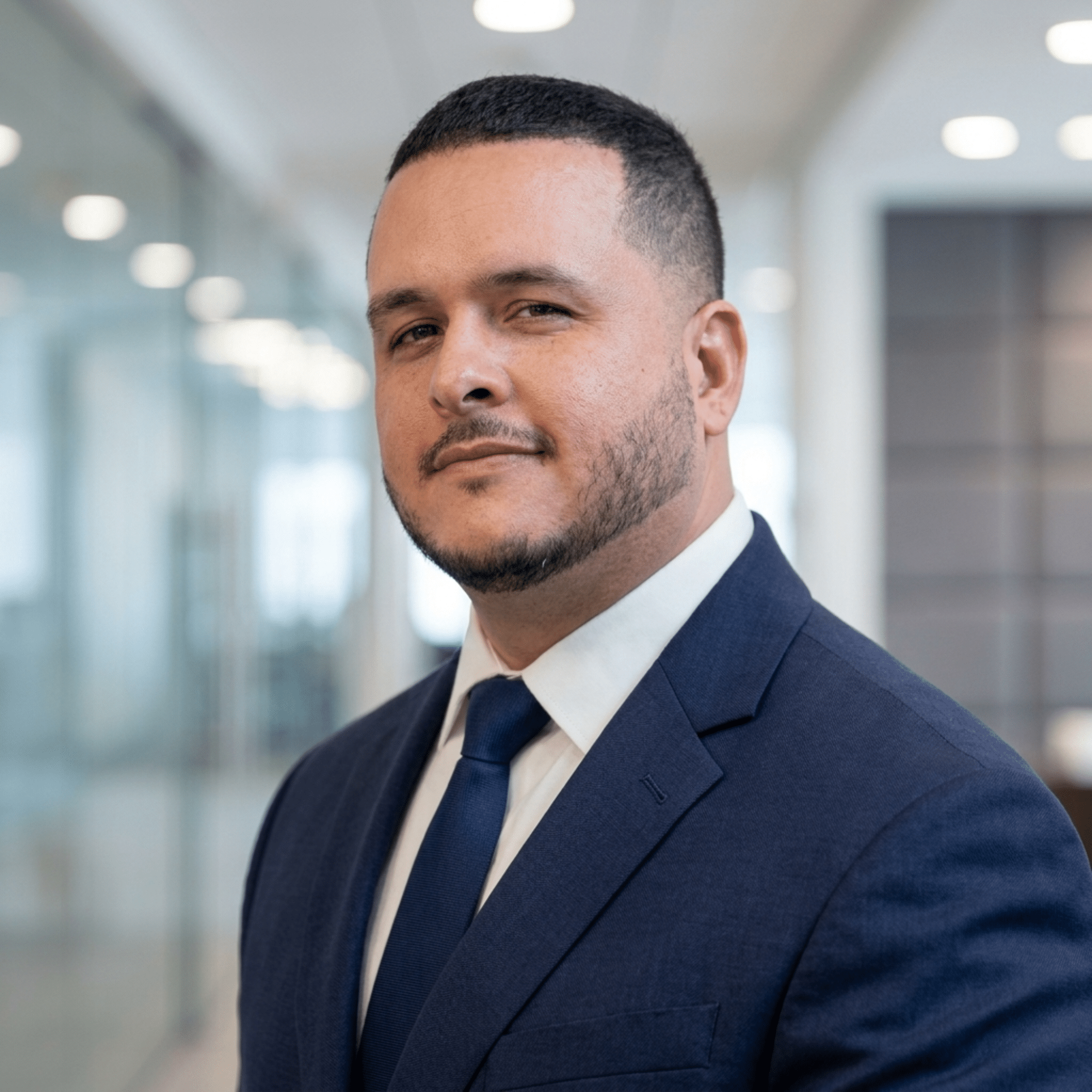
I spent years working in tech and digital publishing, where I saw how quickly industries, brands, and consumer behavior can change. I created Rich Digest to explore the business behind luxury, from iconic products and influential founders to pricing, scarcity, ownership, and brand strategy. My goal is to make the world of luxury business clear, interesting, and easy to understand.