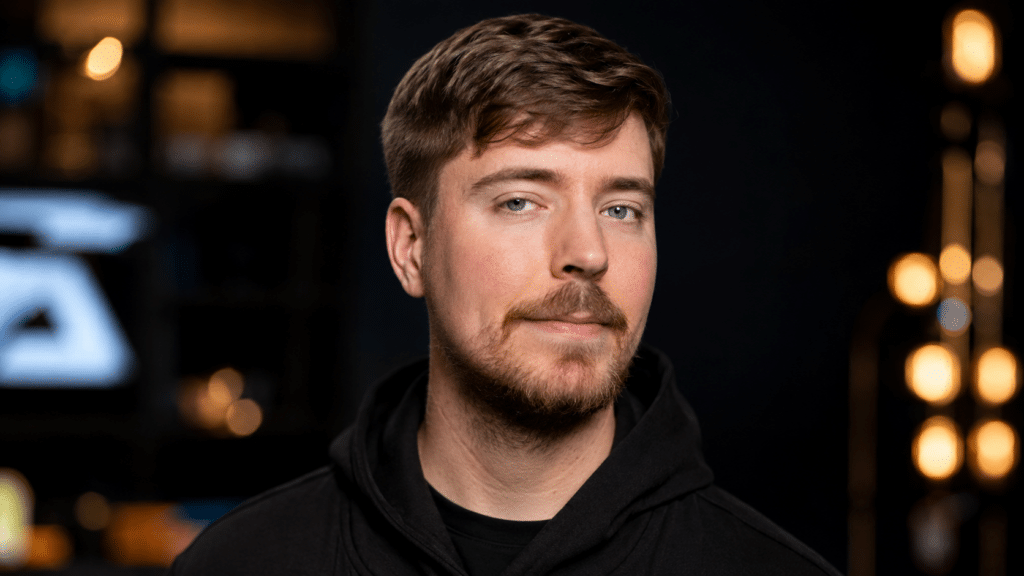
Jimmy Donaldson started posting YouTube videos at 13 years old from his bedroom in Greenville, North Carolina.
His early content was rough, his production was zero-budget, and for years almost nobody watched.
Then, in January 2017, a video of him counting to 100,000 went viral and changed everything.
What makes his story worth studying isn’t the fame, it’s the business model he built once he had the audience’s attention.
Most creators use viewership to fund a lifestyle.
Donaldson used it to fund a machine.
He reinvested earnings into bigger videos, turned those videos into a funnel for consumer products, and built a company that generated an estimated $473 million in revenue in a single year.
His chocolate brand, Feastables, reportedly generates more revenue than his YouTube ad earnings combined.
Understanding how MrBeast makes money means looking past the spectacle.
The giveaways, the stunts, the massive production budgets, these aren’t the product.
They’re the engine.
Where The Money Actually Comes From
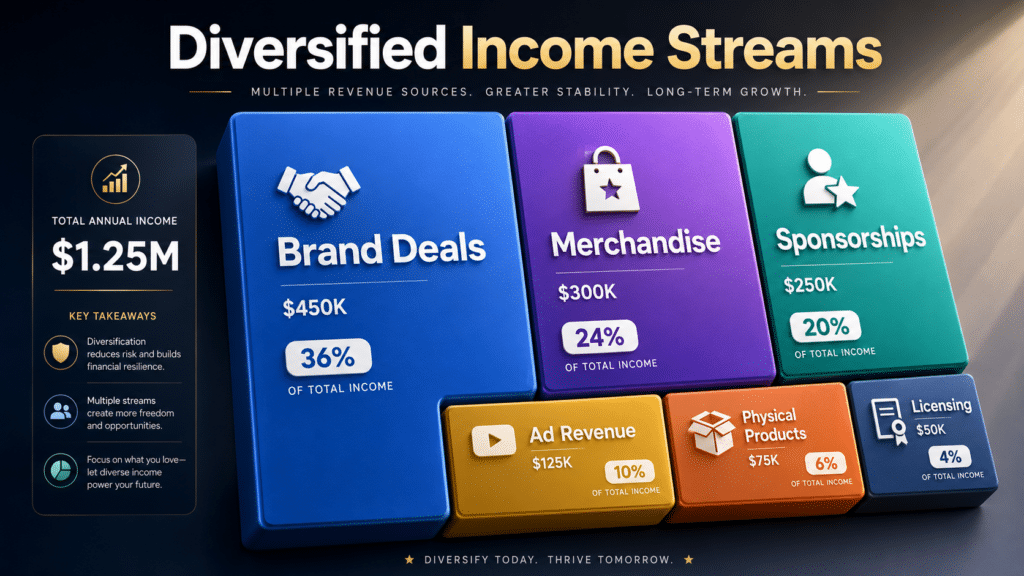
MrBeast’s income runs across several channels at once: YouTube ad revenue, brand sponsorships, merchandise, owned businesses, and strategic investments.
Each one feeds the others in ways that make the whole system more valuable than any single piece.
YouTube Ad Revenue Across His Channel Network
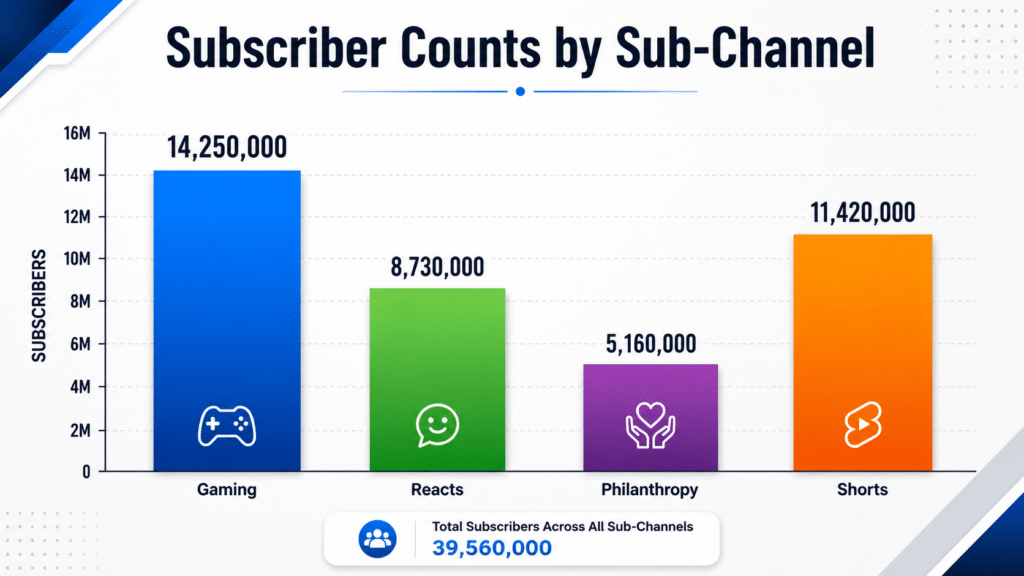
MrBeast runs multiple YouTube channels.
Beyond his main channel, he operates MrBeast Gaming, Beast Reacts, MrBeast 2, and Beast Philanthropy.
Each channel generates its own ad revenue through YouTube’s Partner Program.
His main channel alone has passed 370 million subscribers, and his videos routinely pull tens of millions of views each.
According to estimates compiled by WhoEarns, his CPM (cost per thousand views) runs between $5 and $10, well above the YouTube average, because his content skews family-friendly and attracts premium advertisers.
A single video on his main channel can generate $500,000 or more in ad revenue.
Multiply that across a publishing cadence on multiple channels and the numbers compound quickly.
Brand Deals, Sponsorships, And Premium Advertisers
Sponsorships are arguably where the real YouTube money comes from.
MrBeast charges approximately $2.5 million per sponsored integration, making his deals among the most expensive in the creator economy.
Past partners include Honey, Nike, and Electronic Arts.
These aren’t passive logo placements.
The integrations are built into the video concept itself, which means the sponsor gets reach that a traditional TV ad can’t replicate.
At his audience size, brands treat a MrBeast sponsorship the way media buyers once treated Super Bowl spots.
Merchandise Sales And Direct-To-Fan Revenue
MrBeast sells branded merchandise including hoodies, t-shirts, and limited edition products.
The margins on branded apparel are typically strong, and his audience has a proven history of buying.
Merchandise doesn’t require the same infrastructure as a physical consumer goods business.
It runs largely on existing brand equity and demand, making it one of the simpler income layers in his portfolio.
Startup Investments And Other Equity Bets
Outside his own companies, Donaldson has invested in startups including Current, a consumer banking app.
He’s also been open about holding cryptocurrency.
These bets represent a smaller slice of his financial picture right now, but they show a deliberate move toward building wealth in assets he doesn’t have to personally operate.
The Extreme Reinvestment Flywheel
Most people who start making serious money from YouTube buy things.
Donaldson bought scale.
His core philosophy across the first decade of his career was to put almost every dollar back into the next production, treating the channel less like a job and more like a high-growth startup that needed to earn market share before it earned personal wealth.
Why He Reinvests Instead Of Maximizing Short-Term Profit
By his own admission, Donaldson kept less than $1 million in his personal bank account even as his business was generating hundreds of millions in revenue.
He borrowed money from his mother to help pay for his own wedding.
That’s not recklessness.
It’s a calculated bet that the value of the brand compounds faster than cash sitting in a savings account.
The logic tracks: every dollar reinvested into a bigger video creates more views, more subscribers, higher CPMs, and stronger negotiating leverage with sponsors.
How Bigger Budgets Create A Production Moat
His real-life recreation of Squid Game cost over $3.5 million to produce and pulled in more than 490 million views.
You simply can’t replicate that with a $50,000 budget, or even a $500,000 one.
That’s the moat.
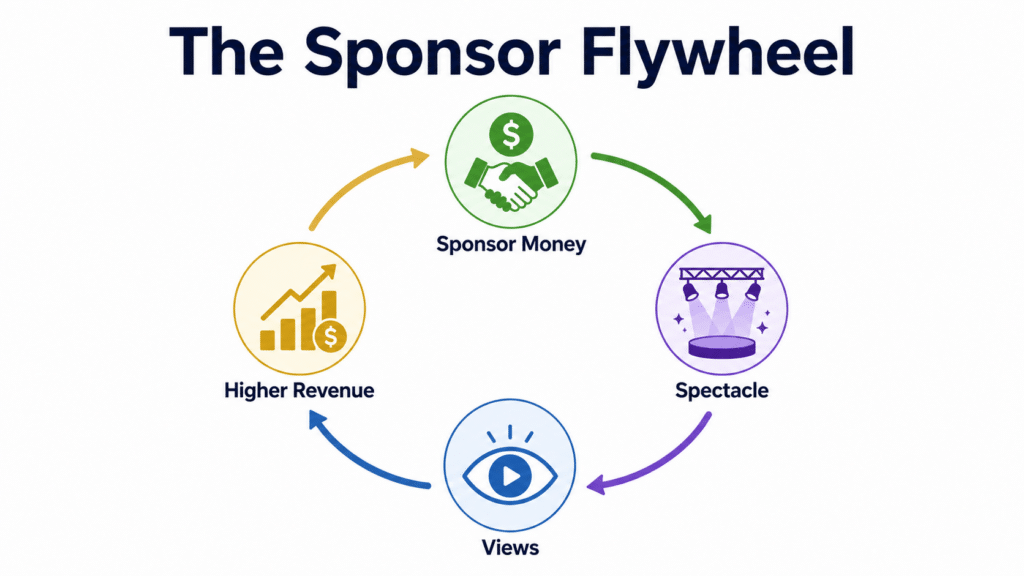
As the flywheel analysis at Ligariotres describes it, the cycle works like this: sponsor money funds spectacle, spectacle attracts views, and those views increase the capacity of the next production.
Each loop makes the barrier to competition slightly higher.
No other creator is operating at this production scale consistently.
That’s a structural advantage, built dollar by dollar over years.
Why Viral Content Feeds Every Other Revenue Stream
When a video goes viral, the benefits spread across the entire business.
Feastables gets search traffic.
The merchandise store sees a spike.
Sponsorship rates go up in the next negotiation.
New subscribers enter the funnel for future videos.
Viral content isn’t just a metric for him.
It’s free distribution for every other thing he’s selling.
The giveaways and large donations that fill his videos serve a dual purpose: they create genuine emotional engagement, and they make the videos worth sharing.
The Science Of Retention And Virality
Donaldson has been public about treating content creation like a data problem.
He studies his own retention graphs, tests thumbnails, and analyzes which structural decisions keep viewers watching through to the end.
I think it’s this obsession with the mechanics of attention that separates him from creators who rely on instinct alone.
Thumbnail, Title, And Packaging Discipline
Before a viewer clicks play, they decide whether to click at all.
MrBeast reportedly runs relentless thumbnail and title optimization, testing variations to find the packaging that maximizes click-through rate.
His thumbnails tend to follow clear visual principles: high-contrast colors, expressive faces, a clear visual promise of what’s inside the video.
The title pairs with the thumbnail to complete the hook.
The click is the first conversion in the entire revenue chain.
Without it, none of the retention engineering matters.
Pacing, Watch Time, And Audience Retention
Once you click, the video is structured to keep you watching.
According to an analysis of MrBeast’s retention system at Influencer Notes, his videos use a pattern of hooks, re-hooks, escalating stakes, and payoff design to sustain viewer attention across videos that often run 20 to 30 minutes or longer.
The pacing is fast.
New information, new tension, or new visual stimulus arrives constantly.
Drop-off points, the moments where retention graphs show viewers leaving, get studied and patched in future videos.
YouTube’s algorithm rewards watch time and session time.
High retention means the platform promotes the video, which means more views without paid distribution.
Why His Videos Convert Attention Into Revenue
High retention has a direct financial effect.
It raises CPM rates because advertisers pay more to reach an audience that’s actively engaged rather than passively distracted.
It also makes sponsorship integrations more valuable, since a viewer who’s still watching at the 10-minute mark is much more likely to process a brand message than one who dropped off at two minutes.
The economics of this are laid out clearly at Screenwiseapp: retention editing and spectacle combine to keep viewers engaged long enough to convert attention into revenue across every format.
Feastables And The Shift To Owned Equity
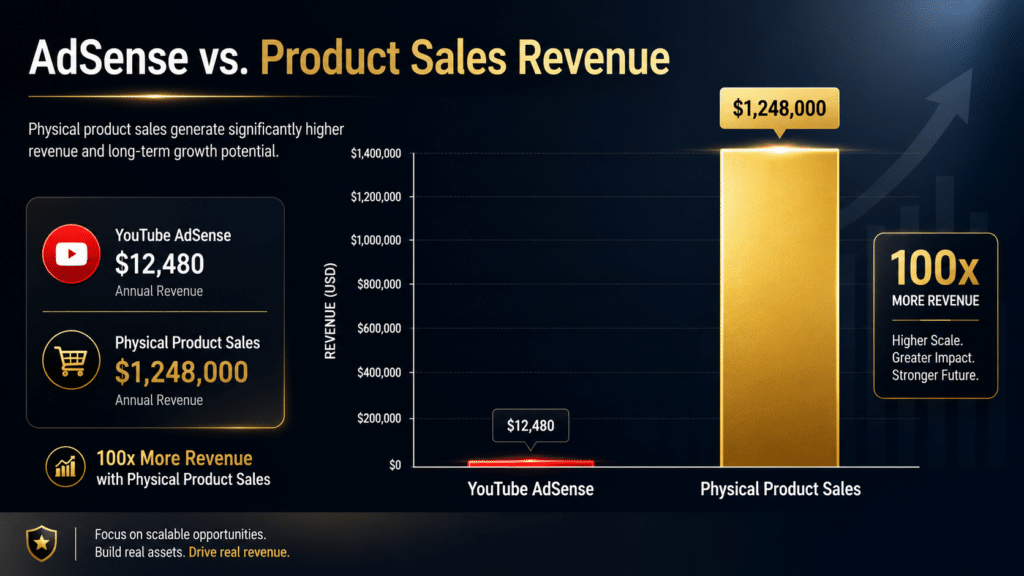
Feastables launched in January 2022 as a chocolate bar brand.
On the surface, it looked like another influencer product.
In practice, it was a fundamental shift in how Donaldson structured his business.
YouTube ad revenue and sponsorship money are rented income.
Feastables is an asset he owns, and its trajectory shows why that distinction matters.
Why Feastables Matters More Than AdSense
A leaked investor pitch deck, reported by Tubefilter, showed that Feastables was already generating more revenue than MrBeast’s YouTube channels.
The brand hit $250 million in revenue in under two years.
AdSense pays based on views.
Feastables pays based on units sold.
The latter scales with retail distribution and brand equity, both of which are far more durable than algorithmic traffic.
Retail Distribution And Shelf-Level Competition
Feastables is now competing in physical retail, not just online.
It’s on shelves in major grocery and convenience chains across the country, which means it’s sitting next to Hershey’s and competing for real impulse purchase decisions.
That’s a different game entirely.
According to Femfounded’s case study on Feastables, the brand’s majority ownership sits inside Beast Industries, with Donaldson owning just over half of that parent company, which was valued at roughly $5 billion in late 2024.
How A Chocolate Brand Changes His Business Model
Before Feastables, the business model depended on attention.
Every dollar required eyeballs first.
Feastables inverts part of that dependency.
Yes, it still benefits enormously from his audience, but it also generates revenue from people who’ve never watched a single video.
That’s what makes it structurally interesting.
It’s the beginning of a consumer packaged goods company that happens to have the world’s most-watched YouTube channel as its marketing department.
Beyond Media: Restaurants, Shows, And New Ventures
Donaldson has tested several ventures beyond YouTube and food products.
Some worked, some didn’t, and the pattern across all of them reflects both the opportunity and the limits of building on top of internet fame.
MrBeast Burger And The Virtual Restaurant Model
MrBeast Burger launched in 2020 as a virtual restaurant brand in partnership with Virtual Dining Concepts.
The model used existing restaurant kitchens to fulfill delivery orders under the MrBeast Burger name, requiring no owned real estate.
At its peak, it operated in 300-plus locations.
It eventually collapsed into a legal dispute with its partner, and Donaldson ended his involvement in the venture.
The episode is worth noting because it illustrates the risk of brand licensing arrangements where you don’t control operations or quality.
Beast Games And Streaming Economics
Beast Games is MrBeast’s competitive reality show on Amazon Prime Video.
Reports indicate the deal was worth roughly $100 million, making it one of the largest streaming deals for a creator-led production.
The show extends his format, big stakes, large giveaways, competitive challenges, into a premium streaming context.
It also broadens his reach beyond YouTube-native audiences and adds a revenue stream that doesn’t depend on algorithm performance.
Lunchly, Beast Industries, And Expansion Beyond YouTube
Lunchly is a meal kit product co-launched with fellow creators Logan Paul and KSI as a competitor to Lunchables.
It targets the same school-lunch market with a slightly different positioning.
Beast Industries serves as the parent company umbrella for most of Donaldson’s ventures.
According to Business Insider, he owned “a little over half” of Beast Industries as of a November 2024 deposition, with the company valued at around $5 billion in its most recent funding round.
Observer reported in late 2025 that Beast Industries was also moving into telecom and financial services with ventures including Beast Mobile, extending the brand well beyond content and snacks.
Net Worth, Philanthropy, And What The Model Gets Right
Putting a number on what MrBeast is worth is genuinely complicated.
The estimates vary because the question itself is slippery when most of the value lives inside private companies rather than liquid assets.
Why Net Worth Estimates Vary So Much
You’ll see figures ranging from $700 million to $2.6 billion depending on the source and methodology.
The Independent has cited an estimated $2.6 billion, while earlier Forbes estimates focused on his annual YouTube earnings alone, which were around $54 million at one point.
The spread exists because most of the value is tied to his ownership stake in Beast Industries, a private company.
Private valuations are estimates based on funding rounds, not verified market prices.
His personal liquid cash, as he’s noted publicly, is genuinely small relative to those paper valuations.
How Beast Philanthropy Fits The Business System
Beast Philanthropy is a registered 501(c)(3) nonprofit.
All ad revenue from its dedicated YouTube channel, which has grown to over 27 million subscribers, goes directly toward charitable work including food banks, clean water projects, and disaster relief.
I think it’s fair to say Beast Philanthropy genuinely creates social value.
It’s also true that the charitable work reinforces the emotional brand association that makes his commercial products more appealing.
Both things can be true at once, and they are here.
What Other Creators And Operators Can Learn
The core lesson from Donaldson’s model isn’t about YouTube specifically.
It’s about treating attention as infrastructure rather than income.
When you own a large, engaged audience, you can use it to launch products that generate far more durable revenue than platform-dependent ad splits.
The reinvestment philosophy is also transferable.
Businesses that prioritize compounding over short-term extraction tend to build harder-to-replicate positions over time.
His production moat didn’t happen overnight.
It was built one reinvested video budget at a time.
Frequently Asked Questions
Where did he get the money to fund his early videos before the channel blew up?
Donaldson’s early videos were extremely low-budget, often just himself filming stunts or challenges with basic equipment. He began monetizing through YouTube’s Partner Program once he hit the subscriber threshold, and he reinvested those early earnings immediately into slightly more ambitious content to grow the channel faster.
What are the biggest income streams behind his YouTube channel besides ad revenue?
Brand sponsorships are the largest YouTube-adjacent income source, with individual deals reportedly worth around $2.5 million per integration. Feastables has since surpassed YouTube ad revenue entirely as a revenue source, making it the biggest part of his business overall.
How much does he reportedly make in a day or month from all his businesses?
Across all ventures, estimates suggest he generates over $250 million annually, with some projections for 2024 reaching $700 million in total business revenue. On a per-day basis, that’s a wide range depending on the year and which businesses are included in the calculation.
Where does the budget for massive projects like Beast Games actually come from?
Large productions are typically funded through a combination of streaming deals, sponsor commitments secured in advance, and reinvested business revenue. The Amazon deal for Beast Games was reported at roughly $100 million, which covered production and compensated the network for distribution rights.
How did he get famous so quickly, and what changed once the channel took off?
His January 2017 video counting to 100,000 was the inflection point. Once that video spread, he had proof of concept for high-commitment, emotionally extreme content, and he immediately scaled the format. Once the channel hit critical mass, sponsorship rates rose sharply and he was able to fund increasingly expensive productions.
What’s his net worth supposed to be, and how do people even estimate it?
Estimates range from roughly $700 million to $2.6 billion depending on how you value his ownership stake in Beast Industries. Since the company is private, valuations are based on investment rounds rather than public market data. This is why the numbers vary so much across different reports.

I spent years working in tech and digital publishing, where I saw how quickly industries, brands, and consumer behavior can change. I created Rich Digest to explore the business behind luxury, from iconic products and influential founders to pricing, scarcity, ownership, and brand strategy. My goal is to make the world of luxury business clear, interesting, and easy to understand.