When you look at how Disney makes money, you’re really looking at one of the most carefully constructed business machines in media and entertainment history.
The Walt Disney Company doesn’t just sell movies or theme park tickets. It builds intellectual property that earns money across dozens of channels simultaneously. This often continues for decades after the original content was created.
Most companies create a product, sell it, and move on.
Disney creates a character, then builds an entire economic ecosystem around that character.
A single film becomes a ride, a cruise ship theme, a line of merchandise, a streaming series, and a reason to visit a resort in Florida, California, or Shanghai.
That’s not accidental. It’s the model.
What’s genuinely interesting about the Disney business model is how durable it’s proven to be.
Walt Disney sketched the basic structure in 1957, and the core logic still runs the company today.
Bob Iger then supercharged it by acquiring Pixar, Marvel, and Lucasfilm, plugging massive pre-built audiences into the same machine.
And the streaming era opened up entirely new monetization windows without replacing the old ones.
This article walks through how all of that works, from the original synergy map to the modern streaming bundle.
It also explores what Disney’s approach reveals about building businesses around IP that compounds in value over time.
The Synergy Map That Still Runs Disney
Walt Disney was thinking about cross-promotion and content distribution long before those terms existed in business school curricula.
The logic he drew out in 1957 is still the operating system underneath everything Disney does today.
Walt Disney’s 1957 Synergy Map
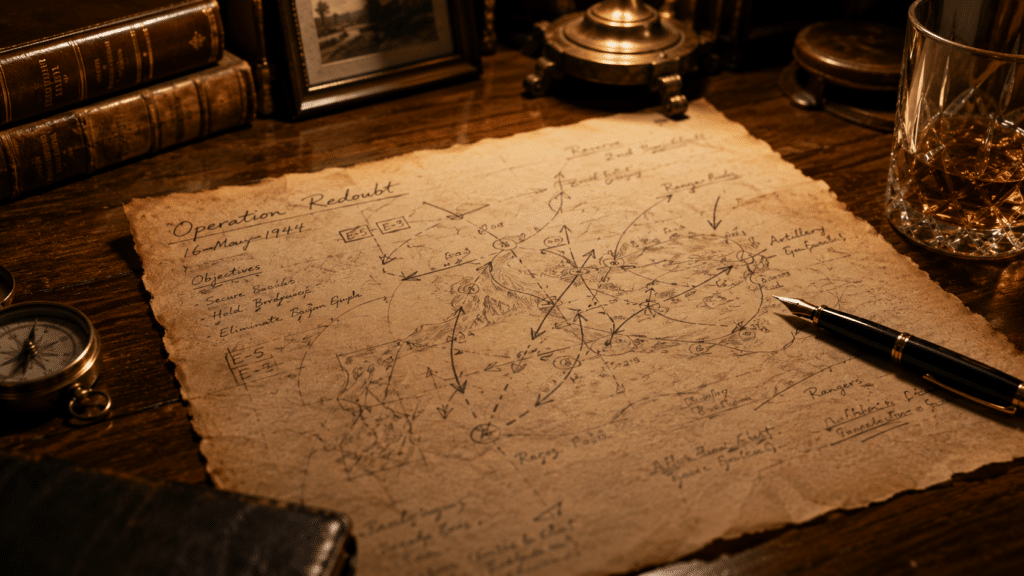
In 1957, Walt Disney hand-drew a corporate strategy diagram that mapped out how every part of his company fed every other part.
Theatrical films sat at the center.
From there, arrows radiated outward to Disneyland, television, music, publications, and merchandise, with each element feeding traffic and revenue back to the others.
The map showed, for instance, how a film release would drive interest in the TV show, which would drive visitors to Disneyland, which would sell merchandise, which would remind people to see the next film.
As one analysis of the diagram puts it, Disney sketched out a content flywheel decades before marketers used the term.
Why Intellectual Property Sits At The Center
The reason this flywheel works is that intellectual property, meaning characters, stories, and worlds, is infinitely replicable.
You can put Mickey Mouse on a t-shirt, a theme park ride, a streaming show, and a cruise ship cabin without diminishing the original asset.
Brand equity compounds rather than depletes.
I think this is the part most people underestimate.
IP isn’t just content. It’s the raw material that every other Disney revenue stream processes into money.
How Cross-Promotion Lowers Marketing Costs
When Disney releases a Marvel film, it doesn’t need separate campaigns for the theme park experience, the merchandise line, or the Disney+ tie-in content.
Each element promotes the others.
That marketing efficiency is built into the structure.
A single successful franchise launch does the advertising work for four or five different business units at once, which meaningfully lowers customer acquisition costs across the board.
How Disney Turns Stories Into Multiple Revenue Streams
Disney’s revenue doesn’t come from one place.
The company has built a layered system where a single story can generate income through films, streaming, TV, merchandise, and physical experiences, often running in parallel.
According to a breakdown of Disney’s revenue structure, the company reported $82.7 billion in revenue for its fiscal year 2022, drawn from several distinct streams.
Studio Entertainment And Box Office
Theatrical releases are still the top of the funnel.
A major film release creates awareness, cultural conversation, and the audience base that every other revenue stream depends on.
Box office sales generate direct income, but their bigger role is activating downstream monetization.
Success at Marvel Studios provides a blueprint for how modern blockbusters drive the entire company’s earnings.
Film distribution deals, content sales and licensing agreements, and home video revenue extend the life of each release well beyond its theatrical run.
Streaming, Linear TV, And Sports Media
Disney operates across multiple distribution layers simultaneously.
On the streaming side, Disney+, Hulu, and ESPN+ collect streaming subscriptions and, increasingly, advertising revenue.
Advanced ad tech integration allows for better monetization of these digital audiences through targeted commercials.
Linear TV assets including ABC, Disney Channels, and ESPN generate affiliate fees from cable carriers and ad revenue from sponsorships.
ESPN’s sports rights agreements are particularly valuable because live sports is one of the last things audiences reliably watch in real time, which protects ad pricing.
Disney’s media networks still contribute significantly to overall revenue, even as the shift toward direct-to-consumer creates pressure on the traditional linear TV model.
Consumer Products, Licensing, And Royalties
Every major franchise generates a consumer products tail.
Merchandise, collectibles, apparel, and toys tied to Disney characters produce royalties and direct retail income.
Global sales of Disney merchandise represent a massive portion of the company’s retail footprint.
Maintaining a complex supply chain ensures that products are available in time for major movie launches and holiday seasons.
Licensing agreements let third-party manufacturers pay for the right to put Disney IP on their products, which means the company earns money without manufacturing anything itself.
Experiences, Travel, And Destination Spending
The experiences segment, which covers theme parks, resorts, cruise vacations through Disney Cruise Line, and guided trips through Adventures by Disney, is one of Disney’s highest-margin businesses.
The Disney parks and resorts division acts as a physical manifestation of the brand’s stories.
This segment creates high-touch environments where fans can live inside their favorite films.
Guests don’t just pay for admission; they spend on hotels, food, merchandise, and premium experiences throughout their visit.
Recurring revenue from annual passes and vacation club memberships layers predictable income on top of transactional guest spending.
The Acquisition Playbook Under Bob Iger

Bob Iger’s most consequential contribution to Disney wasn’t any single deal.
It was the recognition that Disney’s monetization machine was more valuable than its ability to generate original IP from scratch.
His answer was to buy proven franchises and plug them in.
The acquisitions of Pixar, Marvel, and Lucasfilm each followed a similar logic: identify IP with passionate existing audiences, acquire it at a price justified by long-term franchise value, and then let the Disney distribution engine do the rest.
Why Disney Bought Proven Franchises
When Iger became CEO in 2005, Disney’s own animation division had lost momentum, and its pipeline of original characters wasn’t producing the kind of franchise-ready IP the broader business needed.
Rather than rebuild creative capacity from scratch, he looked for studios that had already proven they could generate beloved, multi-generational characters.
As reporting on Iger’s strategic approach notes, he acquired Pixar for $7.4 billion in 2006, Marvel Entertainment for $4 billion in 2009, and Lucasfilm for $4 billion in 2012.
Each deal bought not just content but entire audiences.
Pixar, Marvel, And Lucasfilm As Strategic Assets
Pixar gave Disney back its animation credibility and delivered franchises like Cars and Inside Out.
Marvel brought more than 5,000 characters and a cinematic universe that has generated billions in theatrical releases alone.
Lucasfilm brought Star Wars, one of the most recognized entertainment brands on earth, along with a fan base spanning multiple generations.
Each acquisition was, in effect, a bet on a proven brand rather than a creative gamble.
The capital allocation logic was straightforward: derisked IP converts to cash faster and more predictably than original content.
How Acquired IP Feeds The Existing Machine
Once inside Disney, these franchises didn’t just make movies.
Marvel characters appeared in Disney theme parks, on Disney+ streaming, in consumer products, and across Disney’s marketing channels.
Star Wars land opened at Disneyland and Walt Disney World.
The Disney M&A playbook involved protecting the creative culture of acquired studios while systematically connecting their output to Disney’s distribution and monetization infrastructure.
The acquisitions multiplied in value precisely because Disney had already built the machine to process them.
Parks, Resorts, And Cruises As High-Value Extensions

Disney’s physical experiences aren’t just entertainment venues.
They’re sophisticated, high-margin businesses that turn brand equity into destination spending.
The company has committed to investing roughly $60 billion in its parks and experiences segment over approximately 10 years, which signals how central this segment is to long-term strategy.
From Disneyland To Global Resort Economics
Disneyland opened in 1955 as a novel extension of the studio’s storytelling.
Today, Disney operates theme parks and resorts across the United States (Disneyland Resort in Anaheim and Walt Disney World in Florida), as well as Shanghai Disney Resort, Hong Kong Disneyland, Tokyo Disney Resort, and a planned development in Abu Dhabi.
Each location adapts Disney IP to local audiences through localization while maintaining the core brand experience.
Strategic international expansion has allowed the company to reach emerging middle-class markets.
These Disney parks serve as anchors for the brand in Asia and Europe, facilitating deeper cultural integration.
Internationally, the economics vary.
Some parks operate under licensing agreements where Disney earns fees without carrying full capital risk.
Imagineering And The Guest Experience
Walt Disney Imagineering is the internal creative and engineering group responsible for designing and building Disney’s parks and attractions.
Imagineering translates film IP into physical spaces, which is harder than it sounds.
A ride based on a movie has to deliver an experience that feels coherent with the story, not just slap a character on an existing attraction.
The quality of that execution is a competitive moat.
It’s genuinely difficult to replicate at scale.
Why Physical Experiences Deepen Lifetime Value
Yield management tools, including dynamic pricing on tickets, hotel packages, and dining reservations, help Disney extract maximum revenue per guest.
But beyond revenue optimization, the parks serve a deeper strategic function: they create emotional memories that reinforce brand loyalty across generations.
First-party data collected through the My Disney Experience app and personalization systems helps Disney understand guest behavior and improve the experience.
A family that visits Walt Disney World once is statistically more likely to subscribe to Disney+, buy merchandise, and bring their own children back someday.
Streaming, Distribution, And The Modern Revenue Mix

Disney’s streaming strategy is a direct extension of the same flywheel logic Walt Disney drew in 1957, updated for the digital distribution era.
Rather than replacing linear TV and theatrical releases, Disney has tried to layer streaming on top of existing revenue streams, which creates complexity but also more monetization windows for each piece of content.
Disney+, Hulu, And ESPN+ In The Bundle Era
Disney offers its three streaming services as a bundle, which reduces churn and increases average revenue per user.
Disney+ focuses on family and franchise content from the Walt Disney Studios, Marvel, Star Wars, Pixar, and National Geographic.
Hulu covers broader entertainment and live TV.
ESPN+ carries sports content, including exclusive rights to some leagues.
The economics of Disney+ depend on subscription fees supplemented by advertising revenue on lower-priced tiers.
The bundle strategy mirrors what cable companies did with channel packages, creating stickiness through breadth rather than depth alone.
Balancing Box Office With Direct-To-Consumer
One of Disney’s ongoing strategic questions is how to sequence content releases across theatrical and streaming windows.
A film that goes to Disney+ too quickly can cannibalize box office sales.
A film that stays exclusive to theaters misses subscribers who never visit a cinema.
Disney has experimented with simultaneous releases, delayed windows, and premium access pricing.
The right answer probably varies by title, and the company is still calibrating as streaming economics continue to evolve.
Management must also balance the benefits of content licensing to other platforms against the need for exclusivity on their own services.
This decision-making process is a critical component of the modern Disney business model.
What Disney Faces Against Netflix And Amazon Prime Video
Netflix has built faster localization capabilities and spends aggressively on original content in international markets.
Amazon Prime Video benefits from being bundled with Prime membership, which lowers its effective customer acquisition cost.
As recent analysis notes, Netflix excels at rapidly launching and monetizing franchises worldwide with rising operating margins and fast-growing ad revenues.
Disney’s edge is its IP library and cross-platform ecosystem.
Its challenge is whether franchise-driven content can generate the volume and release cadence that broad streaming audiences expect.
What Disney’s Model Reveals About Durable Franchises
Disney’s business model tells you something important about how value compounds in entertainment.
Characters like Mickey Mouse, who first appeared in Steamboat Willie in 1928, and Snow White, from Disney’s first feature film in 1937, are worth more today than they were decades ago.
That’s the opposite of how most assets work.
The Compounding Economics Of Nostalgia
Software becomes obsolete.
Physical goods depreciate.
But a character that someone loved as a child becomes a way to share something meaningful with their own kids.
That emotional transfer is the engine behind nostalgia marketing, and it’s genuinely hard to replicate without a multi-decade head start.
I think this is the most underappreciated part of Disney’s competitive position.
Brand equity in entertainment isn’t just about awareness; it’s about emotional attachment that gets passed down like a family heirloom.
Each new generation of parents introduces Disney to their children, effectively refreshing the customer base without Disney spending anything on acquisition.
The compounding works because the underlying asset, the character, the story, the feeling, doesn’t degrade with use.
Brand Risks, Competition, And Execution Limits
Brand trust is Disney’s most important asset, and it’s also fragile.
Creative missteps, particularly films that underperform or alienate core audiences, can weaken the franchise value that the entire model depends on.
Disney’s SWOT analysis would show that its brand equity is simultaneously its greatest strength and a vulnerability requiring constant protection.
Maintaining the Disney brand requires a delicate balance between tradition and innovation.
A thorough Disney SWOT analysis reveals that while the library is unmatched, external competition remains fierce.
This Disney SWOT also highlights how cultural shifts can impact brand perception.
Regulatory risk is real too.
Copyright terms, content regulations in international markets, and data privacy rules around first-party data collection all add compliance costs.
Proactive risk management is necessary to navigate shifting geopolitical climates and economic downturns.
Furthermore, regulatory compliance across different territories ensures that content and parks meet local legal standards.
Disney competitors, from Universal and Comcast to Netflix and Amazon, are investing heavily in theme parks, IP acquisition, and streaming, which compresses Disney’s advantages over time.
Who Owns Disney And What Investors Watch
The Walt Disney Company trades publicly on the New York Stock Exchange under the ticker DIS.
Major institutional investors, index funds, and individual shareholders own stakes in the company.
Capital allocation decisions, meaning how much Disney spends on content, parks, acquisitions, and debt repayment, are closely watched indicators of strategic priorities.
Investors tend to focus on streaming profitability, parks segment margins, and the pace of linear TV decline as the three variables most likely to determine Disney’s earnings trajectory over the next several years.
The interactive and gaming segment is a smaller but growing area of attention as Disney looks at new ways to monetize its IP library.
Frequently Asked Questions
How does Disney actually make most of its money across parks, movies, and streaming?
Disney earns across multiple channels simultaneously. Its parks and experiences segment is a primary profit driver through ticket sales and resorts. Streaming via Disney+, Hulu, and ESPN+ adds subscription and ad revenue. According to Disney’s revenue breakdown, this diversification ensures the company doesn’t rely on any single source.
What are Disney’s main revenue streams, and how have they shifted in the last few years?
Primary revenue comes from experiences (parks, cruises), entertainment (films, streaming), and ESPN. Recently, direct-to-consumer streaming has grown as linear TV fees decline. While parks have rebounded post-pandemic, achieving streaming profitability is now a central focus under Bob Iger’s leadership.
What does Disney’s Business Model Canvas look like in plain English?
Disney builds or acquires IP and distributes it across theaters, streaming, parks, and merchandise. Key partners include creators and licensees. Revenue flows from admissions, subscriptions, ads, and royalties. Major costs involve content production and capital investments in resorts.
Who are Disney’s key partners, and what role do they play in its growth?
Key partners include creative studios, merchandise suppliers, and tech vendors. As noted in Disney’s business model analysis, these collaborators extend Disney’s reach. Licensing partners are especially vital, allowing Disney to earn royalties from third-party products without managing manufacturing or logistics directly.
How do Disney’s brand and intellectual property turn into long-term competitive advantages?
Disney’s IP generates cross-channel revenue while building multi-generational emotional attachments. Characters like Mickey Mouse or the Avengers refresh their audience as parents introduce them to children. This compounds brand equity over time, creating a competitive advantage that is extremely difficult for rivals to replicate.
How does Disney’s mission statement connect to the way it runs its businesses?
Disney’s mission to inspire through storytelling guides its capital allocation. Every investment—from theme parks to streaming content—is designed to extend the reach of its stories. The integrated entertainment strategy is the operational translation of its purpose.

I spent years working in tech and digital publishing, where I saw how quickly industries, brands, and consumer behavior can change. I created Rich Digest to explore the business behind luxury, from iconic products and influential founders to pricing, scarcity, ownership, and brand strategy. My goal is to make the world of luxury business clear, interesting, and easy to understand.