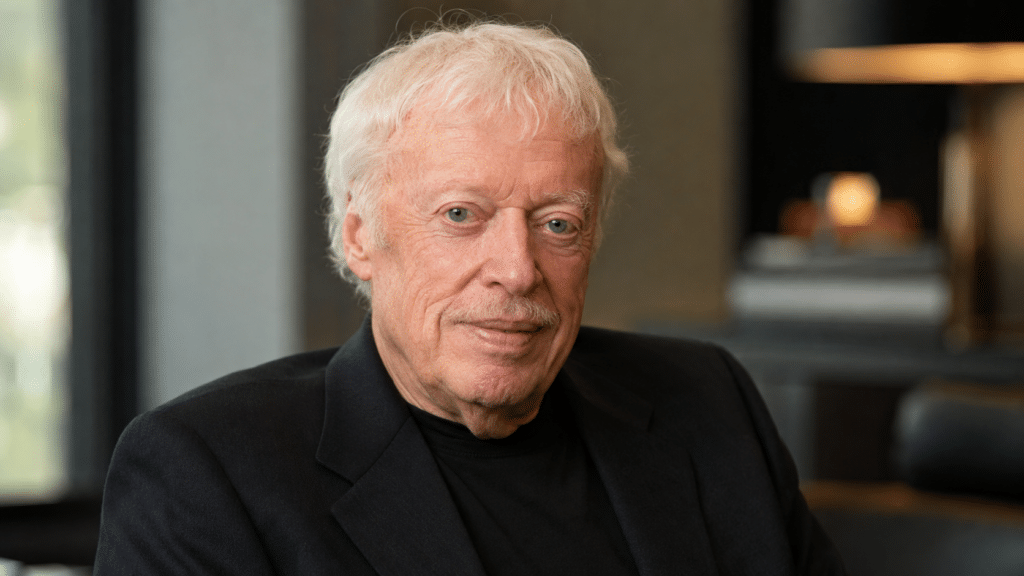
Phil Knight spent decades building one of the most recognized brands on earth, and he did it without ever obsessing over making shoes. That might sound strange, but it’s the core of what made him different.
His real product was never athletic footwear; it was the feeling people got when they wore it.
Most business schools teach you to control your supply chain. Knight looked at that logic and quietly ignored it.
He saw manufacturing as a cost center, not a competitive edge, and he put his energy into something harder to copy: identity.
The company he built went from selling shoes out of a car trunk to generating tens of billions in annual revenue, and it did so by turning athletes into symbols and symbols into sales.
If you’re trying to understand Phil Knight’s leadership style, you’ll find a few consistent threads. He believed in hiring people smarter than himself, gave them real freedom, and held them accountable to a culture rather than a rulebook.
He was also an introvert who let the product and the athletes do the talking, which made him a counterintuitive study in charisma through restraint.
Why His Approach Worked So Well

Knight’s model succeeded because it combined capital efficiency with emotional resonance. He kept costs lean by outsourcing production, then poured resources into brand-building activities that created loyalty far beyond what product specs alone could earn.
An Asset-Light Model Before It Was Common
In the 1960s and 70s, most American manufacturers owned their factories. Knight saw that approach as a trap.
By outsourcing production to Japan first, and later to other parts of Asia, he avoided the enormous capital costs of building and maintaining physical plants. That freed up money to invest in marketing, athlete partnerships, and product development.
This was an asset-light model before the term was fashionable in business circles. Knight understood intuitively that the factory wasn’t where value was created; it was where costs accumulated.
The real value sat in the swoosh, in the story, in the association with winning athletes.
You can see this same logic applied today by dozens of companies across different industries. Outsource the commodity function, own the brand relationship.
Turning Athletic Footwear Into a Branded Experience
Knight didn’t just sell running shoes. He sold what running shoes meant.
Early Nike marketing leaned heavily into the identity of the serious athlete, the person who trained hard and refused to quit. That positioning gave the product an emotional weight that competitors selling similar footwear couldn’t easily match.
The move from functional product to branded experience is what separated Nike from every other shoe company of the era. Adidas had better name recognition for much of Nike’s early growth.
But Nike built a mythology around its athletes that Adidas wasn’t focused on at the same time.
When you buy a product tied to that kind of story, you’re not just buying performance specs. You’re buying a piece of an identity.
Vision and Purpose as Strategic Filters
Knight used his vision for the company as a decision-making tool, not just an inspirational talking point. When choices came up about endorsements, product lines, or marketing campaigns, the guiding question was whether something aligned with Nike’s purpose: to serve athletes and celebrate the spirit of competition.
That clarity helped the company stay focused during periods of fast growth, when it would have been easy to chase any revenue opportunity.
According to an analysis of Knight’s leadership philosophy, his belief that a brand should represent a lifestyle and aspiration, rather than just a product, functioned as a consistent filter across major business decisions.
From Blue Ribbon Sports to Nike

Knight’s path from student athlete to global business founder was less linear than the polished version of the story suggests. The early years involved a lot of uncertainty, some creative legal maneuvering, and a partnership that turned out to be one of the most productive in business history.
Knight moved from importing other companies’ shoes to building a brand that would eventually outgrow every competitor in its category.
The Onitsuka Tiger and ASICS Chapter
After earning his MBA from Stanford, Knight traveled to Japan and visited the Onitsuka Tiger factory. He was struck by the quality of the shoes and saw an opening: Japanese manufacturing produced excellent footwear at lower costs than American or European alternatives, and the U.S. market wasn’t flooded with them yet.
He struck a deal to distribute Onitsuka Tiger shoes in the United States, and Blue Ribbon Sports was born in 1964 with Knight and his former track coach Bill Bowerman as equal partners.
That Onitsuka relationship gave Knight his first real education in the shoe business, including how to talk to retailers, manage inventory, and build a customer base from scratch.
The relationship eventually soured as Onitsuka pushed to buy out Blue Ribbon Sports, which accelerated Knight’s decision to break away and build his own brand.
Bill Bowerman’s Product Influence
Bill Bowerman wasn’t just a co-founder; he was a relentless product experimenter. As a track coach at the University of Oregon, Bowerman constantly tinkered with shoe designs to help his athletes perform better.
He famously poured rubber into a waffle iron to create the waffle sole, a design that gave runners better traction and became one of Nike’s early signature innovations.
Bowerman’s obsession with performance gave Knight’s marketing claims real substance. It’s easier to build a brand around athletic excellence when the product genuinely delivers something better.
Their complementary skills created a foundation that many partnerships lack: one person focused on the product, the other on the business.
From Distributor to Brand Owner
The shift from distributor to brand owner was Knight’s most consequential strategic decision. Distributing another company’s product meant you were always at their mercy on pricing, supply, and terms.
Owning the brand meant controlling your own destiny.
When the Onitsuka relationship collapsed, Knight had already been laying groundwork. He had a name, a logo designed by a young graphic design student named Carolyn Davidson, and a clear idea of what the brand should stand for.
Nike launched in 1971, and within a few years, it had outpaced the shoes Knight had originally been selling.
The transition from Blue Ribbon Sports to Nike is a case study in how patient relationship-building and quiet preparation can make a risky pivot feel like a natural next step.
The Leadership Philosophy Behind the Company

Knight put his leadership principles into writing in a 1980 manifesto that circulated internally at Nike. It wasn’t a standard corporate mission document.
It was a set of directives that reflected how he actually wanted people to operate, including lines about assuming nothing, living off the land, and stretching the possible.
These weren’t slogans; they were instructions.
Autonomy, Trust, and Empowering Employees
Knight believed that hiring excellent people and then micromanaging them was a waste of everyone’s time. His approach was to bring in talented people, make the company’s direction clear, and then get out of the way.
As noted in research on his leadership approach, he famously said Nike had “always had the freedom to fail,” and he considered that freedom essential to keeping the company moving forward.
This created a culture where people felt real ownership over their work. When employees know they’re trusted to make decisions and that honest failure won’t end their career, they tend to take smarter risks.
Accountability and Stretching the Possible
Freedom without accountability is just chaos. Knight balanced his hands-off style with a clear expectation that people would push themselves to exceed what seemed comfortable or safe.
The phrase “stretch the possible” in his 1980 manifesto wasn’t motivational filler; it was a performance standard.
Knight expected the people around him to set ambitious targets and find ways to hit them, often with fewer resources than they’d prefer.
That combination of autonomy and high expectations is harder to sustain than it sounds. It requires leaders who are confident enough to let others make calls, but honest enough to push back when standards slip.
Resourcefulness, Assume Nothing, and Live Off the Land
Two other principles from Knight’s 1980 manifesto carry practical weight: “assume nothing” and “live off the land.” The first was a guard against complacency.
Knight didn’t want his team coasting on past success or making decisions based on outdated assumptions about the market or the customer.
“Live off the land” was about resourcefulness. It meant making the most of what you had, finding creative solutions rather than waiting for more budget or better conditions.
In a company that spent much of its early life in a cash crunch, this mindset was a survival tool as much as a cultural value.
Athletes, Advertising, and the Creation of Identity

Knight’s marketing instinct was built around a single insight: the athlete isn’t just an endorser; the athlete is the message.
By connecting Nike’s identity to specific human beings who embodied excellence and determination, the brand became something people wanted to be associated with, not just buy from.
Why Athletes Became the Growth Engine
Knight understood that most people who buy running shoes don’t run competitively. They buy because they want to feel like someone who does.
By signing athletes who were genuinely great at their sport, Nike gave everyday customers a way to align with that greatness through a purchase.
This wasn’t a cynical calculation. Knight had a real passion for athletics, going back to his days as a middle-distance runner at the University of Oregon.
His belief in athletes was genuine, and that authenticity came through in how Nike told its stories.
According to research on Knight’s marketing approach, building the brand around top athletes and creating emotional connections through advertising became the core engine of Nike’s growth.
Just Do It and the Power of Cultural Storytelling
Launched in 1988, “Just Do It” became one of the most durable advertising slogans in history. The phrase works because it speaks to a universal human experience: the gap between intention and action.
Every person who has put off a workout, avoided a hard conversation, or hesitated before a difficult decision knows exactly what it means.
Knight’s genius was recognizing that Nike’s brand didn’t need to be about shoes at all. It needed to be about a feeling.
“Just Do It” gave the brand a cultural footprint that no product spec could ever match.
The slogan became part of the language, and when a phrase enters the language, you’ve stopped being a company and started being something else.
Air Jordan, Bo Jackson, and Signature Marketing Campaigns
The Air Jordan deal with Michael Jordan in 1984 was one of the riskiest and most successful marketing moves in sports history. Jordan was a rookie.
Nike paid out guarantees that were unusual for an unproven player. But Knight and his team believed that Jordan’s competitive character and athletic gifts were the kind of story Nike was built to tell.
The Air Jordan line became its own cultural institution, and Bo Jackson’s “Bo Knows” campaign pushed Nike’s approach further. Bo Jackson was a two-sport professional athlete, which gave Nike an almost impossible story to work with: a person who excelled at everything.
These signature campaigns, as detailed in analysis of Nike’s brand strategy, showed that the right athlete in the right context could make a product line feel like a movement.
Transformational Leadership in Practice

Phil Knight didn’t fit the mold of the loud, visionary leader who commands every room. He was introverted, often quiet in meetings, and preferred to let the work speak.
But by the standards of leadership theory, he checks nearly every box of what researchers call transformational leadership: inspiring people to exceed their own expectations by connecting their work to something larger.
Idealized Influence and Inspirational Motivation
Transformational leaders create change by modeling the behavior and values they want to see. Knight did this consistently.
His dedication to athletes, his willingness to take personal financial risks for the company’s survival in the early years, and his refusal to treat Nike as just another business all sent a clear signal to the people around him.
He also had a rare ability to make his vision feel achievable and worth pursuing. As noted in a detailed look at his leadership principles, Knight’s inspirational motivation wasn’t delivered through speeches; it was embedded in the brand itself.
“Just Do It” motivated employees as much as it motivated consumers.
Intellectual Stimulation and a Culture of Innovation
Knight welcomed challenges to conventional thinking. He encouraged people to question how things were done and to experiment without assuming failure would be punished.
That attitude created an environment where product innovation, like the waffle sole, and marketing innovation, like the Jordan campaign, could actually happen.
Intellectual stimulation in leadership theory means asking people to think differently, not just work harder. Knight’s culture pushed both.
He expected people to bring new ideas and to back them up with results. That combination is what produced a steady stream of genuinely novel campaigns and products across multiple decades.
Leadership Lessons From Failure, Pressure, and Competition
Knight’s early years were financially brutal. Nike came close to collapse more than once due to banking problems, cash flow crises, and disputes with suppliers and distributors.
Knight’s response to those pressures was to lean in rather than pull back. He looked for creative financing, expanded into new markets, and kept hiring people who believed in the company’s direction.
The lesson from that history isn’t that resilience is some magical quality. It’s that persistence in the face of real pressure requires a clear sense of what you’re building and why.
Knight never seemed to doubt the larger project, even when individual situations looked dire. That clarity, as illustrated throughout Shoe Dog, his memoir, is what kept the company from folding during its most vulnerable years.
What Leaders Can Take From the Nike Model Today

Knight’s blueprint didn’t expire when he stepped back from day-to-day operations. The principles behind how Nike grew, outsourcing commodities, owning identity, protecting culture, continue to show up across industries.
Leaders who study this model carefully tend to find ideas that are directly applicable to their own situations, regardless of what they’re selling.
Selling Identity in Commodity Markets
If your product does roughly the same thing as a competitor’s product, the brand is the differentiator. Knight understood this in athletic footwear, where the core function of shoes is essentially shared across every manufacturer.
He competed on meaning rather than pure performance, and that’s a strategy available to almost any business operating in a crowded space.
The question to ask yourself is: what does your customer want to be associated with? What identity does your product let them claim?
If you can answer that clearly, you have the beginning of a positioning strategy that price competition can’t easily undercut.
Protecting Culture as Companies Scale
One of the harder leadership challenges Knight faced was preserving Nike’s scrappy, athlete-obsessed culture as the company grew into a global corporation. Culture is easy to maintain when everyone fits in one room.
It gets diluted quickly at scale if nobody is actively protecting it.
Knight tried to address this through his 1980 manifesto and through the kinds of leaders he promoted into senior roles. The goal was to make the culture self-reinforcing, so that people who didn’t share the values naturally felt out of place.
As highlighted in coverage of Nike’s leadership transitions, that culture outlasted Knight’s active leadership and continues to shape how the company presents itself.
How the Founder Blueprint Shows Up Beyond Knight
Knight’s model influenced how many consumer brands now think about building companies. The playbook of outsourcing production while investing heavily in brand, athlete partnerships, and emotional storytelling has been adopted across fashion, tech hardware, and direct-to-consumer startups.
Elliott Hill, who took over as Nike’s CEO in 2024, returned to the company after previously leaving, partly because Nike’s identity and purpose remained intact enough to pull talented leaders back.
Knight’s original blueprint created something durable. Leaders like Rob Strasser, who helped architect Nike’s early marketing strategy, carried the model forward and proved it could scale beyond any single founder’s presence.
The deepest lesson from Knight’s career is that when you build a culture around a real belief, not a marketing line, it tends to survive the transitions that kill most companies.
Frequently Asked Questions
How did he motivate people at Nike without being a loud, charismatic leader?
Knight motivated through clarity of purpose rather than personality. He communicated what the company stood for, gave people real autonomy, and made the brand itself an inspiring thing to be part of. People who shared his belief in athletes and competition didn’t need much external cheerleading.
What personality traits seemed to shape the way he led teams?
Knight was known for being introverted, intensely competitive, and deeply curious about business strategy. He listened more than he talked in meetings and was comfortable with ambiguity. Those traits made him a patient builder rather than an impulsive decision-maker.
How hands-on was he with decision-making as the company grew?
In Nike’s early years, Knight was involved in nearly every major call. As the company scaled, he pushed authority downward and trusted senior leaders to run their areas. According to analysis of Nike’s organizational transformation, moving from entrepreneurial management to more structured leadership was one of the harder transitions Knight had to manage personally.
What kind of company culture did he try to build in the early Nike days?
Knight wanted a culture built on athlete respect, creative risk-taking, and resourcefulness. He hired people who were genuinely passionate about sports and competition, then gave them enough freedom to act on that passion. The result was a team that operated more like a competitive sports unit than a traditional corporate department.
How did he handle conflict and tough calls inside the business?
Knight wasn’t known for avoiding difficult decisions, but he tended to take time before making them. He trusted his instincts and was willing to make unpopular calls when he believed they were right, including breaking away from Onitsuka and betting on unproven athletes like Michael Jordan before anyone else would.
What can today’s founders learn from the way he led through risk and uncertainty?
The clearest lesson is that a strong sense of purpose functions as a navigation tool during uncertain times. Knight kept building through cash crises and competitive pressure because he never lost sight of what Nike was supposed to be. Founders who treat their company’s identity as seriously as their financials tend to make better decisions under pressure.

I spent years working in tech and digital publishing, where I saw how quickly industries, brands, and consumer behavior can change. I created Rich Digest to explore the business behind luxury, from iconic products and influential founders to pricing, scarcity, ownership, and brand strategy. My goal is to make the world of luxury business clear, interesting, and easy to understand.