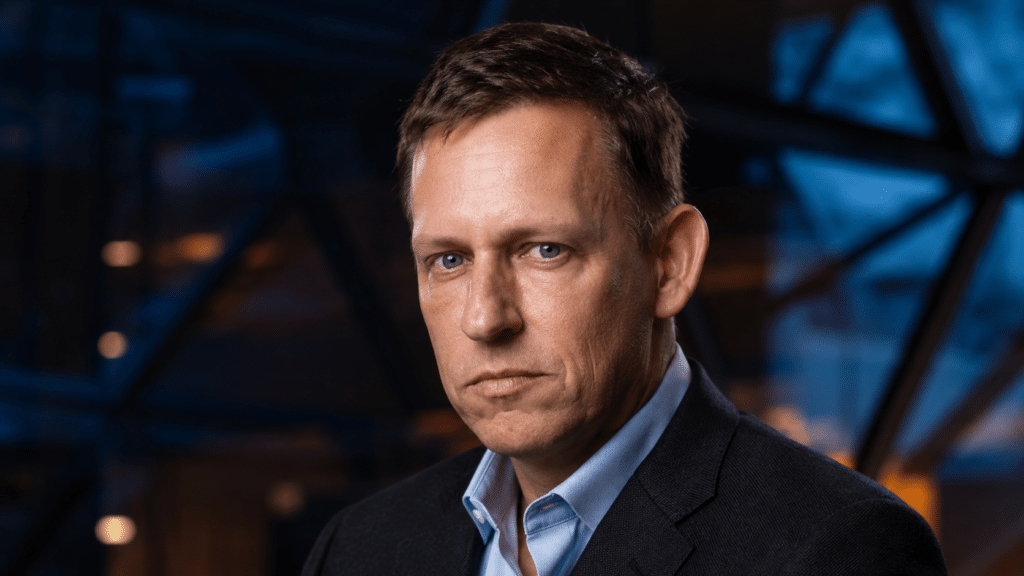
Peter Thiel doesn’t think like most people in Silicon Valley. He’s not chasing market share or trying to beat competitors at their own game.
His whole framework is built on a different premise: that competition is a trap, secrets are the real edge, and the only progress worth making is the kind that creates something genuinely new.
His core argument is simple but cuts against almost everything you’re taught in business school: the best companies don’t compete, they make competition irrelevant.
You’ve probably heard the phrase “zero to one” or seen his name attached to PayPal, Palantir, or an early Facebook check.
But understanding why he made those bets, and what ties them together, requires getting into how he actually thinks about markets, innovation, and power.
What follows is a breakdown of that thinking, starting with why he believes competition destroys value, moving into how he finds opportunities others miss, and ending with the intellectual and political roots behind it all.
Why Thiel Thinks Competition Destroys Value
Thiel’s case against competition runs deeper than “find a niche.” He argues that competitive markets structurally destroy the ability to build anything durable.
The most valuable companies in history got there by escaping competition, not by winning it.
What “Competition Is For Losers” Actually Means
When Thiel told a room of Stanford students that “competition is for losers,” he wasn’t being contrarian for the sake of it.
He was making a structural argument about how markets work.
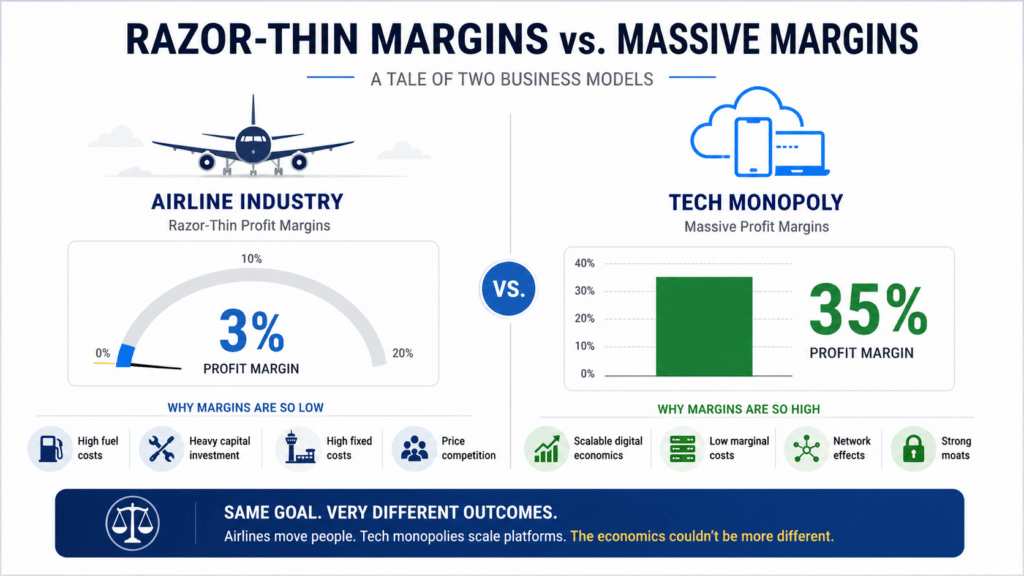
In a perfectly competitive market, prices fall to the cost of production.
That means no profits, no margin for R&D, no ability to take long-term risks. You’re just surviving.
His go-to example is the airline industry. Airlines move hundreds of millions of people every year and generate almost no profit per passenger.
Meanwhile, Google, which routes information, captures enormous margins because it owns its category.
The difference isn’t effort or size. It’s monopoly power.
Why Monopoly Economics Matter More Than Market Size
You might think a bigger market means more opportunity. Thiel flips this.
A huge, competitive market is often a terrible place to be.
Your slice of a massive pie can still be tiny if dozens of companies are fighting for the same customers.
A monopoly, in Thiel’s framework, isn’t a predatory thing.
It’s what happens when you build something so distinctly better or different that comparison shopping stops making sense.
Think of Google Search in 2004. There was no real competitor, so the economics were completely different from, say, running a restaurant.
Thiel’s argument is that capitalism and competition are actually opposites.
The goal of a smart business is to escape the logic of competition entirely.
How To Start With A Tiny Niche And Expand Outward
The practical move, according to Thiel, is to dominate something small first.
Amazon didn’t start by trying to be “the everything store.” It started with books, which was a specific, well-defined category where it could build operational systems and customer trust before expanding.
Founders Fund, the venture capital firm Thiel co-founded, looks for this same pattern in startups.
Companies like Airbnb, Stripe, and LinkedIn each started in narrow contexts before growing into broader platforms.
The monopoly came first in a small pond, and then the pond got bigger.
You’re not trying to win a war. You’re trying to pick a fight so small and specific that no one else bothers to show up.
The Contrarian Truth And The Search For Secrets
Thiel’s framework for finding good businesses is built on a single, uncomfortable idea: if everyone already thinks something is a good opportunity, it’s probably too late.
The real edge lives in beliefs that most people reject or haven’t considered yet.
The Famous Interview Question And What It Reveals
Thiel is known for asking one question in interviews: “What important truth do very few people agree with you on?“
It sounds philosophical, but it’s actually a business filter.
A good answer, as explained in his Zero to One framework co-developed with Blake Masters, is a belief that’s both unpopular and actually true.
Not just edgy or contrarian for its own sake, but genuinely correct in a way that most people haven’t caught up to yet.
The answers that fail are the ones that feel controversial but are actually mainstream.
“The education system is broken” sounds bold but almost everyone says it. There’s no edge there.
Why Consensus Markets Are Usually Crowded Markets
If a market opportunity is widely recognized, it’s already being pursued.
Venture capital, startup culture, and modern society in general tend to funnel attention toward the same obvious trends at the same time.
Thiel points to a pattern in Silicon Valley where money flows into categories that Wired has declared “the next big thing.”
By the time everyone agrees, the competitive dynamics have usually already set in.
Globalization and modern information flow make this worse, not better, because consensus forms faster and capital moves faster.
The startups that create the most durable value tend to operate in spaces where the dominant reaction from smart people was skepticism, not enthusiasm.
How Founders Turn Hidden Insights Into Strategy
Thiel calls these contrarian truths “secrets.” Not secrets in a conspiratorial sense, but things that are knowable if you look carefully and think independently.
The question he pushes founders to ask is: what do you know about a specific market or technology or human behavior that most people either don’t see or actively disbelieve? Build around that.
That’s where the monopoly starts.
This is why he argues that neoliberalism and the globalization consensus, as a framework for thinking about progress, can actually obscure real opportunities.
The crowd’s map isn’t the territory.
From Zero To One: His Theory Of Real Innovation
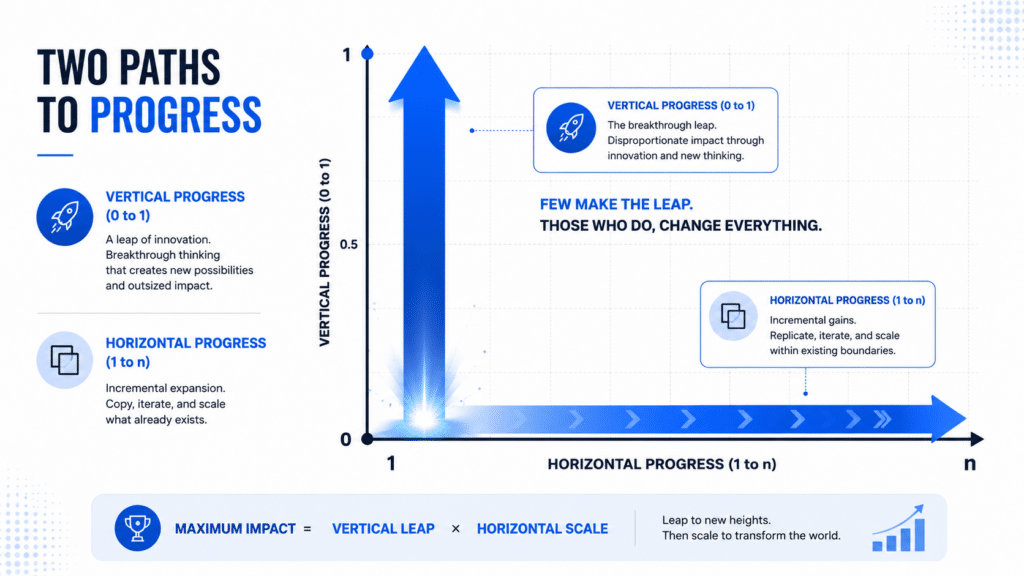
Thiel’s deepest argument about progress is that most of what gets called innovation isn’t innovation at all. It’s repetition with minor edits.
The companies and technologies that actually change the world are doing something structurally different.
Horizontal Progress Vs Vertical Progress
Horizontal progress means copying things that work. You take a business model from one city and replicate it in twenty more.
You build a slightly faster version of an existing product.
This is “one to N” growth, and while it’s useful, it doesn’t move the overall frontier.
Vertical progress means creating something that didn’t exist before. That’s the “zero to one” leap.
It’s what happened when SpaceX built reusable rockets instead of treating rockets as disposable.
It’s what Bitcoin did for digital scarcity.
It’s what early artificial intelligence systems like DeepMind’s AlphaFold did for protein folding.
Thiel’s concern is that most startup culture celebrates horizontal progress while calling it vertical.
Why Thiel Obsessively Returns To Stagnation
Thiel has spent years pointing to what he sees as a slowdown in real innovation, particularly in the physical world.
His famous line, “we wanted flying cars, instead we got 140 characters,” captures the frustration.
He separates atoms from bits: progress in computing and communications has been dramatic, but progress in energy, transportation, medicine, and materials has been sluggish.
He’s argued this stagnation started in the 1970s and that modern society hasn’t fully reckoned with it.
His view on what he calls Peter Thiel on stagnation is that we’ve been measuring the wrong things and celebrating the wrong wins.
What Definite Plans Mean For Builders And Investors
Thiel separates optimists from pessimists, but he also separates definite from indefinite thinkers.
A definite optimist, in his framework, has a specific plan for the future and executes against it.
Bill Gates had a specific vision for a PC on every desk. Elon Musk has a specific architecture for getting to Mars.
Indefinite optimism, by contrast, is just vibes.
It’s trusting that things will work out without having a clear thesis.
Thiel thinks a lot of Silicon Valley venture capital operates this way, placing diversified bets without a real point of view on what should exist.
If you’re building or investing, his challenge is to have a definite theory about why your thing matters.
How His Ideas Show Up In Companies And Investments
Thiel’s philosophy isn’t just theoretical.
You can trace it directly through the companies he built, backed, and influenced, each one reflecting a distinct piece of his thinking about monopoly, founder control, and the relationship between technology and power.
PayPal And The PayPal Mafia As A Founding Template
PayPal, which Thiel co-founded with Max Levchin and others, was the first real proof of his ideas in practice.
The company built a payment network with strong network effects that made switching costs extremely high. That’s monopoly logic applied to a specific problem: digital money movement.
What came after PayPal is arguably more significant.
The alumni network, now called the PayPal Mafia, went on to found or fund LinkedIn, YouTube, Yelp, and dozens of other companies.
Thiel treated PayPal as a template, not just for a business, but for a kind of tight-knit, high-conviction founding culture that he’d replicate through Founders Fund and Thiel Capital.
Palantir And The Business Of Software, Data, And State Power
Palantir Technologies, co-founded by Thiel with backing from In-Q-Tel (a CIA-linked fund), is where his ideas about technology and state power get most visible.
The company builds data analysis software for governments, military agencies, and large enterprises.
Critics raise real concerns about surveillance tech, facial recognition, and the concentration of data power in a company with minimal democratic accountability.
Thiel has never been apologetic about the mission. His view is that Western institutions need better data infrastructure to function effectively, and that Palantir provides it.
Whether you agree or not, it’s a direct expression of his belief that powerful, monopolistic technology platforms serve a function that market competition can’t.
Facebook And The Founder-Control Model
Thiel’s early investment in Facebook, made when he was running Clarium Capital and writing checks out of his own account, reflected his thesis about founder-led companies. He’s consistently argued that Mark Zuckerberg’s control over Facebook’s governance structure, including his super-voting shares, is a feature rather than a flaw.
The argument connects to his broader skepticism of consensus-driven management.
Companies that optimize for shareholder votes or quarterly earnings tend to make incremental decisions.
Founders with strong convictions and structural control can make long-term bets that a committee never would.
You can see this philosophy embedded in how Stanford Law School’s corporate governance debates have played out, with Thiel firmly on the side of concentrated founder power.
The Intellectual Roots Behind The Business Logic
Thiel’s business philosophy didn’t come from business school.
It came from philosophy, literary theory, and political thought.
His time at Stanford University left a permanent mark on how he thinks, and understanding those influences helps explain why his ideas feel different from standard startup advice.
Stanford, René Girard, And Mimetic Theory
The most significant intellectual influence on Thiel is René Girard, a French literary theorist who spent decades at Stanford University.
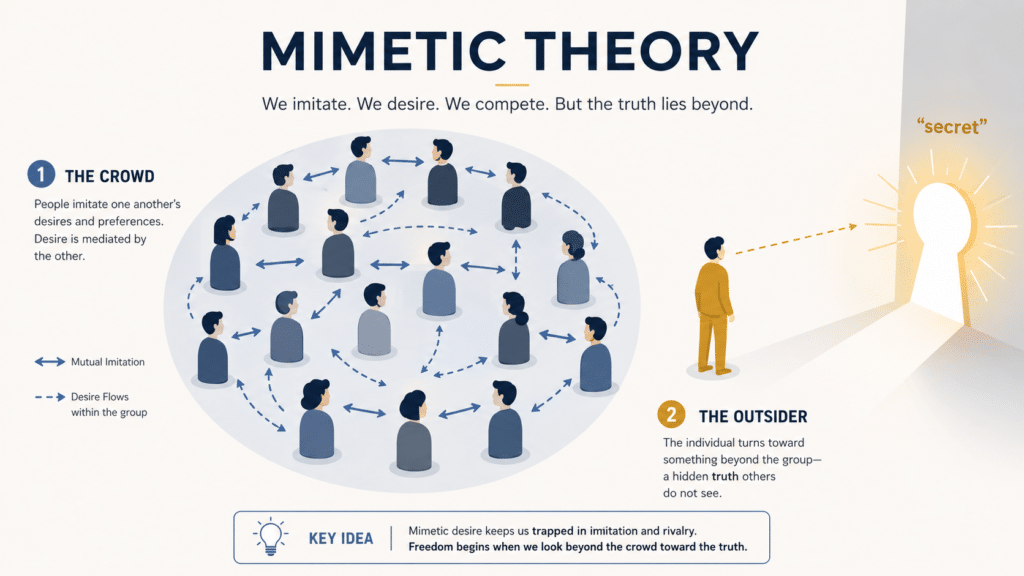
Girard’s big idea is mimetic desire: humans don’t want things because of their intrinsic value, they want them because other people want them.
This is mimesis, imitation as the engine of desire.
Girard argued that mimetic desire leads to rivalry, which escalates into conflict and eventually requires a scapegoat mechanism to release social tension.
His major work, Things Hidden Since the Foundation of the World, traces this pattern through history, literature, and the Bible.
Thiel absorbed all of it.
He’s cited Girard as one of the most important thinkers he encountered at Stanford, and mimetic theory runs through almost everything he writes.
His critique of competition isn’t just economic.
It’s that competition is a mimetic trap, people fight over things because others want them, not because they’re actually worth fighting for.
Leo Strauss, Nietzsche, And Elite Leadership
Alongside Girard, Thiel has engaged seriously with Leo Strauss, the political philosopher known for his reading of esoteric writing and his concept of the “noble lie.”
Strauss believed that certain truths were too difficult or dangerous for mass consumption and had to be communicated differently to different audiences.
You can feel that influence in how Thiel talks and writes, often layering ideas for different readers.
He’s also drawn to Nietzsche’s critique of herd mentality and the idea that genuine progress requires individuals willing to break from consensus.
Ayn Rand’s Randian individualism is a rougher version of a similar idea, and while Thiel is more sophisticated than Rand, the underlying structure overlaps.
He’s written at Cato Unbound and engaged publicly with libertarian frameworks, though his thinking has evolved well beyond classical libertarianism.
How Mimesis Shapes Thiel’s View Of Markets And Conflict
Mimetic theory gives Thiel a way to explain why markets become competitive in the first place.
If desire is imitative, then everyone ends up wanting the same things, entering the same industries, copying the same strategies.
The result is the crowded, low-margin competitive markets he warns against.
His solution, finding secrets and building monopolies in non-obvious spaces, is partly an escape from mimetic competition.
If you’re building something that others haven’t thought to desire yet, you’re not in the imitation game.
This is why Thiel pushes so hard against following consensus signals.
The market for mimicry is always oversupplied.
Where The Philosophy Becomes Political And Contested
Thiel’s business thinking doesn’t stay in the boardroom.
Over the past decade especially, his philosophy has moved into politics in ways that have generated real controversy.
His financial backing of political figures, his skepticism of democracy, and his connections to the broader “New Right” are now impossible to separate from how people evaluate his ideas.
Libertarian Skepticism Of Democracy
Thiel has been explicit, particularly in a 2009 essay published at Cato Unbound, that he no longer believes freedom and democracy are compatible.
He wrote that expanding the voter franchise, particularly to women and people on welfare, had made libertarian politics increasingly difficult.
His political theology framework, influenced by Carl Schmitt’s Political Theology, treats sovereignty as inherently about the exception, the capacity to decide in moments of crisis, not consensus-building.
He’s engaged seriously with Christian eschatology, including concepts like the katechon (the force that restrains the Antichrist in biblical theology) and how they map onto political philosophy.
As reported in The Guardian, his off-the-record lectures have framed modern institutions through an apocalyptic lens drawn from the Bible and, surprisingly, The Lord of the Rings.
From Tech Elites To The New Right
Thiel’s move from libertarianism to what critics call the “dark enlightenment” or New Right isn’t a sharp break.
It’s an evolution.
He bankrolled J.D. Vance’s Senate campaign, backed Blake Masters’s Arizona run, and was a visible presence at Donald Trump’s 2016 Republican National Convention.
His connections to conservative politics have made him a central figure in debates about how tech billionaires are reshaping American political institutions.
The Intercept, Politico, and New York Magazine have all run major investigations into his political network.
Critics point to the Hoover Institution, his funding relationships with figures adjacent to the Trump administration, and questions about his relationship with Jeffrey Epstein as evidence of a troubling pattern.
Supporters like Marc Andreessen frame it differently, as a legitimate critique of institutional decay.
The Debate Over Control, Global Governance, And Accountability
One of the sharpest debates around Thiel concerns global governance and what he sees as a dangerous drift toward one-world state structures or world government models.
He’s skeptical of international bodies, climate change frameworks, and figures like Greta Thunberg, viewing them as expressions of indefinite, consensus-driven thinking.
His concern about nuclear war, the ICC, and global institutions reflects a consistent preference for national sovereignty and strong individual actors over multilateral systems.
Critics argue this position, when combined with his investments in surveillance tech and Palantir’s government contracts, represents a concentration of unaccountable power.
The Thiel Foundation and the Thiel Fellowship, which pays young people to skip college, reveal a philanthropic vision that explicitly bypasses existing institutions.
He declined to sign the Giving Pledge, which he sees as another form of elite consensus management.
The tension between his stated opposition to concentrated power and the actual power he’s accumulated is something thinkers like Eliezer Yudkowsky have noted in discussions about AI risk and tech governance.
Frequently Asked Questions
What thinkers and books have shaped his worldview the most?
René Girard’s mimetic theory, Leo Strauss’s political philosophy, and Carl Schmitt’s Political Theology are the three most cited intellectual influences. His own book Zero to One, co-written with Blake Masters, is also the clearest distillation of his business framework.
How has his way of thinking influenced Silicon Valley and startup culture?
His monopoly-first framework, the “competition is for losers” idea, and the emphasis on finding contrarian “secrets” have become standard vocabulary in venture capital and startup culture. Y Combinator and many founders explicitly reference his Zero to One framework when pitching or evaluating businesses.
What did he study in college, and did he actually get a philosophy degree?
Yes. Thiel earned a Bachelor of Arts in Philosophy from Stanford University in 1989, then went on to earn a Juris Doctor from Stanford Law School in 1992. His philosophical training is real and directly shapes how he approaches business and politics.
What are his main political views, and how have they changed over time?
He started as a classical libertarian, then moved toward a more authoritarian-adjacent New Right position over time. His 2009 Cato Unbound essay marked a public turn, and his support for Donald Trump and J.D. Vance cemented his place in conservative politics well outside mainstream libertarianism.
Why do people on Reddit argue so much about him, what are the biggest criticisms and defenses?
Critics point to his Palantir surveillance contracts, his anti-democracy statements, his funding of Gawker’s lawsuit, and his political backing of far-right candidates. Defenders argue he’s one of the few public figures willing to challenge institutional consensus honestly, and that his business ideas have genuine intellectual merit regardless of his politics.
Did he ever teach or work as a philosophy professor, or is that just a rumor?
He’s not a philosophy professor and has never held an academic teaching position. He did teach a Stanford class on startups, which was transcribed and later became the basis for Zero to One. His reputation as a philosophical thinker comes from his writing and public speaking, not academia.
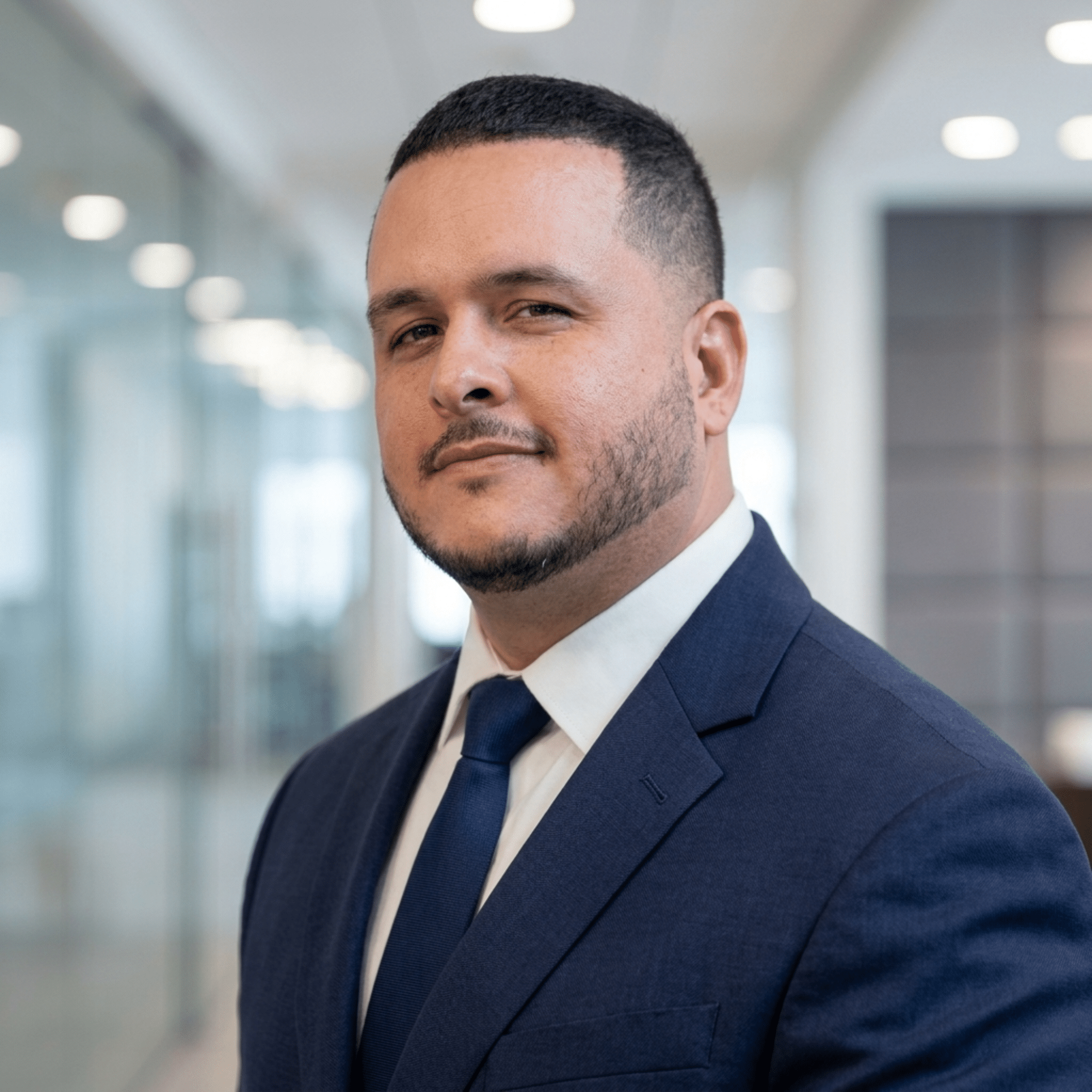
I spent years working in tech and digital publishing, where I saw how quickly industries, brands, and consumer behavior can change. I created Rich Digest to explore the business behind luxury, from iconic products and influential founders to pricing, scarcity, ownership, and brand strategy. My goal is to make the world of luxury business clear, interesting, and easy to understand.