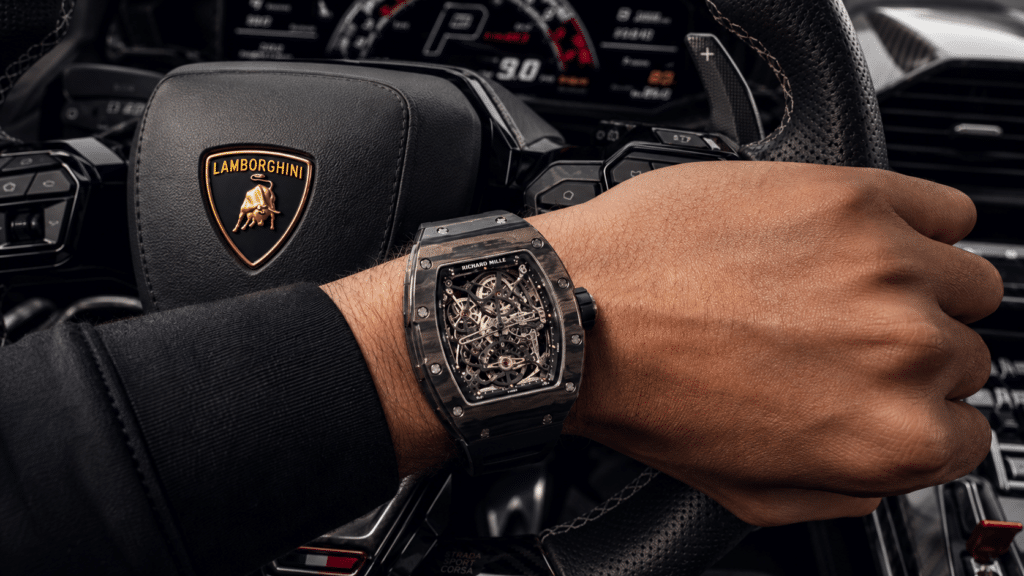
Richard Mille watches are expensive because of three core factors: extremely limited production runs, the use of cutting-edge aerospace-grade materials, and a deliberate strategy to position the brand as the ultimate status symbol for the ultra-wealthy.
If you’re trying to understand why a Richard Mille can cost anywhere from $120,000 to over $3 million, the answer sits at the crossroads of material science, intentional scarcity, and some of the smartest luxury brand-building in modern history.
Founded in 2001, Richard Mille entered a watch market already crowded with centuries-old Swiss names.
Rather than compete on heritage, the brand built an entirely new category rooted in Formula 1 engineering philosophy, exotic composites, and sky-high prices that were the whole point.
The price wasn’t a side effect.
It was the product.
Today, Richard Mille produces roughly 5,300 pieces per year, a fraction of what Rolex or Patek Philippe output annually.
That controlled scarcity, paired with high-profile wrists and six-figure minimums, has turned the brand into what insiders call a “billionaire’s handshake.”
Wearing one signals membership in a very small club.
How Richard Mille Built Pricing Power Fast
Richard Mille didn’t inherit centuries of Swiss watchmaking credibility.
Instead, the brand built pricing power from scratch through a calculated mix of radical design, athlete partnerships, and price points that made competitors look affordable.
The strategy worked because it redefined what luxury watch pricing was supposed to signal.
Creating A New Luxury Category Without Old-School Heritage
Most top-tier watch brands lean on their founding dates.
Patek Philippe was founded in 1839.
Vacheron Constantin traces its roots to 1755.
Richard Mille launched in 2001, which in haute horlogerie terms is practically yesterday.
Rather than apologize for that, the brand used it.
Richard Mille positioned itself as the anti-heritage brand.
No ornate gold cases.
No dress-watch formality.
The pitch was pure performance engineering, closer to aerospace than antique craft.
As noted in one brand analysis, Richard Mille’s approach was rooted in disruption rather than tradition.
That disruption became the brand identity.
Young money, athlete money, and tech-billionaire money responded immediately.
Swiss watchmaking had never seen anything quite like it.
Why Extreme Pricing Works As A Brand Filter
Pricing a watch at $150,000 minimum isn’t just about covering costs.
It’s a filter.
When the entry price is that high, the buyer pool shrinks to a very specific group.
And that exclusivity is the product itself.
The term “billionaire’s handshake” exists because spotting a Richard Mille on someone’s wrist tells you something specific about their net worth and their desire to broadcast it.
A Richard Mille signals a different tier entirely.
This is a deliberate positioning strategy.
The brand never needed mass-market appeal.
It needed a small group of extremely wealthy buyers to treat the watch as the ultimate membership badge.
How Richard Mille Compares With Rolex, Patek Philippe, And Audemars Piguet
To understand Richard Mille pricing, it helps to map it against the broader luxury watch market.
| Brand | Entry-Level Retail Price (Approx.) | Annual Production (Approx.) |
|---|---|---|
| Seiko | Under $500 | Millions |
| Longines | $1,000 – $3,000 | Hundreds of thousands |
| Omega | $5,000 – $15,000 | 700,000+ |
| Rolex | $7,000 – $40,000+ | 800,000+ |
| Audemars Piguet | $25,000 – $100,000+ | ~40,000 |
| Patek Philippe | $20,000 – $1M+ | ~62,000 |
| Vacheron Constantin | $20,000 – $500,000+ | ~20,000 |
| Richard Mille | $120,000 – $3M+ | ~5,300 |
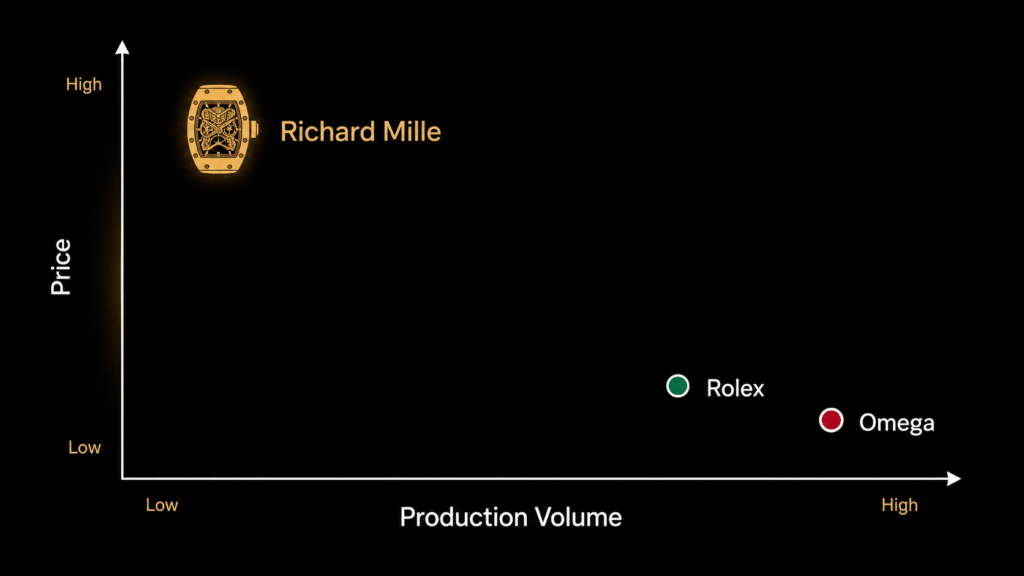
Richard Mille sits at the extreme end on both axes: the highest prices and the lowest production.
Compared to even Patek Philippe, which has genuine centuries of high watchmaking credibility behind it, Richard Mille’s volumes are tiny.
That’s not an accident.
It’s the business model.
The Cost Drivers Inside The Product
There are real, tangible reasons these watches cost what they cost.
The materials are genuinely exotic, the movement engineering is complex, and production is slow.
Each watch takes anywhere from 12 to 18 months to complete, depending on complexity.
Why Carbon TPT, Quartz TPT, And Ceramic Composites Cost So Much
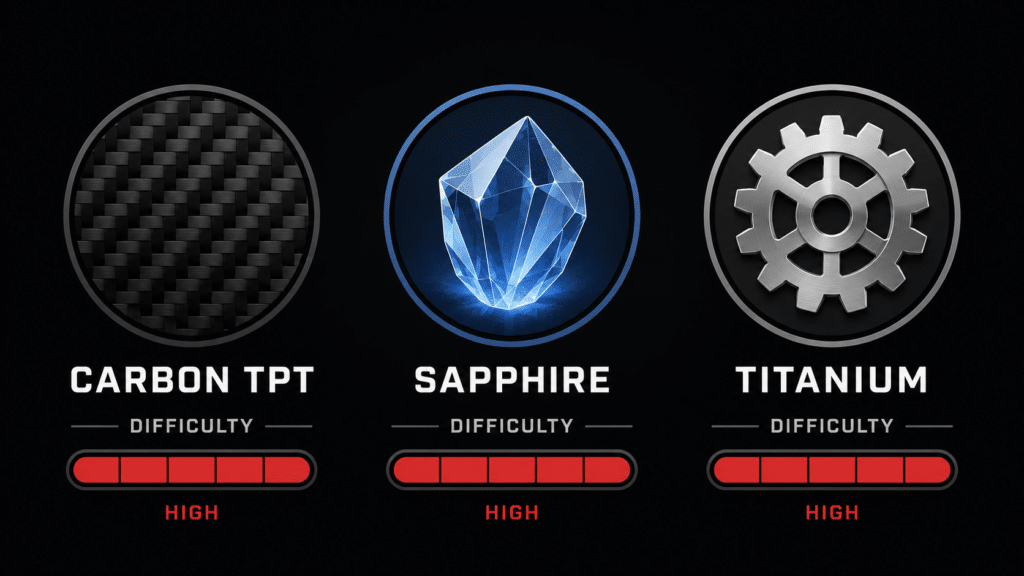
Carbon TPT® is one of Richard Mille’s signature materials.
It’s made by layering carbon fiber filaments at alternating 45-degree angles, then compressing them under heat and pressure.
The result is a composite with an irregular, almost marbled texture that varies from piece to piece.
NTPT® produces this material, and each case requires hours of machining and finishing.
Quartz TPT works on the same thin ply technology principle but uses silica filaments instead.
Both materials are lighter than titanium and stronger than most metals at the same weight.
They’re also brutally expensive to source and machine at this level of precision.
Ceramic composites add another layer of cost.
These materials resist scratching, handle temperature swings well, and require diamond-tipped tools just to cut.
You can’t rush any of it.
Case Engineering From Grade 5 Titanium To Sapphire Crystal Cases
When Richard Mille doesn’t use carbon TPT or ceramic, the brand often turns to Grade 5 titanium.
It’s the same alloy used in aerospace and medical implants: strong, light, and corrosion-resistant.
Machining it is slow and hard on cutting tools.
Then there are sapphire crystal cases.
The RM 56-02 is one of the most extreme examples, featuring a case made almost entirely from sapphire crystal.
Sapphire rates 9 on the Mohs hardness scale, just below diamond.
Cutting and polishing it into a tonneau-shaped case that fits watch components precisely requires specialized equipment and weeks of careful work.
That difficulty directly inflates the price.
Skeletonized Calibers, Tourbillons, And Specialist Movement Partners
Richard Mille’s skeletonized movements remove as much material as possible from the movement bridges and plates, leaving the internal mechanics fully visible.
This looks spectacular, but it also requires each remaining component to be individually hand-finished because you can see everything.
Complications push costs further.
A tourbillon adds a rotating cage to offset gravity’s effect on the movement.
A split-seconds chronograph requires a second independent seconds hand that can lap the first.
Both are extraordinarily difficult to engineer and assemble.
Early in the brand’s history, Richard Mille worked with specialists including Renaud et Papi for movement design.
As the brand grew, it brought more manufacturing in-house, with around 80% of production now handled internally, including partnerships with Vaucher Manufacture Fleurier.
That vertical integration adds cost upfront but gives the brand tighter control over quality and supply.
Scarcity, Hype, And Market Demand
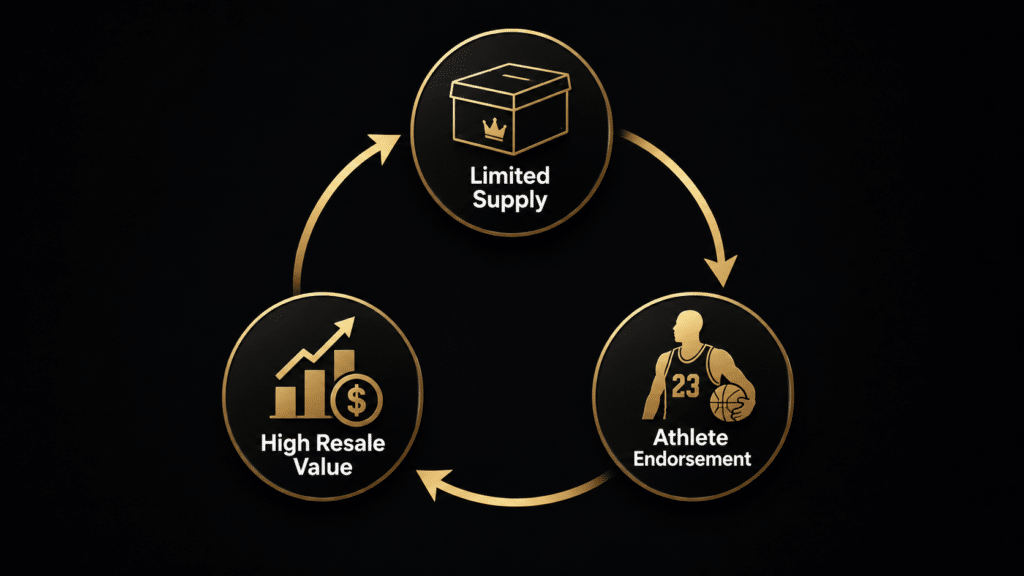
The engineering justifies a high price.
The scarcity justifies an extreme one.
Richard Mille’s tight production numbers and carefully chosen celebrity partners create a demand loop that keeps waiting lists long and resale prices high.
Limited Editions, Limited Supply, And Waiting-List Economics
With roughly 5,300 watches per year across all models, Richard Mille produces far fewer watches than nearly any comparable brand.
Limited editions shrink that number further.
Some models are released in editions of ten, five, or even one.
When demand exceeds supply at this scale, waiting lists form quickly.
Retailers allocate pieces to their best clients.
First-time buyers often can’t get access at all.
That friction becomes part of the brand’s appeal.
If you can actually get one at retail, that’s a signal on its own.
How Celebrity Endorsements Turn Watches Into Cultural Signals
Richard Mille’s celebrity partnerships aren’t just marketing.
They’re product tests and cultural positioning tools at the same time.
Rafael Nadal famously wore his Richard Mille while playing full Grand Slam matches, proving the watches could survive extreme athletic stress.
Felipe Massa wore his during Formula 1 races.
Bubba Watson wore his on the PGA Tour.
These aren’t paid actors in commercials.
They’re elite performers wearing the watches under real competitive pressure.
That association builds the “racing machines on the wrist” narrative that Richard Mille cultivates.
Musicians and entertainers like Pharrell Williams and Jay-Z added a second cultural layer.
Jackie Chan extended the brand’s reach into Asian markets.
Each endorsement reinforces the message that this watch belongs in rooms most people never enter.
Why Pre-Owned Prices Can Outrun Retail
Because retail access is so restricted, the pre-owned collection for Richard Mille watches often trades at or above original retail prices.
Some models, particularly limited editions tied to specific athletes or events, command significant premiums on the secondary market.
This is the opposite of most consumer goods, which lose value the moment you buy them.
A Richard Mille can appreciate, which turns the watch into both a status symbol and a financial asset.
That dynamic further fuels demand from buyers who see the purchase as a store of value rather than pure consumption.
Which Models Best Explain The Premium
Looking at specific Richard Mille models makes the pricing logic much easier to follow.
Some models exist to push technical limits.
Others anchor the brand in the mid-tier of its own range.
Each price tier reveals something about what the brand prioritizes.
The RM 27 Series And The Sports-Performance Story
The RM 27 series is Richard Mille’s most direct expression of sports-performance engineering. The RM 27-03 was developed with Rafael Nadal and built to withstand up to 10,000 g-forces.
Tourbillon inside. Weight around 19 grams total.
The case uses a cable-suspended movement, meaning the caliber floats on braided carbon nano-tubes rather than sitting on a solid plate.
The RM 27-04 pushed further. Same Nadal connection, same tonneau case philosophy, different material approach.
These aren’t watches designed for boardrooms. They’re designed to survive professional tennis at the highest level while still functioning as mechanical marvels.
Retail prices for the RM 27 series land well above $700,000. The engineering story justifies every dollar of that premium for the collector who wants to own the intersection of horology and athletics.
Why The RM 56 Family Reached The Top End Of The Market
The RM 56-01 and RM 56-02 tourbillon sapphire represent the absolute ceiling of what Richard Mille does.
The case is sapphire crystal, machined from solid blocks, allowing a completely unobstructed view of the movement from every angle. The RM 56-02 retailed for approximately $2 million.
Machining sapphire at this scale is extraordinarily difficult. The material is second only to diamond in hardness.
Creating a watch case from it, then fitting a tourbillon movement inside, requires precision tolerances that take weeks to achieve.
The result is one of the most visually arresting objects in the entire luxury watch market.
Production numbers are extremely small, and pieces rarely surface in the pre-owned market.
When they do, prices reflect that scarcity sharply.
What Richard Mille Models Reveal About Price Tiers
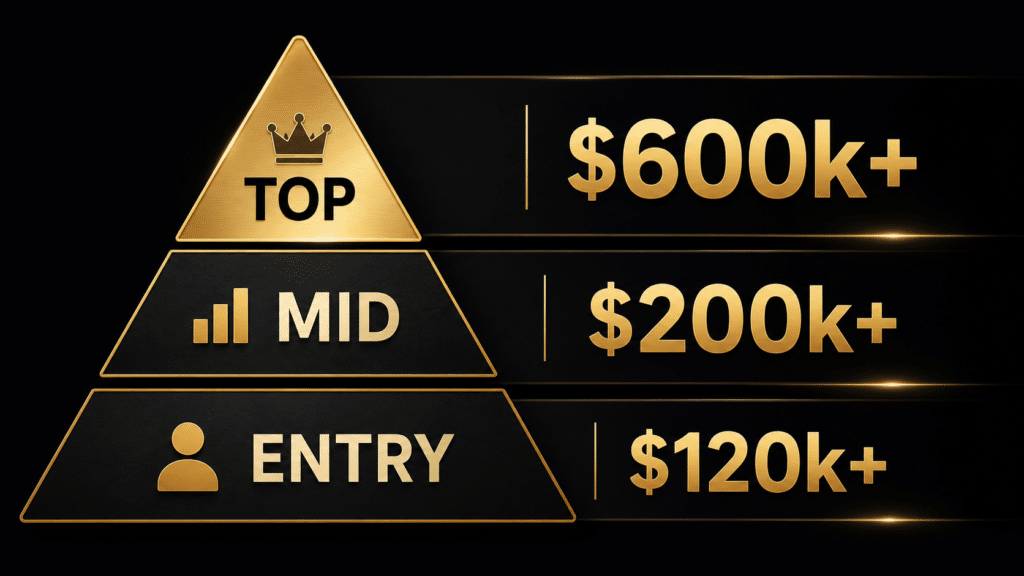
Richard Mille’s model lineup effectively creates three tiers within its own already-expensive range.
- Entry tier (~$120,000 – $200,000): Models like the RM 35-02, developed with Rafael Nadal as a more accessible sports watch, use carbon TPT cases and in-house automatic movements.
Still exotic. Still extremely limited compared to Swiss competitors.
- Mid tier (~$200,000 – $600,000): Models like the RM 11-03 flyback chronograph sit here.
More complex movements, often with annual calendar or GMT complications, in a range of exotic case materials.
- Top tier ($600,000 and above): The RM 27 series, RM 56 family, and one-off commissions live here.
These exist to demonstrate the outer limits of what’s technically possible at the wrist, and their prices reflect that ambition directly.
Understanding these tiers helps explain why the brand retains coherence across such a wide price range.
Every model, from the most accessible to the most outrageous, delivers on the same core promise of exquisite timepieces built on aerospace-grade engineering and deliberate exclusivity.

I spent years working in tech and digital publishing, where I saw how quickly industries, brands, and consumer behavior can change. I created Rich Digest to explore the business behind luxury, from iconic products and influential founders to pricing, scarcity, ownership, and brand strategy. My goal is to make the world of luxury business clear, interesting, and easy to understand.