Tesla’s mission statement has always been a business tool as much as a values statement. It shapes who applies for jobs, who buys the cars, and how much forgiveness the brand gets when things go wrong.
That is not an accident.
The way a company frames its purpose can create real competitive advantages. Tesla is one of the clearest examples of that playing out at scale.
Right now, Tesla sits at an interesting inflection point. The official mission wording is shifting, the product lineup is expanding into AI and robotics, and the original “sustainable energy” language is fading from the front page.
If you are trying to understand Tesla as a business, you need to understand what that shift means and what it does not mean.
This piece walks through the Tesla mission and vision as a business case study. You will see how the mission works as a recruiting engine, a customer loyalty tool, and a product strategy signal.
What Tesla Says Now And Why It Changed
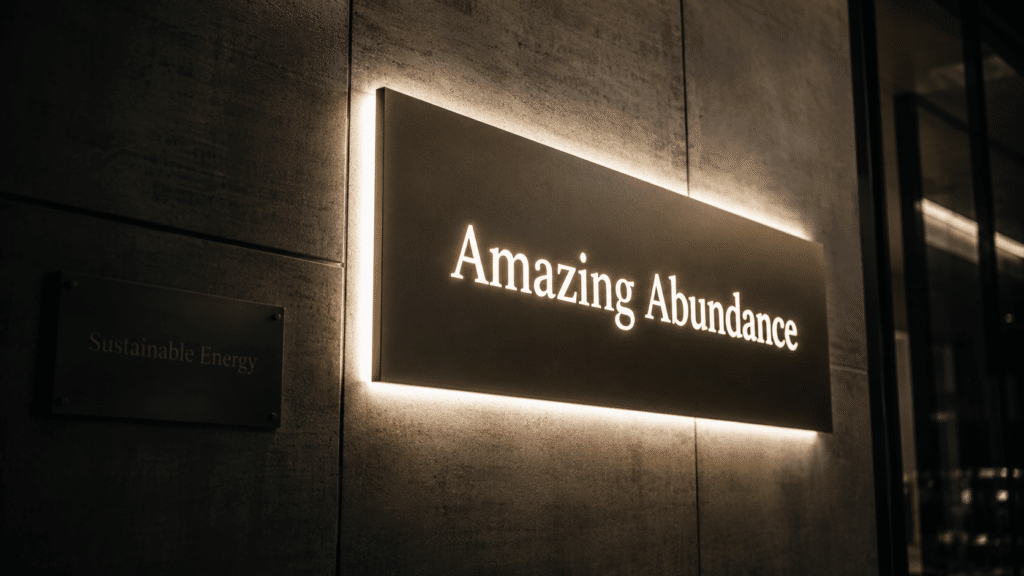
Tesla’s messaging has gone through at least two distinct phases. The older mission, centered on sustainable energy, defined the brand for over a decade.
Now, Elon Musk is steering toward a broader frame built around abundance and AI.
The 2026 Shift To Amazing Abundance
In late 2025, Elon Musk signaled a change in Tesla’s core mission wording. Instead of “to accelerate the world’s transition to sustainable energy,” the new framing points toward a goal to build a world of amazing abundance.
Musk described the new language as more “joyful.” The word “sustainable” was quietly dropped.
According to reporting on the change, critics noted the shift moves Tesla’s stated purpose away from environmental goals and toward economic and technological abundance driven by AI and robotics.
This is not just a messaging tweak. It reflects where Tesla is actually spending money, including a pledged $20 billion transformation from an EV maker into an AI company.
How The Older Sustainable Energy Mission Still Shapes Perception
Even with the language changing, the older mission still carries real weight. Millions of existing Tesla owners bought in under the sustainable energy frame.
Their loyalty, their referrals, and their identity as Tesla drivers is tied to that original story. The tesla.com/about page still describes a world powered by solar energy, running on batteries, and transported by electric vehicles.
That framing did not vanish overnight. The older mission created a customer base that sees Tesla as a cause, not just a product.
That emotional connection does not reset because a press release changed the wording.
Where The Vision Statement Still Fits
Tesla’s corporate vision, “to create the most compelling car company of the 21st century by driving the world’s transition to electric vehicles,” has stayed relatively stable even as the mission language shifted.
The tesla vision statement is outward-facing and aspirational. It tells the world what Tesla is building toward.
The mission is the internal operating principle that tells employees and customers why they do it. Right now, there is visible tension between the two.
The vision says “car company,” but Tesla’s actual investments say “AI and robotics platform.” That gap is worth watching.
Why The Mission Works As A Talent Magnet
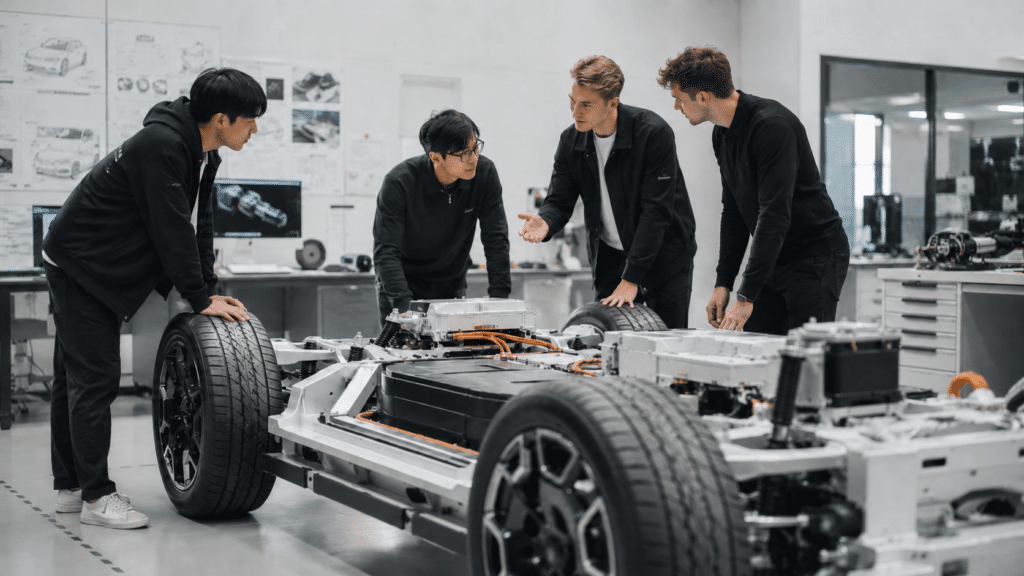
Tesla’s ability to attract engineers, designers, and operators from competitors like Ford and General Motors is not purely about salary. It is about what the mission signals to people who want their work to matter.
The combination of ambitious goals and a culture built around ownership thinking creates a pull that few legacy automakers can match.
Why Top Engineers Choose Tesla Over Legacy Automakers
When a candidate is choosing between Tesla and a traditional automaker, the mission is part of the pitch from the very first interview. Tesla’s core values include doing the impossible, taking risks, constant learning, and thinking like owners.
Those are not just wall-poster phrases. They set an expectation for the pace and the stakes of the work.
For engineers who want to work on problems that have not been solved yet, Tesla’s vertical integration model means they are working across battery chemistry, software, manufacturing, and hardware simultaneously.
At Ford or General Motors, those functions are often siloed or outsourced. The mission gives talented people a reason to accept the tradeoffs, long hours, aggressive timelines, and high pressure.
How Mission Supports Retention And Ownership Thinking
Tesla explicitly asks employees to think like owners. That framing connects back directly to the mission.
If you believe the company is doing something that matters, you are more likely to act like a stakeholder rather than a contractor. This shows up in Tesla’s business model in a practical way.
Tesla, Inc. generates significantly more revenue per employee than traditional automakers, partly because the culture attracts people willing to operate with fewer resources and more autonomy.
The Cultural Tradeoff Behind The Pitch
The mission-driven pitch has a real cost. Tesla’s culture is demanding, and not everyone stays.
The same intensity that attracts high performers also produces burnout and high turnover in some roles. You should understand this tradeoff if you are using Tesla as a model for your own business.
A mission can attract talent, but it has to be backed by actual work that matches the promise. If the work feels disconnected from the stated mission, the mission becomes a liability rather than an asset.
How Mission Turned Buyers Into Evangelists
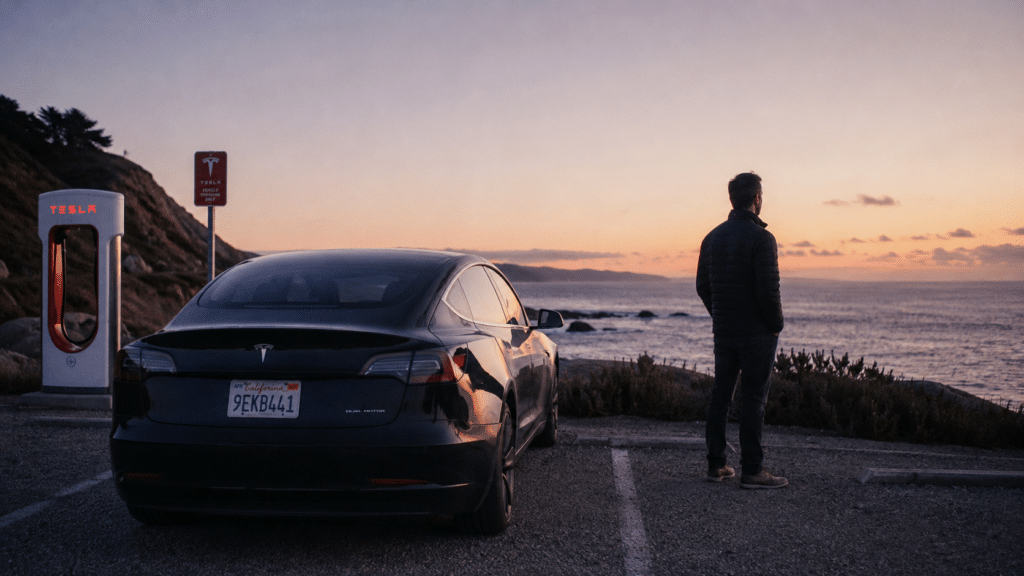
Tesla never ran traditional advertising campaigns the way Ford or General Motors did. Instead, the brand built a customer base that promoted the cars on its behalf.
That did not happen by accident. The mission created buyers who felt like participants in something larger than a car purchase.
The product then gave them something worth talking about.
Why Early Customers Accepted Rough Edges
The early Tesla Roadster and Model S had quality issues that would have sunk a brand without mission-driven buyers. Panel gaps, software glitches, and service delays were common complaints.
But early adopters in the electric vehicle market were buying into sustainable transport as an idea, not just a finished product.
When your customers believe they are helping accelerate clean energy adoption, they tolerate friction that would cause mass defections at a traditional brand.
The Forgiveness Factor In Product Launches
The forgiveness factor applied across multiple vehicle launches, from Model 3 production delays to early Model X falcon-wing door problems. Tesla’s tesla marketing strategy leaned into transparency from Elon Musk directly, which reinforced the sense that customers were insiders, not just consumers.
The Supercharger network and the Tesla app also gave owners practical, tangible connections to the mission. Every charge at a Supercharger station felt like a demonstration that sustainable transportation was real and working.
How Brand Belief Helped Word Of Mouth Scale
Tesla owners became storytellers. They posted on forums, gave strangers test rides, and defended the brand online.
This behavior is consistent with mission-driven brand evangelism, where the customer sees themselves as an advocate for the cause, not just a buyer. The Tesla Semi, Model Y, and ongoing software updates gave those advocates fresh material to share.
Vehicle deliveries became public proof that the mission was advancing, which kept the story alive without paid media.
How The Strategy Shows Up In Tesla’s Products
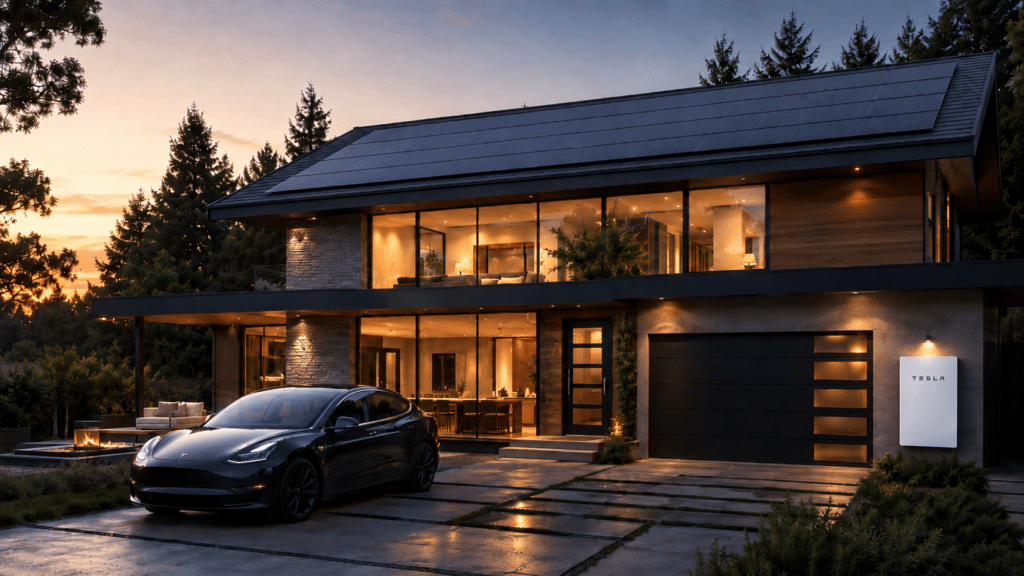
Tesla’s product lineup is not a random collection of vehicles and gadgets. Each category connects back to a core idea: building a complete energy ecosystem that replaces fossil fuels.
The cars are the most visible piece, but the energy and software layers are what make the strategy coherent over time.
Cars As Proof Of The Vision
Every Tesla vehicle, from the original Roadster to the Model 3, Model Y, and beyond, served as a live demonstration that electric cars could outperform gasoline alternatives. The cars were not just products. They were evidence.
Elon Musk’s original master plan described starting with a high-priced sports car, then using that success to fund a premium sedan, then a mass-market vehicle.
Each step was designed to prove the mission was achievable, not just aspirational.
Energy Products As Mission Expansion
The Powerwall, Megapack, solar panels, and Solar Roof are not side projects. They are what makes the tesla mission coherent beyond transportation.
If the goal is to build a world powered by renewable energy, then energy generation and energy storage solutions are just as central as electric vehicles. The Megapack utility storage product in particular positions Tesla directly in the grid-scale energy market, well outside the automotive lane.
Energy storage deployed by Tesla has scaled significantly, and that growth line matters for anyone evaluating whether Tesla is actually an energy company or just an automaker that sells batteries on the side.
Software And Hardware Working As One System
Over-the-air updates are the clearest expression of Tesla’s mission in product form. A car that improves after you buy it is a fundamentally different product than a traditional vehicle.
This software layer ties the entire ecosystem together. The Tesla app connects your car, your home energy system, and your Supercharger access in one place.
Gigafactories produce the battery packs and vehicles at scale, but the software layer is what keeps customers engaged long after the purchase.
AI, Autonomy, And The New Story Tesla Is Selling
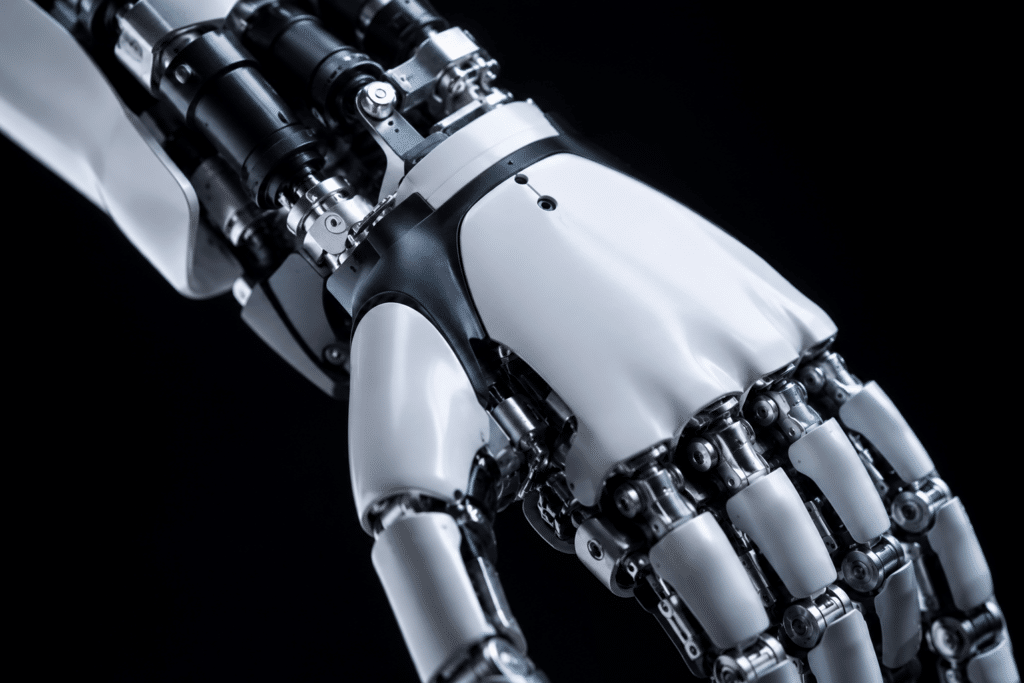
Tesla’s current narrative has shifted meaningfully toward artificial intelligence, autonomous driving, and humanoid robotics. This is not just a product announcement.
It represents a deliberate effort to reposition Tesla as an AI company that happens to make vehicles, rather than an automaker that uses software. The tension in that repositioning is real and worth examining clearly.
From Full Self-Driving To Robotaxi
Full Self-Driving has been a promise in progress for years.
The tesla ai stack is built on real-world driving data collected from the fleet. This underpins Tesla’s claim that it can eventually deploy a robotaxi network at scale.
The robotaxi network is positioned as a future revenue stream that could eventually exceed vehicle sales.
This puts Tesla in direct competition with Waymo, which already operates commercial robotaxi services in several U.S. cities.
Why AI Expands The Mission Beyond Cars
The FSD and autonomous driving ambitions connect back to the mission in a specific way.
If you believe transportation should be safer, cleaner, and more efficient, then removing human error from driving is a logical extension of that goal.
The Optimus humanoid robot program pushes the frame even further.
Tesla frames Optimus as a tool for physical labor that could expand human prosperity. This fits into the new “amazing abundance” mission language.
The Risk Of Stretching The Story Too Far
The risk here is credibility.
Tesla built its brand on delivering products that worked. Full self-driving has faced repeated delays.
The robotaxi network has not launched commercially at scale as of May 2026.
As noted by analysts watching the pivot, Tesla may be neglecting its core car business by chasing AI and robotics headlines.
If the new mission story runs ahead of the actual products, it erodes the forgiveness factor that helped the brand survive its early growing pains.
The Real Competitive Advantage For Your Business
Tesla’s mission is not magic.
It is a repeatable strategic tool. If you run a business or are building one, the Tesla case study offers a clear framework for how a well-constructed mission can reduce hiring costs, improve retention, and create customer loyalty that marketing budgets alone cannot buy.
The key is that the mission has to connect to something real in the product or service.
Mission As A Hiring Tool
Tesla’s corporate vision gives candidates a reason to say yes before salary negotiations even begin.
When your mission articulates a problem worth solving, you attract people who have already self-selected around that problem.
For your business, this means the mission statement should answer one question clearly: why does this work matter?
If you can answer that in one sentence, you have a hiring tool. If you cannot, you are competing on compensation alone.
Mission As A Retention Tool
Tesla’s emphasis on thinking like owners, doing the impossible, and constant learning keeps employees engaged beyond the initial excitement of joining.
The tesla business model is built around vertical integration. This means employees see a wider range of work than they would at a more fragmented competitor.
For your business, retention improves when employees feel their work connects to something larger than a quarterly target.
The mission is the bridge between daily tasks and long-term purpose.
Mission As A Brand Loyalty Asset
Tesla’s customer base has shown a level of loyalty that traditional automakers struggle to replicate.
That loyalty is tied directly to the tesla mission and vision because buyers feel they are participating in a movement, not just owning a product.
For your business, brand loyalty built on mission is more durable than loyalty built on price or features, because those can be copied.
A mission that genuinely guides decisions and product choices is harder to replicate.
Frequently Asked Questions
What is Tesla’s mission in plain words?
Tesla’s mission is to speed up the world’s move to sustainable energy, though the language is shifting toward “building a world of amazing abundance” as of 2026. In practice, it means making electric vehicles, solar energy, and battery storage affordable and mainstream. The core idea is replacing fossil fuels with cleaner alternatives at a global scale.
Has Tesla’s mission changed over the years?
Yes. The original mission focused on accelerating sustainable transport through mass-market electric cars. It later broadened to cover sustainable energy as a whole. In late 2025, Elon Musk signaled a shift to language around “amazing abundance,” dropping the word “sustainable” and leaning more toward AI and technology-driven prosperity.
How is Tesla’s mission different from its vision?
The mission describes what Tesla is doing right now and why. The vision, “to create the most compelling car company of the 21st century by driving the world’s transition to electric vehicles,” describes the long-term destination. The mission and vision work together but serve different purposes: mission guides daily decisions, vision sets the aspirational target.
Where can I find an official source for Tesla’s mission statement?
You can read Tesla’s current self-description on the official Tesla About page and review the strategic framing in Master Plan Part 4. These are the most authoritative sources for understanding how Tesla describes its own purpose.
How does Tesla’s mission connect to sustainability goals?
The older mission language connected Tesla directly to climate and energy goals through a focus on sustainable energy and clean transportation. The product lineup, including EVs, Powerwall, Megapack, and solar panels, was designed to reduce global fossil fuel use. The newer “amazing abundance” framing is broader, though the underlying products still serve sustainability outcomes even if that word appears less prominently.
What core values does Tesla focus on to support its mission?
Tesla’s core values include thinking like owners, doing the impossible, taking risks, constant learning, respect, and environmental consciousness. These values attract and retain employees who want to work on hard problems at speed. They also reinforce the mission internally, making it a daily operating principle.

I spent years working in tech and digital publishing, where I saw how quickly industries, brands, and consumer behavior can change. I created Rich Digest to explore the business behind luxury, from iconic products and influential founders to pricing, scarcity, ownership, and brand strategy. My goal is to make the world of luxury business clear, interesting, and easy to understand.