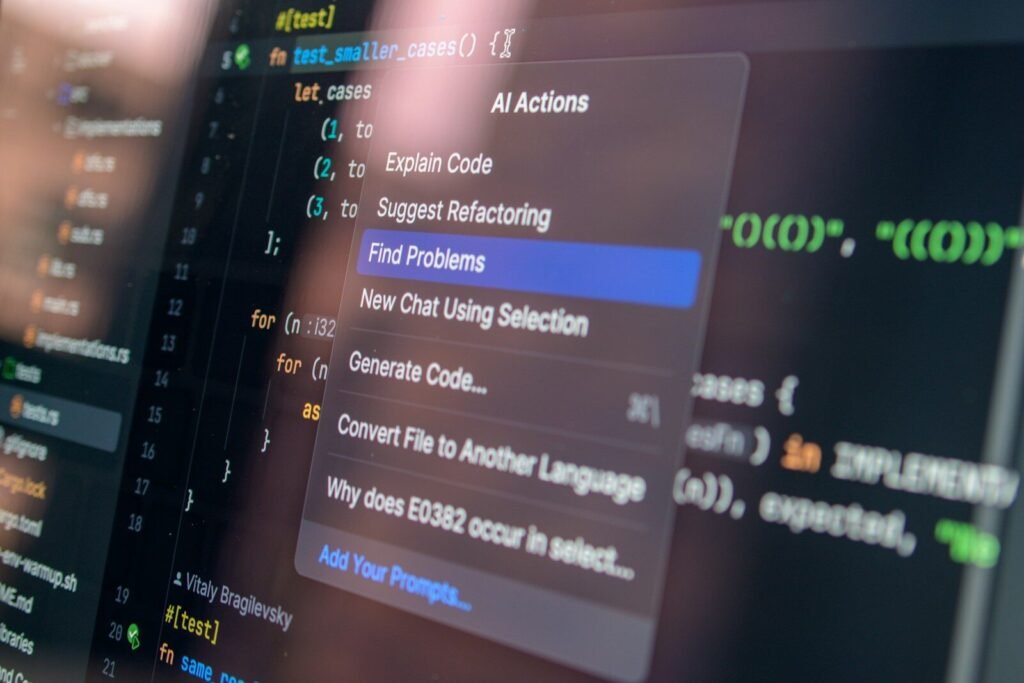
Learning to code with AI is kind of like getting access to a superpower overnight. Suddenly you’ve got answers, examples, and explanations on demand. That’s awesome, but it can also mess with your progress if you use it the wrong way.
A lot of people end up moving fast while learning very little, and that’s a brutal tradeoff.
The goal isn’t to let AI think for you. It’s to use it as a tool that sharpens your own thinking. When you approach it with the right mindset, it can speed up learning instead of short circuiting it.
These ideas aren’t about being anti AI. They’re about learning smarter, building real skills, and not cheating yourself out of growth.
Tutor, Not Crutch
When you’re learning to code with AI, the healthiest way to think about it is like having a tutor, not a magic fix. It’s there to support you, not to do the pushups for you.
I get why it’s tempting to paste in a problem and grab the answer. Quick win, dopamine hit, moving on. But if you keep doing that, you’re not really building the muscle.
What works better is slowing down and letting the tool walk you through things step by step. Ask why. Ask how. Make it explain the logic in plain English. Then try to write it yourself and see where you get stuck.
I like to picture AI as a junior teammate who’s super eager and never gets tired. Pretty awesome, right? But you’re still the one in charge. You make the decisions. You’re the one growing.
Contextual Prompting
Here’s something most beginners don’t realize at first. The results you get from AI are only as good as the directions you give it. If you toss out something broad like asking it to explain a whole framework, you’ll probably get a giant wall of info that doesn’t really help.
You’ve got to be specific. Tell it who the explanation is for, how deep you want to go, and what you’re actually trying to accomplish. Think of it like talking to a smart coworker. If you give messy instructions, you’ll get messy output.
What really levels things up is giving it a role and some guardrails. Ask it to respond like a senior engineer. Share your code. Paste the exact error. Now it can zero in on the real problem instead of guessing.
Do that consistently and the answers start feeling custom made.
Planning and Strategy
I know the urge. Something breaks, you want the fix right now. Boom, paste the error, grab the patch, move on with your life. Feels productive, but long term it can keep you stuck in firefighter mode instead of actually learning how things work.
A smarter move is using AI to help you map the path before you start walking. Ask it what steps you should take. Build the structure, then layer in the details. Layout first, styling later. Big problem, smaller bites.
Also, mess with the issue a little on your own before you call for backup. Change a value, comment something out, read the message again. Half the time you’ll solve it yourself, and if you don’t, you’ll ask a way better question.
That’s how you shift from reacting to thinking like a builder.
Interrogate the Concepts
One of the coolest advantages you’ve got is that AI talks back. So use that. Don’t just read the answer and nod like you get it. Push it to explain things in simpler language. Ask for a real world example. Make it earn its keep.
My favorite follow up question is, why does this work? That little sentence forces you to slow down and actually look at the logic. Otherwise you’re just admiring the output without understanding what’s going on under the hood.
You can go further too. Ask it to compare two ideas. Ask when the solution would fail. Ask for the opposite case. Suddenly you’re building a mental map instead of collecting random trivia.
Just don’t fall into parroting mode. Let it help you connect dots, but you’re still responsible for making sure those dots make sense.
Verify, Test, Refine
AI can sound crazy confident, even when it’s totally wrong. It might invent functions that don’t exist, suggest sketchy patterns, or hand you code that works today but becomes a nightmare later. If you just accept everything it gives you, you’re rolling the dice.
You’ve got to treat the output like a first draft. Read it carefully. Clean it up. Make sure it’s understandable and something future you won’t hate. Responsibility doesn’t magically transfer to the robot.
Testing is huge here. Even if it spits out some test cases, write your own too. Try weird inputs. Think about edge situations. Poke holes in it.
At the end of the day, your name is on the project. Own it, refine it, and make sure it actually holds up in the real world.
Final Thoughts
AI isn’t going anywhere, and honestly, that’s a good thing. If you use it right, it can feel like having a patient mentor sitting next to you at all hours. Pretty incredible when you think about it.
But the people who grow the fastest aren’t the ones chasing shortcuts. They’re the ones staying curious, testing ideas, and making sure they understand what’s happening behind the scenes.
They let the tool support their effort, not replace it.
Keep showing up. Keep thinking. Keep building. If you do that, AI becomes an advantage that compounds over time, and your skills will be the thing that really sets you apart.