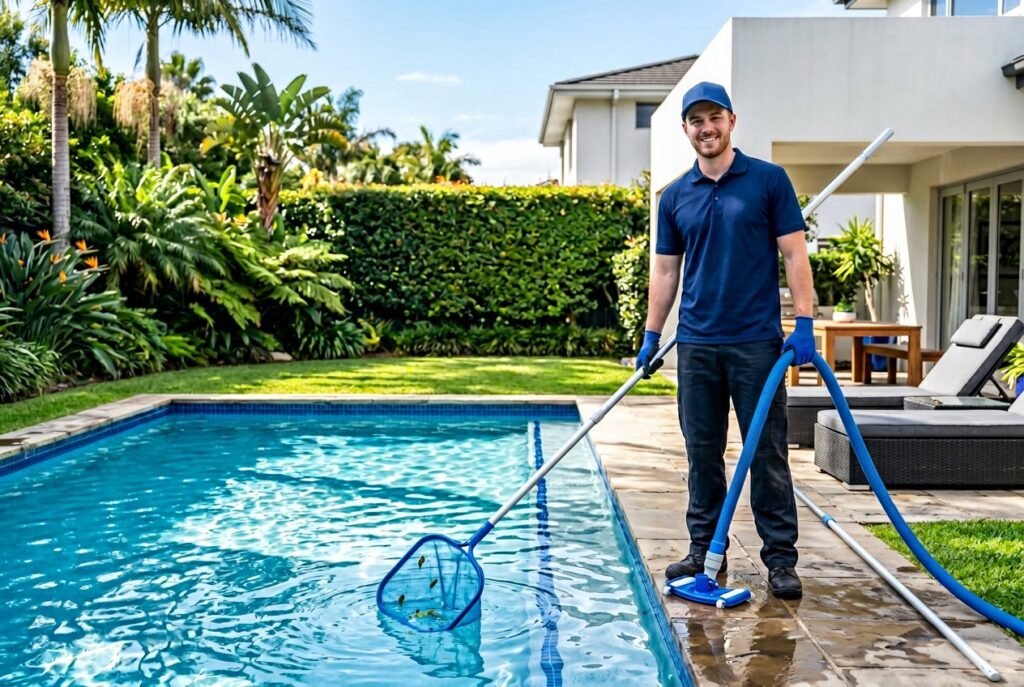
Starting a pool cleaning business is a smart move if you want to work outside and be your own boss.
A pool cleaning business provides weekly maintenance to pools by skimming debris, vacuuming floors, and balancing water chemistry. You keep the water safe and clear so the homeowner doesn’t have to lift a finger.
Because you can launch with just a few basic tools and some testing kits, it’s widely considered one of the best low-cost business ideas with high profit around.
The demand for pool maintenance stays strong in many areas, and that recurring weekly revenue gives you incredible flexibility. This guide walks you through exactly what you need to know to get started, from buying equipment to finding your first paying customers.
Understanding the Pool Cleaning Business
A pool cleaning business provides maintenance and care services to keep swimming pools clean and safe for use. The industry offers steady demand from both homeowners and commercial property owners who need regular upkeep.
What Does a Pool Cleaning Business Involve?
When you run a pool cleaning business, you’re responsible for keeping pools clean, balanced, and safe for swimming. This means you’ll test water chemistry, add the right chemicals, and make sure everything is working properly.
Your typical day involves traveling to different properties to service pools. You’ll skim debris from the water surface, vacuum the pool floor, and brush the walls to prevent algae buildup. You also need to empty skimmer baskets and check the filter system.
Water testing is a big part of the job. You’ll measure chlorine levels, pH balance, and alkalinity to make sure the water is safe. Based on your tests, you’ll add chemicals to bring everything into the right range.
You’ll also inspect pool equipment like pumps, filters, and heaters. If something isn’t working right, you’ll either fix it yourself or let the customer know they need repairs.
Types of Pool Cleaning Services
Your pool service business can offer several different types of services depending on what customers need. Each service type has its own schedule and pricing structure.
Regular maintenance is the most common service. You visit pools weekly or bi-weekly to clean, test water, and add chemicals. This keeps pools in good shape year-round.
One-time cleanings work for pools that haven’t been maintained or need a deep clean. This involves more intensive work like acid washing or heavy algae removal.
Seasonal services include pool opening in spring and closing in fall. You’ll remove covers, start up equipment, balance the water, or winterize everything for cold months.
Repair services let you fix broken equipment, patch leaks, or replace damaged parts. Some pool cleaning businesses offer repair services alongside their regular maintenance.
Commercial pool service involves larger pools at hotels, gyms, or apartment complexes. These require more frequent visits and stricter safety standards.
Industry Prospects and Trends
The pool service industry shows strong growth potential for new businesses. More homeowners are installing pools, which creates steady demand for maintenance services.
Many pool owners prefer hiring professionals rather than doing the work themselves. They want to avoid the hassle of learning water chemistry and buying equipment. This gives you a reliable customer base once you get established.
Technology is changing how pool service businesses operate. Software helps you schedule appointments, send invoices, and track customer information. Automated pool cleaners and smart monitoring systems are becoming more common too.
The business tends to be seasonal in some areas. You’ll have busier summers and slower winters depending on your location. Warm-climate states offer year-round work opportunities.
Competition exists in most markets, but there’s usually room for quality service providers. Building a good reputation through reliable work helps you stand out and grow your customer list.
Getting Started: Planning and Legal Essentials
Before you start a pool cleaning business, you need to understand your local market and handle the legal paperwork. Research helps you find customers while licenses and insurance protect your business.
Market Research for Pool Cleaning
You need to know who needs pool cleaning in your area. Drive around neighborhoods and count how many pools you see. Check if they look well-maintained or if they need help.
Look at what other pool cleaners charge. Call a few competitors and ask about their prices. This tells you what customers expect to pay.
Key things to research:
- Number of pools in your area
- Income levels of homeowners
- What services competitors offer
- Average prices for cleaning and maintenance
- Gaps in service that you could fill
Talk to pool owners if you can. Ask what they like or don’t like about their current service. Their complaints become your opportunities.
Understanding your target market helps you create services people actually want to buy.
Licensing, Permits, and Insurance
Most states require specific licenses to clean pools legally. You typically need a swimming pool contractor’s license and water treatment certification. Some areas also require a certified pool operation license.
Visit your state’s licensing board website to see what you need. The requirements change based on where you live. You might need to take classes or pass a test.
Don’t skip insurance. Get general liability insurance to protect against accidents or property damage. If you hire employees, you’ll need workers’ compensation insurance too.
The business registration process usually costs under $300. Budget extra for insurance premiums and license fees.
Choosing a Target Market
Decide if you want to serve homes or businesses. Residential pools are easier to start with because homeowners need regular weekly service.
Commercial pools like hotels or gyms need more expertise. They have stricter health codes and larger equipment. But they pay more and offer steady contracts.
Residential vs Commercial:
| Residential | Commercial |
|---|---|
| Smaller pools | Larger facilities |
| Weekly service | Daily maintenance |
| Lower rates | Higher rates |
| More customers needed | Fewer customers needed |
Most beginners focus on residential customers first. You can always add commercial clients as you gain experience and equipment.
Pick a specific neighborhood or ZIP code to start. It’s easier to build your reputation in one area than to spread yourself too thin.
Essential Pool Cleaning Tools and Supplies
Starting a pool cleaning business means having the right gear from day one. You’ll need basic cleaning equipment, chemicals to balance water, and safety items to protect yourself on the job.
Must-Have Equipment and Chemicals
Your equipment list starts with basic cleaning tools. You’ll need brushes with different bristle types for various pool surfaces. Nylon bristles work well for vinyl pools, while stainless steel brushes handle concrete better.
A pool vacuum is one of your most important investments. You can choose between suction cleaners that connect to the pool’s skimmer, pressure cleaners that use a booster pump, or robotic cleaners with built-in motors. Robotic models cost more but they’re more efficient and save wear on pool equipment.
Leaf rakes and skimmer nets help you remove debris from the water surface. Get telescopic poles that extend your reach to all pool areas.
For chemicals, you’ll need chlorine or bromine to sanitize water. Algaecide prevents and treats algae growth. Water balancers control pH levels, which should stay between 7.2 and 7.8. You’ll also need products to adjust calcium hardness and cyanuric acid levels to keep water properly balanced.
Water test kits are essential for checking chemical levels. Digital testers give you the most accurate readings for pH, alkalinity, chlorine, and other measurements.
Safety Gear and Best Practices
Pool chemicals can be dangerous if you don’t handle them correctly. Wear chemical-resistant gloves whenever you’re working with chlorine, acids, or other pool treatments.
Safety glasses protect your eyes from splashes. You should also wear closed-toe shoes with good grip to prevent slips around wet pool decks.
Never mix different chemicals together. This can create dangerous reactions. Always add chemicals to water, not water to chemicals, to avoid splashing. Store your products in a cool, dry place away from direct sunlight.
Keep a first aid kit in your vehicle. Know how to handle chemical exposure and have emergency contact numbers ready.
Choosing Quality Products
Buying quality pool cleaning tools saves you money in the long run. Cheap brushes break quickly and need constant replacement. Look for reinforced vacuum heads and durable hose materials.
Check professional pool supply companies for better deals than retail stores. Many offer discounts for business accounts or bulk purchases.
Read reviews from other pool professionals before buying equipment. They’ll tell you which brands hold up to daily use and which ones fail quickly.
Start with essential items and add specialized tools as your business grows. You don’t need every piece of equipment on day one. Focus on reliable basics that work for most pools you’ll service.
Mastering Water Chemistry and Pool Maintenance
Understanding water chemistry keeps pools safe and sparkling, while consistent maintenance prevents costly repairs and unhappy customers.
Basics of Water Chemistry
Water chemistry involves balancing three main measurements in every pool you service. pH levels show how acidic or basic the water is, and you want to keep them between 7.4 and 7.6. Alkalinity acts as a buffer to prevent big pH swings, so aim for 100 to 150 parts per million (ppm).
Sanitizer levels depend on what type you’re using. For chlorine pools, maintain 1 to 3 ppm. Bromine pools need 3 to 5 ppm.
You’ll need a reliable water testing kit to check these levels before adding any chemicals. Test the water first, then adjust as needed. Never guess or add chemicals without knowing what the water actually needs.
Calcium hardness matters too, especially for plaster pools. Keep it between 200 and 275 ppm to prevent surface damage.
Routine Pool Maintenance Tasks
Regular pool cleaning keeps water clear and equipment running smoothly. You should skim the surface, brush the walls, and vacuum the pool floor at least once a week. Empty skimmer baskets during each visit to maintain good water flow.
Run the pump 10 to 12 hours daily to circulate water properly. Moving water stays cleaner and prevents algae growth.
Backwash the filter when pressure rises 8 to 10 psi above normal. This clears out trapped debris and keeps filtration working well.
Shock the pool weekly or after heavy use and rainstorms. Always shock at night since sunlight breaks down chlorine before it can work. Run the pump for eight hours after shocking to distribute it evenly.
Check equipment during each visit. Look for leaks, unusual noises, or worn parts that need replacement.
Dealing With Common Pool Problems
Cloudy water usually means poor circulation or unbalanced chemistry. Test the water, adjust chemicals as needed, and make sure the pump runs long enough each day.
Green water signals algae growth. Brush the walls thoroughly, shock the pool with extra chlorine, and run the filter continuously until the water clears.
High pH causes scaling and cloudy water. Add pH decreaser slowly until levels drop to the right range.
Low pH leads to corrosion and eye irritation. Use pH increaser or soda ash to bring levels up.
Strong chlorine smell actually means not enough free chlorine. The smell comes from chloramines, which form when chlorine combines with contaminants. Shock the pool to break them down.
Stains on pool surfaces come from metals or organic matter. Use a stain remover designed for the specific type of stain you’re treating.
Setting Up Your Service Offerings and Pricing
Your pricing and service packages will make or break your pool cleaning business. You need to figure out what services you’ll offer, how much to charge, and how to protect yourself with clear agreements.
Designing Service Packages
Most successful pool cleaning services offer different package levels to meet various customer needs. A basic package usually includes skimming debris, vacuuming, brushing walls, and checking water chemistry.
Your mid-tier package might add filter cleaning and equipment checks. A premium package could include everything plus chemicals, minor repairs, and priority scheduling.
Think about your local market when designing your service packages. Some areas have more pools that need year-round maintenance. Others are seasonal.
You can also offer one-time services like green pool cleanups, acid washing, or opening and closing pools for the season. These services bring in extra money between regular visits.
Common Package Structure:
- Basic: Weekly maintenance and chemical testing
- Standard: Everything in basic plus filter cleaning and equipment inspection
- Premium: Full service including all chemicals and minor repairs
Pricing Strategies
Calculating your break-even point helps you understand your minimum pricing needs. Add up your costs for chemicals, equipment, labor, gas, and software before setting prices.
Many pool cleaning businesses charge between $80 and $150 per month for regular weekly service. Your actual prices depend on pool size, service frequency, and local competition.
The “plus chems” model is becoming popular. You charge a base service fee and bill chemicals separately. This protects you when chemical prices go up.
Look at what other pool cleaning service providers charge in your area. You don’t want to price yourself way too high or too low compared to competitors.
Service Contracts and Agreements
Your pool service agreement protects both you and your customers. It sets clear expectations about what you’ll do and what customers will pay.
Include your service schedule, payment terms, and what happens if a customer cancels. List exactly what’s included in each visit and what costs extra.
Make sure to add a clause that prices can change with notice. This protects you if chemical or fuel costs jump unexpectedly.
Your agreement should also cover access to the property, liability limits, and what repairs aren’t included in regular service. Have customers sign before you start work so everyone knows what to expect.
Optimizing Operations and Scheduling
Smart scheduling and good systems will save you hours each week and help you make more money. The key is grouping clients by location and using the right tools to plan your routes.
Efficient Daily Operations
You need to group your pool maintenance tasks into packages that make sense for your schedule. Weekly tasks like skimming, brushing, vacuuming, and chemical testing should be bundled together. This makes it easier to plan your day and quote prices to customers.
Don’t randomly visit pools as requests come in. Instead, batch your service calls by neighborhood or area. If you have three pools on the same street, visit them all on the same day. This approach cuts down your drive time and lets you service more pools each day.
Plan your week ahead of time so you know which neighborhoods you’ll work in each day. This also helps you figure out when you have time for one-time jobs like pool openings or repairs. During busy seasons around Memorial Day and Labor Day, start booking appointments early so you’re not overwhelmed.
Using Route Optimization Software
Manual route planning wastes your time and money. Pool service route scheduling software can cut your planning time by hours each week.
These tools automatically group your clients by location and create the most efficient driving routes. They factor in customer time windows, job requirements, and even your lunch breaks. You just import your daily appointments and the software handles the rest.
Optimizing your pool maintenance schedule with smart software helps you handle seasonal rushes better. One Maryland pool company saved 8,000 miles per month and cut their planning time in half by using automated routing tools. Less time driving means lower gas costs and more pools serviced each day.
The software also makes it easier to handle last-minute changes. If a customer cancels, you can quickly reassign that time slot to another job nearby.
Recordkeeping and Billing
Keep detailed records of every pool you service. Write down what chemicals you added, what the pH levels were, and any problems you noticed. Take photos of issues before and after you fix them.
Use a simple system to track which customers you’ve billed and who still owes payment. Many pool pros use basic spreadsheets or invoicing apps on their phones. Send invoices right after you finish each job while it’s fresh in everyone’s mind.
Store your records digitally so you can access them from anywhere. This helps when customers call with questions about past services. Good records also protect you if there’s ever a dispute about work you did.
Winning and Keeping Customers
Getting customers through the door is just the start. Keeping them happy and turning them into fans who tell their friends about you is what builds a lasting pool cleaning business.
Customer Communication Tips
Talk to your customers like real people, not just names on a schedule. Send them a quick text when you’re on your way to their house. Let them know if you find any problems with their pool before you fix them.
Set up simple ways to stay in touch:
- Text updates when you arrive and finish jobs
- Quick follow-up messages after each visit
- Easy ways for customers to reach you with questions
- Monthly tips about pool care they can do themselves
Be honest if you’re running late or need to reschedule. People appreciate when you respect their time. Answer questions quickly, even if it’s just to say you’ll look into it and get back to them.
Keep notes about each customer’s pool and preferences. Maybe they like their chlorine levels higher or want you to avoid certain areas when kids are swimming. These small details show you care.
Before-and-After Photos for Marketing
Pictures of pools you’ve transformed are worth more than anything you could say about your work. Take a photo of a green, dirty pool when you arrive. Then snap another shot after you’ve cleaned it.
Post these photos where potential customers will see them:
- Your website gallery
- Facebook and Instagram posts
- Google Business Profile
- Neighborhood social media groups
Make sure the lighting is good and the shots clearly show the difference. You don’t need fancy camera equipment. Your phone works fine if you take clear, well-lit pictures.
Always ask permission before taking photos of someone’s property. Most customers are happy to help, especially when they see the amazing results.
Use these images in flyers and door hangers in neighborhoods where you want to work. When people see real proof of your skills, they’re more likely to call you.
Building Customer Retention and Referral Programs
Happy customers who stick with you for years are the backbone of your business. Give them reasons to stay by doing great work every single time you show up.
Create a simple reward for customers who send friends your way. Maybe they get one free cleaning after three successful referrals. Or knock $20 off their next service when someone they recommend books with you.
Keep your best customers coming back:
- Offer small discounts for yearly contracts
- Remember special requests and preferences
- Check in during off-season to schedule spring opening
- Send birthday or holiday cards
Ask satisfied customers to leave you an online review after you finish a job. Make it easy by sending them a direct link to your Google or Yelp page.
Don’t overcomplicate your referral program. Keep the rules simple so customers actually understand and use it. A straightforward “refer a friend, get $25 credit” works better than complex point systems.
Frequently Asked Questions
As you research the pool service industry, you’ll likely have questions about how to turn your skills into a profitable career. Here are the answers to the most common questions people ask when starting a pool cleaning business.
A pool cleaning business is highly profitable, with many solo operators earning six-figure incomes. High profit margins of 50% to 75% are common because recurring service contracts provide steady, predictable revenue.
Initial startup costs typically range from $2,000 to $5,000. This includes essential cleaning tools, water testing kits, initial chemicals, business licenses, and liability insurance.
Requirements vary by location, but most states require a business license and some require a specialized contractor’s license or water chemistry certification. Always check your local health department and state board for specific regulations.
A solo professional can usually service 10 to 15 pools per day if they are located in close proximity. Maximizing the density of your route is the most effective way to increase daily earnings.
General liability insurance is essential to protect against property damage or chemical-related accidents. You may also need commercial auto insurance and, if you hire staff, workers’ compensation insurance.
The most effective methods include leveraging word-of-mouth referrals, posting in local neighborhood social media groups, and creating a Google Business Profile to appear in local search results.