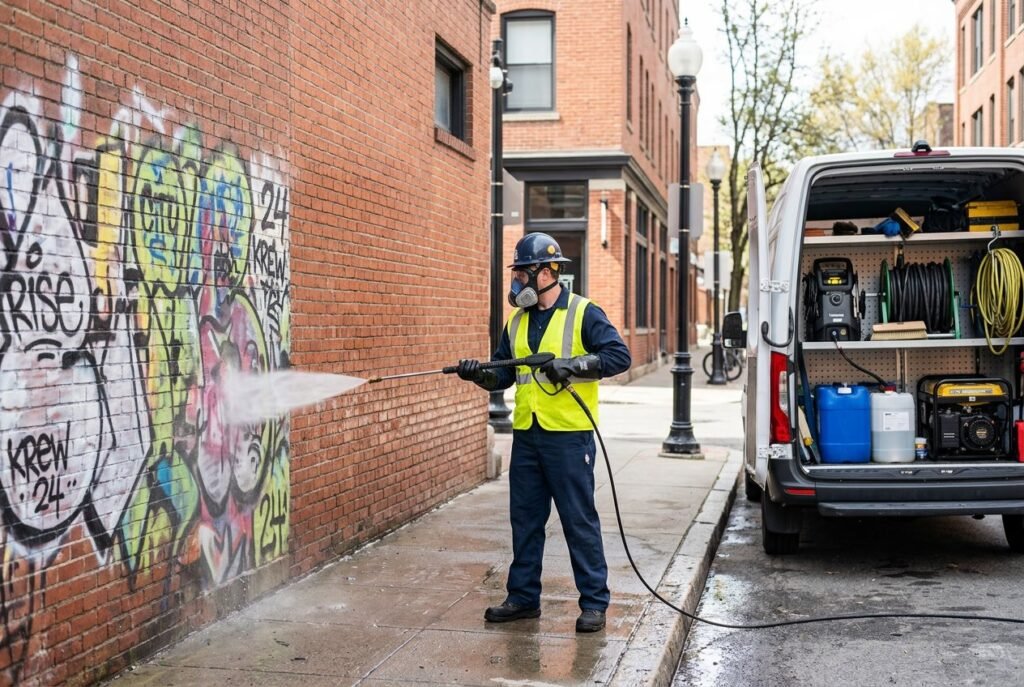
Graffiti turns a nice-looking property into an eyesore fast, and business owners need it gone immediately. That urgency creates a massive opportunity for anyone willing to do the cleanup.
A graffiti removal business cleans unwanted paint, ink, and markers from walls, fences, and signs. You use specialized equipment and chemicals to restore the surface without damaging the property underneath.
Because you can run the entire operation out of your truck with just a pressure washer and some cleaning agents, it’s widely considered one of the best low-cost business ideas with high profit around.
The work gets you outside, pays well, and solves a major headache for property managers who don’t have the time to do it themselves.
This guide walks you through what the daily work actually involves, who your customers are, and what it takes to succeed in this fast-paced industry.
What Is a Graffiti Removal Business?
A graffiti removal service cleans unwanted paint, ink, and marker from walls, signs, fences, and other surfaces. You travel to your customer’s location to do the work instead of having them come to you.
This makes it a mobile business that you can run from your vehicle.
The cleaning method you use depends on what the surface is made of and what type of graffiti was used. Some surfaces need gentle chemicals while others can handle pressure washing.
Identifying various surface types is a core part of the job, as porous stone requires a different approach than non-porous glass or plastic. You’ll work with different materials like brick, concrete, wood, metal, and painted walls.
Beyond cleaning, you may also offer the application of anti-graffiti coatings to prevent future damage. These protective layers make it much harder for spray paint to bond to a wall. This allows for easier cleaning if the property is tagged again.
Who needs these services?
- Property owners and landlords
- Business owners with storefronts
- City governments and public agencies
- Schools and community centers
- Shopping centers and retail spaces
Your graffiti removal business helps keep properties looking clean and professional. When buildings have graffiti on them, it makes neighborhoods look run down and can hurt property values. Business owners especially need fast removal to maintain their reputation.
The work is usually done on-site at the customer’s location. You bring your equipment and cleaning supplies with you. Most jobs can be finished in a few hours depending on the size and difficulty.
This type of service is always in demand because graffiti happens regularly in urban and suburban areas. You can build relationships with repeat customers who need ongoing maintenance. Property managers often hire graffiti removal services on a regular schedule to keep their buildings clean.
What Does a Graffiti Removal Business Actually Do?
A graffiti removal business cleans unwanted spray paint, markers, and tags from buildings, fences, signs, and other surfaces. You travel to your customer’s location and remove the graffiti using the right tools and methods for each job.
The work changes based on what surface you’re cleaning and what type of paint or marker was used. A brick wall needs different treatment than a metal sign or painted wood fence.
Common tasks you’ll handle:
- Testing small areas first to pick the safest removal method
- Using pressure washers or steam cleaners to remove paint from hard surfaces
- Applying graffiti removal chemicals when pressure washing alone won’t work. Prioritizing product safety is essential, so always review the manufacturer labels for proper handling procedures.
- Using scrapers and brushes for delicate surfaces that can’t handle high pressure
- Protecting nearby landscaping, windows, and walkways during cleanup
- Collecting and properly disposing of rinse water and chemical waste
- Technicians must be trained in chemical safety to handle potent solvents.
- You also need to manage hazardous waste disposal for any toxic runoff collected during the process.
- Performing paint touch-ups on walls after removing graffiti
Some jobs are quick and simple. Others take more time and careful work, especially on older buildings or specialty surfaces.
You might also offer exterior cleaning services beyond just graffiti. Many property owners want their walls and surfaces cleaned regularly to prevent future tagging.
More customers are asking for eco-friendly cleaning solutions that work well but don’t harm plants or storm drains. Learning different graffiti removal techniques helps you handle more types of jobs safely.
The goal is always the same: remove the graffiti without damaging what’s underneath. Surface restoration skills matter because your customers want their property to look like nothing ever happened.
Who Hires a Graffiti Removal Professional?
You’ll find customers for your graffiti removal business across many different industries and property types. The market is bigger than you might think at first.
Business owners are often your main clients. Retail stores, restaurants, gas stations, and shopping centers deal with graffiti regularly. They need to keep their buildings looking clean and professional to attract customers.
Property managers and maintenance companies hire graffiti removal services frequently. They oversee apartment buildings, office complexes, and commercial properties where graffiti can hurt property values.
Government agencies and public institutions make up another big part of the market. Schools, libraries, and municipal buildings often have graffiti problems and need regular cleaning services.
Here are the most common types of clients:
- Retail businesses – Storefronts, malls, strip centers
- Property management companies – Apartment complexes, HOAs, commercial buildings
- Public institutions – Schools, libraries, parks, transit stations
- Homeowners – Residential properties affected by vandalism
- Transportation agencies – Bus stops, subway stations, parking garages
Some businesses will hire you for one-time cleanups when graffiti appears. Others prefer monthly contracts where you check their property weekly and remove any new graffiti as part of ongoing property maintenance.
The best part? Your potential market is constantly being renewed since new graffiti keeps appearing. When people search “graffiti removal near me,” they need help right away.
What Problems Does a Graffiti Removal Business Solve?
Graffiti creates several headaches for property owners and communities. When vandals spray paint or mark up buildings, walls, and fences, it makes neighborhoods look run down and unwelcoming. This is where you step in as a problem solver.
Property owners face strict timelines to clean up graffiti. Many cities have local graffiti ordinances that dictate how quickly graffiti must be removed, putting pressure on business owners and residents to act fast.
Your service helps people deal with these main issues:
- Visual blight – Graffiti makes properties look neglected and can lower property values
- Time constraints – Most property owners don’t have the skills or equipment to remove graffiti themselves
- Cost concerns – Leaving graffiti untouched often attracts more vandalism, creating a bigger expense later
- Surface damage – Using the wrong cleaning method can permanently harm walls, signs, or painted surfaces
Businesses, schools, libraries, and homeowners all need professional help tackling unwanted markings. You give them back their clean, professional-looking spaces without them having to figure out what chemicals to use or rent expensive pressure washers.
A graffiti removal service works directly at the customer’s location, handling everything from start to finish.
You pick the right cleaning method based on what surface you’re working with and what type of paint or marker was used. This takes the guesswork and hassle away from property owners who just want the problem gone.
What Is the Work Like Day-To-Day?
Your typical day starts with checking your schedule and confirming job locations. You’ll spend a lot of time driving between sites since this is mobile work that happens at customer locations.
Once you arrive at a job site, you inspect the surface and the graffiti. You need to figure out what the wall or fence is made of and what was used to tag it. This helps you pick the right cleaning method.
Before you start any actual removal, you set up your work area. This means laying down containment materials to catch runoff, setting up cones if you’re near a street, and putting on your protective gear.
Safety gear is not optional since you work with chemicals and pressure washers. Wearing personal protective equipment is vital to shield yourself from abrasive materials and fumes.
The actual removal work varies based on the job. Some tags come off quickly with the right chemical and a gentle scrub. Others need more time and multiple methods.
You might use low-pressure washing, steam, or careful hand tools.
Common daily tasks include:
- Testing cleaning methods on small spots first
- Mixing and applying chemical removers
- Operating pressure washers or steam units
- Protecting plants and nearby surfaces from overspray
- Collecting and properly disposing of wash water
You’ll also handle customer communication throughout the day. This means sending before-and-after photos, explaining what you did, and scheduling follow-up visits if needed.
Many jobs happen early in the morning, on weekends, or during off-peak hours. Property owners often want graffiti removed quickly and when fewer people are around.
Who Is a Good Fit for a Graffiti Removal Business?
This business works well for people who don’t mind physical work and being outdoors most of the time. You’ll spend your days climbing ladders, using pressure washers, and working in different weather conditions.
You should be comfortable working independently and managing your own schedule. Most graffiti removal work is mobile and happens at customer sites, so you need reliable transportation and good time management skills.
Ideal characteristics include:
- Problem-solving mindset – Different surfaces and graffiti types need different removal methods
- Attention to detail – You need to remove graffiti without damaging the underlying surface
- Customer service skills – You’ll interact with property owners, managers, and local officials
- Physical fitness – The work involves lifting equipment, standing for long periods, and repetitive motions
People switching careers from construction, cleaning services, or property maintenance often do well in this field. You already understand working with your hands and dealing with clients.
You don’t need a college degree or special certifications to start, though getting trained on equipment and safety procedures helps. Some states require a contractor’s license depending on your service offerings.
This business suits someone who wants to start with relatively low overhead costs compared to other service businesses. You can often begin with basic equipment and grow as you gain more clients.
Choosing the right business structure, such as an LLC or sole proprietorship, is a key decision for any new owner. This choice affects your taxes and legal protections.
If you care about improving your community and take pride in visible results, graffiti removal can be rewarding work. Each completed job shows immediate before-and-after transformation.
Pros and Cons of Running a Graffiti Removal Business
Running a graffiti removal business offers several advantages like low startup costs and steady demand, but it also comes with challenges such as physical labor and equipment maintenance.
Pros
The startup costs are relatively low, typically ranging from $62 to $35,923. This makes it easier to get started compared to many other businesses. You won’t need a fancy storefront or expensive inventory.
You get to be your own boss and control your workload. You can choose which clients to work with and decide how much you want to work each week. This flexibility lets you balance your business with your personal life.
The demand for graffiti removal stays strong even during tough economic times. Property owners and cities always need these services.
Owner earnings typically average between $60,000 and $80,000 annually for sole proprietors in the early years.
The high profitability of specialized cleaning services makes this an attractive path. You can maintain high margins by managing your supply costs and labor hours carefully.
You’ll build a solid client base with repeat customers. Once property owners find a reliable service, they stick with it. This creates predictable income that makes planning easier.
The work keeps you active and outdoors. If you don’t like sitting at a desk all day, this business gets you moving and solving real problems for your community.
Cons
The work is physically demanding. You’ll spend your days on your feet using equipment like pressure washers. This can be tiring, especially in bad weather or extreme temperatures.
Equipment maintenance adds ongoing costs. Pressure washing machines, chemicals, and safety gear need regular upkeep and replacement. These expenses can eat into your profits if you’re not careful.
You’ll face competition from other cleaning services. Many pressure washing businesses also offer graffiti removal, so you need to set yourself apart. Building a reputation takes time and consistent quality work.
The job isn’t always pleasant. You might work in dirty areas or deal with stubborn graffiti that takes hours to remove. Some surfaces require special techniques that need practice to master.
How to Succeed as a Graffiti Removal Professional
Building a strong business plan is your first step to success. Having a comprehensive graffiti removal business plan serves as your roadmap for growth. This document helps you stay focused on your goals while managing your initial startup expenses.
If you are unsure where to start, using a business plan generator can simplify the process of drafting your strategy. You can also download a business plan template to help organize your market research and operational goals.
Include market analysis, financial projections, and clear service offerings to guide your decisions. Developing a detailed revenue forecast allows you to plan for seasonal dips and growth opportunities throughout the year.
Getting the right business insurance protects you from costly mistakes. Securing comprehensive insurance for graffiti removal is non-negotiable for professional operators.
You need general liability insurance to cover property damage and commercial auto insurance for your work vehicle. If you hire workers, workers’ compensation insurance becomes required in most states.
Establishing a clear pricing structure ensures you remain profitable while staying competitive in your local market. You should decide whether to charge by the square foot or by the hour.
Handle your business registration early and open a separate business bank account. Check local regulations for any business licenses and permits you need. Some areas require a contractor’s license or environmental permits depending on the chemicals you use.
Your online presence makes or breaks your growth. Set up Google My Business to appear in local searches and invest time in local SEO. A comprehensive digital marketing strategy will help you reach a wider audience across multiple platforms.
Develop a robust marketing plan to reach local commercial clients and property groups. Setting aside a specific marketing budget helps ensure you can afford ads and promotional materials during the busy season. Post before-and-after photos on social media to show your results.
Sharing before and after photos on your website is the best way to prove your skill to new prospects. Run targeted Google Ads to reach property managers and business owners quickly.
Use modern accounting software to track your revenue and expenses efficiently. Good financial records make it easier to manage your taxes and monitor your cash flow.
Customer service should be your top priority. Happy clients leave client testimonials and send word-of-mouth referrals that cost you nothing. Respond fast to inquiries and show up on time.
Build strategic partnerships with property management companies and real estate agents. Networking at local business events puts you in front of potential clients.
Strong branding helps you stand out from competitors. Create a professional logo and consistent messaging across all materials.
Track your operational efficiency by monitoring job times and supply costs. Consider equipment financing or small business loans if you need to expand your tools and vehicle fleet as demand grows.
Frequently Asked Questions
Starting a graffiti removal business brings up practical questions about costs, equipment, and finding clients. This business can be profitable with the right approach to pricing and marketing your services.
Yes, graffiti removal can be a profitable business because property owners and city governments need these services regularly. Graffiti shows up on buildings, fences, and public spaces all the time, creating steady demand for removal work.
The profit margins are strong in this industry. Job margins typically range between 50% and 80% after you cover your initial equipment costs.
A small mobile graffiti removal business can bring in $50,000 to $100,000 per year. You can start small and grow as you build your customer base.
First, you need to check what licenses and permits your city or state requires for this type of work. Most areas require a basic business license to operate legally.
Getting liability insurance is important to protect yourself from potential claims or damages during jobs. Some clients will ask to see proof of insurance before they hire you.
You should also invest in training to learn proper removal techniques and safety practices. Attending workshops or training programs helps you understand eco-friendly methods and work more efficiently.
Creating a graffiti removal business plan keeps you organized. Write down your goals, who your target customers are, and how you plan to market your services. You also need to calculate your initial startup expenses, including equipment, insurance, and first-month supplies.
Your pricing strategy should consider the size of the graffiti you need to remove and how difficult the job will be. The type of surface matters too since some materials require more work than others.
Look at what your competitors charge in your area to get a sense of local rates. You need to cover your costs for labor, materials, and equipment while staying competitive.
The location of the job can affect your price. If you need to travel far or work in a hard-to-reach spot, you should charge more for your time and effort.
Calculate your operating costs first so you know your baseline. Then add a profit margin that reflects the value you provide while keeping your prices fair for customers.
The cost varies based on what the graffiti is on and how big it is. Smooth surfaces like metal or glass are usually easier and cheaper to clean than rough surfaces like brick or concrete.
Paint type matters for pricing too. Spray paint might come off easier than permanent markers or etched graffiti, which need special tools and more time.
Jobs can range from small tags that take 30 minutes to large murals that need several hours of work. You should price each job individually after looking at it in person or through photos.
Some surfaces need gentle cleaning methods to avoid damage, which can take longer and cost more. Delicate materials might require special products that add to your expenses.
Investing in high-quality graffiti removal equipment is the foundation of your service. Having the right tools ensures you can handle various surfaces without causing damage.
You need a quality pressure washer as your main tool for most jobs. This machine uses high-pressure water to blast away paint and graffiti from surfaces.
Chemical applicators and cleaning solutions designed for graffiti removal are essential. Look for eco-friendly and biodegradable products that work well without harming the environment.
Safety gear protects you during jobs. Get gloves, goggles, and protective clothing to keep yourself safe from chemicals and debris.
The initial equipment investment can be significant, with specialized vehicles and tools totaling substantial costs in your first few months. Start with the basics and add more equipment as your business grows.
Reach out to property managers and building owners in your area who deal with graffiti regularly. These contacts can become repeat customers if you do good work.
Building relationships with local government offices can lead to contracts for cleaning public spaces. Cities often need reliable companies to handle graffiti removal on a regular schedule.
Create a professional website and use social media to show your work. Post before-and-after photos to demonstrate what you can do.
Word-of-mouth referrals from satisfied customers are powerful for growth. Provide excellent service and respond quickly to requests to build a strong reputation.
Offering maintenance plans or regular cleaning schedules helps you keep customers coming back. Some clients prefer to pay a monthly fee for ongoing graffiti monitoring and removal.