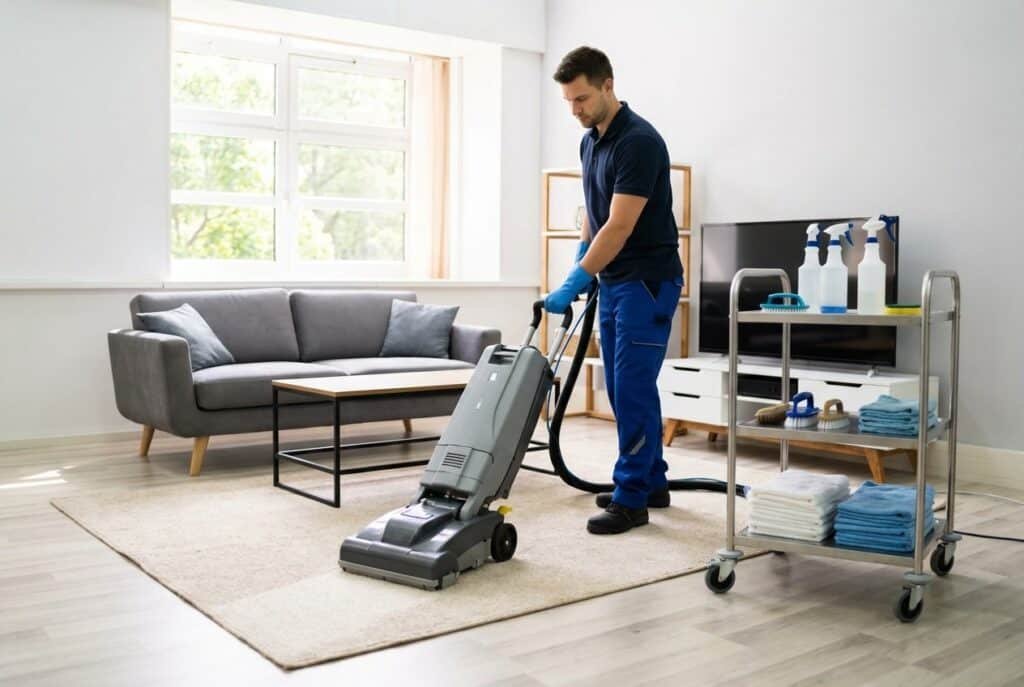
The carpet cleaning industry isn’t about fancy market trends or corporate jargon. It’s about solving a messy problem for homeowners and property managers who want their spaces looking fresh.
A carpet cleaning business provides deep cleaning services for residential and commercial carpets, rugs, and upholstery. You use professional hot-water extraction machines to remove stains, odors, and dirt that a normal vacuum can’t touch.
Because you don’t need a storefront and can run the entire operation out of a van, it’s widely considered one of the best low-cost business ideas with high profit for beginners.
You can build a reliable business that pays the bills and gives you total control over your schedule. This guide covers the real pros and cons of the industry, what the daily work actually looks like, and whether it’s the right fit for you.
What Is a Carpet Cleaning Business?
A carpet cleaning business provides professional cleaning services to remove dirt, stains, and allergens from carpets in various spaces. You visit client locations with specialized equipment to deep clean carpets that regular vacuuming cannot handle.
Most carpet cleaning companies offer services to both homeowners and businesses.
Many modern operations now feature online booking through a mobile-friendly website to streamline the scheduling process for their clients. Your clients might include apartment buildings, office spaces, hotels, and retail stores.
The work involves more than just running a vacuum. You use professional-grade equipment like hot water extraction machines, industrial vacuums, and specialized cleaning solutions. These tools can tackle tough stains, pet odors, and years of built-up grime.
Common services you might offer include:
- Deep carpet cleaning and using professional carpet shampoo
- Bonnet cleaning for low-moisture needs
- Stain removal and treatment
- Pet odor elimination
- Water damage restoration
- Upholstery cleaning and tile cleaning
- Area rug cleaning
- Encapsulation for low-moisture commercial jobs
- Duct cleaning for improved indoor environments
A carpet cleaning company operates as a mobile service. You transport your equipment in a truck or van and travel to each job site. This setup keeps your overhead costs lower since you don’t need a storefront.
The business model works well for solo operators and small teams. You can start with minimal startup costs compared to other service businesses. Many owners begin part-time and grow as they build their customer base.
Your income depends on your pricing strategy, whether you charge per room or use square footage pricing. Repeat business is a major factor in success. Most carpets need professional cleaning every 12 to 24 months to maintain their appearance.
What Does a Carpet Cleaning Business Actually Do?
A professional carpet cleaning business provides specialized services for carpets in homes and commercial spaces. You’ll use professional equipment and powerful stain removers to remove dirt and allergens.
Core Services You Can Offer:
- Steam cleaning and hot water extraction – This method injects hot water and cleaning solution into fibers and then extracts it
- Stain removal and stain treatment – Targeting specific spots like wine, pet accidents, or food spills
- Deep steam cleaning – A thorough cleaning process that reaches deep into carpet fibers
- Upholstery cleaning – Cleaning furniture fabric using similar techniques as carpets
- Rug cleaning – Special care for area rugs and delicate materials
- Tile and grout cleaning – Expanding beyond carpets to clean hard surfaces and tile cleaning
- Water damage restoration and carpet restoration – Helping clients recover from flooding or severe damage
Your typical workday involves traveling to client locations with your equipment. You’ll assess the carpets, pre-treat stains, and use your cleaning machines to deep clean the fibers. The job requires physical work since you’re moving equipment and working on your feet.
Carpet cleaning services help extend carpet life and improve indoor air quality. Many clients book regular maintenance cleanings while others call for one-time deep cleans. You can choose to focus on residential homes, commercial buildings, or both.
Who Hires a Carpet Cleaning Business?
You’ll work with different types of clients when you run a carpet cleaning business. Homeowners make up a large part of your customer base for regular maintenance or stain help.
To reach these homeowners, using marketing tools like flyers and door hangers in local neighborhoods can be very effective. Building referral incentives into your service can also encourage happy customers to spread the word to their friends.
Implementing loyalty programs is another great way to boost customer retention and ensure they return every year.
Real estate agents need carpets to look fresh for home showings. Building partnerships with real estate agents can give you steady work. They often need fast turnaround times to get homes ready for buyers.
Property managers hire carpet cleaners when tenants move out or to handle complaints. This can lead to regular contracts if you do good work. They value reliability and consistent quality above all else.
Commercial clients include offices, hotels, restaurants, and retail stores. These businesses need professional carpet cleaning to maintain a clean appearance for customers and employees.
They often schedule regular cleanings throughout the year. Providing ongoing commercial carpet maintenance helps these businesses keep their facilities in top shape.
Small businesses like medical offices, salons, and gyms also hire carpet cleaners. They want their spaces to look and smell clean for clients who visit daily. Consistency and flexibility with scheduling are key for these clients.
What Problems Does a Carpet Cleaning Business Solve?
A carpet cleaning business provides professional cleaning and maintenance services that solve real problems. You’re addressing issues that people can’t always handle on their own, like deep-seated allergens.
Health and Hygiene Concerns
Carpets trap dirt, allergens, dust mites, and bacteria deep in their fibers. Regular vacuuming only removes surface debris. Your service removes contaminants that affect indoor air quality and can trigger respiratory issues.
Stubborn Stains and Odors
Pet stain removal is one of the most common requests you’ll get. Accidents happen, and regular cleaning products don’t always work. Pet odor treatment requires special equipment and solutions that neutralize smells permanently.
Extending Carpet Life
Replacing carpets is expensive. Your service helps people protect their investment by removing the grit that breaks down carpet fibers over time. This saves your customers money in the long run.
Environmental Solutions
Many customers now want eco-friendly cleaning options. You can offer green cleaning methods using eco-friendly cleaning products that are safe for kids and pets. This diversifying into related areas gives you an edge over competitors.
Time and Convenience
Most people don’t have the specialized equipment or time to deep clean carpets properly. You solve this by bringing professional-grade tools right to their door. They get clean carpets without the hassle.
What Is the Work Like Day-To-Day?
Your mornings start with checking your schedule and loading equipment into your vehicle. Most of your time is spent traveling between client locations and performing cleaning services. Each job is different based on carpet condition and square footage.
Effective time management is essential when you have multiple appointments across town. Wearing professional uniforms helps you build trust the moment you arrive at a client’s door. You’ll spend a significant portion of your day interacting with customers and managing your route efficiently.
A typical workday includes:
- Meeting with clients to assess their carpets
- Pre-treating tough stains with a backpack sprayer
- Running cleaning equipment over carpeted areas
- Using a carpet rake to reset the pile
- Drying and finishing the carpets
- Providing professional carpet care tips to customers
- Following up on leads and scheduling new jobs
The work is physically demanding. You’ll be lifting equipment and staying on your feet most of the day. The challenges require both hard work and skill as you transform spaces.
After finishing jobs, you’ll return to clean your gear. Consistent equipment maintenance is vital to avoid breakdowns during a busy workday.
You’ll also handle administrative tasks like invoicing, calculating sales tax, and managing email marketing campaigns. Providing maintenance tips is part of the customer service that keeps clients coming back.
Who Is a Good Fit for a Carpet Cleaning Business?
You’re probably a good match for starting a carpet cleaning business if you enjoy hands-on work. This isn’t a desk job; you’ll be moving furniture and spending time on your knees.
People who thrive in this business typically have:
- Strong customer service skills and enjoy talking with clients
- Physical fitness to handle heavy equipment daily
- Attention to detail to spot stains and missed areas
- Basic problem-solving abilities to tackle different carpet types
- Self-motivation to manage their own schedule and find new customers
You don’t need a college degree or special certifications to get started. What matters more is your willingness to learn proper cleaning techniques and build relationships with customers. Building trust is essential for long-term growth.
The low startup costs and overhead expenses make this ideal for entrepreneurs on a budget. If you’re someone who likes seeing immediate results, carpet cleaning delivers that satisfaction.
Pros and Cons of Running a Carpet Cleaning Business
Starting a carpet cleaning business comes with clear advantages and some challenges. The long-term profitability of the business depends on how well you manage your expenses and customer relationships.
The Good Parts
A carpet cleaning business offers low startup costs. You don’t need a storefront or fancy office space. Profitability remains high once you cover your initial investment in equipment.
The demand stays steady year-round. Homes and businesses always need carpets cleaned, providing opportunities for recurring revenue through service contracts. You’ll have flexibility with your schedule since you can choose when to take jobs and how many clients to serve.
The Challenges
The work is physically demanding. You’ll spend hours moving equipment and working in uncomfortable positions. This can be tough on your body over time, so proper technique is important.
Competition exists in most areas. You’ll need to stand out from other carpet cleaners already serving your market. Building a loyal customer base takes time and consistent effort.
Income can be unpredictable when you’re starting out. Some months bring plenty of work while others might be slower. Equipment also requires regular maintenance and occasional replacement to keep the business running smoothly.
Frequently Asked Questions
These are some of the most common questions others have asked when researching this business idea. We cover everything from the initial investment and equipment needs to profit margins and growth strategies.
You need a few key items to launch. The most important is a reliable cleaning machine, either portable or truck-mounted. Choosing quality carpet cleaning machines ensures professional results from day one.
You’ll also need cleaning solutions, hoses, a commercial vacuum, and a backpack sprayer. Most start with carpet cleaning equipment and supplies like a carpet extractor. These machines often cost between $2,000 and $8,000.
Beyond equipment, you need a business bank account and a dedicated business checking account to keep finances organized. General liability insurance, commercial property insurance, and commercial auto insurance are also essential for protecting your business.
Startup costs range from $5,000 to $50,000 for most businesses. Your biggest expense is the cleaning machine itself.
A budget setup with a portable carpet cleaning machine costs $5,000 to $10,000. A professional setup with a commercial-grade carpet cleaning machine and a premium truck-mounted system can cost $30,000 to $50,000 or more. If you lack the cash upfront, many owners look into small business loans to fund their equipment purchases.
You’ll also need money for business registration ($50 to $500), insurance ($500 to $2,000 per year), and initial marketing ($300 to $2,000). Always keep some working capital on hand for your first couple of months.
Carpet cleaning businesses typically earn profit margins of 30% to 50%. This makes them one of the more profitable service businesses you can start today.
A solo operator with portable equipment can make $50,000 to $100,000 per year. If you invest in a truck-mounted system, you can earn $100,000 to $180,000 annually working by yourself.
The U.S. carpet cleaning industry generates over $6 billion annually with steady growth. Monthly operating costs for a solo business include chemicals, vehicle expenses, insurance, and marketing.
Most carpet cleaners start with a carpet extractor or steam cleaner that costs $2,000 to $8,000. Entry-level machines work well for beginners who are just starting out.
Professional-grade portable machines handle higher volume work. Truck-mounted systems are more powerful and range from $15,000 to $50,000 depending on the model.
You’ll also need a wand, hoses, and spot tools. Air movers speed up drying time and cost $150 to $600 for a set of 2 to 4 units.
Starting your own business costs much less than buying a franchise. You can launch with $5,000 to $50,000 on your own, while franchises often require $80,000 to $200,000 upfront.
Franchises provide brand recognition and marketing support. However, they also take 15% to 25% of your revenue in ongoing fees and royalties, which can impact your bottom line.
Independent businesses keep all their profits and have complete control over pricing. Getting IICRC certification costs $300 to $500 and builds credibility without franchise fees.
Most carpet cleaners spend their mornings responding to customer inquiries and scheduling appointments. You’ll quote prices, confirm times, and plan your daily route carefully.
The bulk of your day involves traveling to customer locations and cleaning carpets. Each residential job takes 1 to 3 hours depending on the size of the home.
Many successful operators offer green cleaning solutions to attract eco-conscious customers. You’ll also spend time marketing your business through social media and asking satisfied customers for reviews.