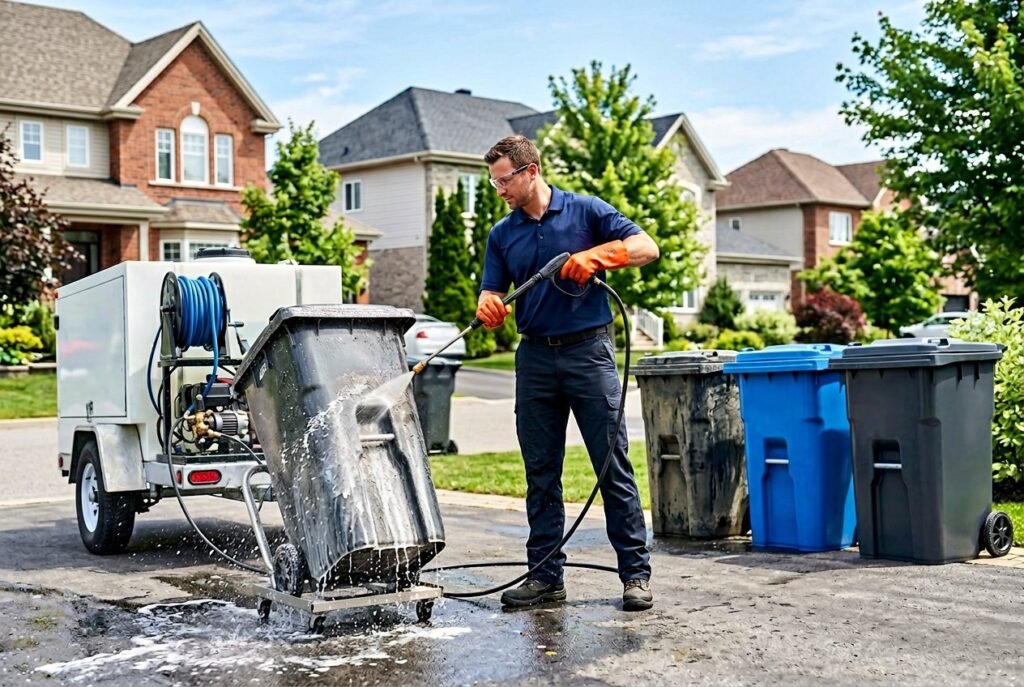
Trash bins get disgusting fast. Most people hate dealing with the smell and the mess, which is exactly why cleaning them is such a smart opportunity.
A trash bin cleaning business sanitizes residential and commercial garbage cans right at the curb. You use high-pressure hot water to blast away grime and bacteria so the owner doesn’t have to.
Because you can build a massive route of recurring subscription customers with just a basic trailer setup, it’s easily one of the best low-cost business ideas with high profit available right now.
It’s straightforward work with surprisingly low competition in most cities. This guide breaks down exactly how the business works, who your customers are, and what a typical day actually looks like.
What Is a Trash Bin Cleaning Business?
A trash bin cleaning business is a service that cleans and sanitizes garbage cans for homes and businesses. Running a trash can cleaning business involves using high-heat systems to kill bacteria and eliminate foul odors.
You use specialized equipment to wash away dirt, bacteria, and bad smells from trash bins that most people never think to clean themselves.
The service works pretty simply. You visit customers on a regular schedule, usually monthly or quarterly. You take their dirty trash cans and use high-pressure water and cleaning solutions to make them look and smell fresh again.
Most bin cleaning services offer:
- Residential trash can cleaning for homeowners
- Commercial garbage bin cleaning for restaurants and stores
- Regular subscription plans with recurring visits
- One-time deep cleaning options
This bin cleaning business model relies on recurring revenue since customers pay you month after month. Unlike a one-time service, you build lasting relationships with clients who need ongoing help.
The reason trash bin cleaning services work is that bins get really gross. Food waste, liquids, and warm weather create perfect conditions for bacteria growth. Most people don’t have the tools or desire to clean these bins themselves.
Your job is to solve a problem nobody wants to deal with. You show up at their home or business, clean their bins while they’re at work or inside, and leave everything spotless. The whole process usually takes just a few minutes per bin once you have your system down.
What Does a Trash Bin Cleaning Business Actually Do?
A trash bin cleaning business sanitizes, deodorizes, and pressure washes waste bins for both homes and businesses. You show up at your customer’s location with specialized equipment and clean their dirty garbage cans so they don’t have to deal with the mess themselves.
The cleaning process uses a pressure washing system with hot water to blast away stuck-on grime, bacteria, and bad smells. Most businesses use a trailer or truck equipped with tanks that hold clean water.
High-end units include a water reclamation system that captures and filters used water. This setup is also highly effective for dumpster cleaning at commercial locations.
Here’s what a typical service includes:
- High-pressure hot water cleaning
- Sanitizing with eco-friendly cleaning products
- Deodorizing to eliminate odors
- Removing bacteria and germs
Wastewater disposal is a key part of the job. You can’t just spray dirty water into the street or storm drains. Your equipment needs to collect all the wastewater so you can dispose of it properly at designated facilities.
Environmental compliance matters because many cities have rules about how you handle wastewater. You might need a waste disposal permit depending on where you operate. These permits make sure you’re following local regulations about water usage and disposal.
Most customers sign up for regular service on a monthly or quarterly schedule. You clean their bins on trash collection day while the bins are empty and sitting at the curb. This creates a recurring revenue model where customers keep paying you month after month.
The service solves a real problem that people notice but don’t want to handle themselves. Nobody enjoys scrubbing out a smelly trash can.
Who Hires a Trash Bin Cleaning Business?
Your potential customers fall into two main groups: homeowners and businesses. Each has different needs and budgets.
Residential Customers
Most of your clients will be homeowners who want clean, odor-free garbage bins. These customers usually sign up for monthly or bi-monthly service. They’re willing to pay for convenience and don’t want to clean their own bins.
Families with young children often hire trash bin services because they worry about germs and bacteria. Elderly homeowners also make great clients since they can’t physically clean heavy bins themselves.
Commercial Customers
Businesses need your services too. Restaurants, apartment complexes, and office buildings all have multiple bins that get dirty fast. Commercial properties make excellent clients because they need regular cleaning and have bigger budgets.
Property management companies hire professional bin cleaning experts to keep their buildings looking good. These contracts can provide steady income for your business and often lead to more referrals.
Finding Customers Online
Most people search for “trash bin cleaning near me” when they need your service. That’s why setting up your Google Business Profile matters so much. It helps locals find you when they search.
Customer reviews play a huge role in getting new clients. People trust what others say about your work. Good reviews make it easier to sign up new customers.
Local SEO helps you show up in search results when people look for bin cleaning in your area. This means optimizing your website and online listings with local keywords.
What Problems Does a Trash Bin Cleaning Business Solve?
Your customers deal with some pretty gross stuff when it comes to their trash cans. Food waste, liquids, and other garbage leave behind bacteria, grime, and terrible smells that build up over time.
Most people don’t have the time or equipment to deep clean their bins properly. Hauling heavy cans to the driveway, scrubbing them out, and dealing with dirty water runoff is messy work. Plus, a basic garden hose doesn’t cut it for removing stubborn buildup.
Health and hygiene issues are a real concern too. Dirty trash cans attract pests like flies, rats, and roaches. They also become breeding grounds for harmful bacteria that can spread disease. This essential recurring service helps keep neighborhoods cleaner and safer.
Many homeowners and businesses want an easier solution. They need someone with professional pressure washing equipment and eco-friendly cleaning agents to handle the job for them. Your service removes the hassle from their plate entirely.
You’re also solving an environmental problem. When people try cleaning bins themselves, dirty water often runs into storm drains. Professional services capture and dispose of wastewater properly.
Using biodegradable detergents means you’re tackling the problem without harsh chemicals that harm the environment.
Commercial properties face even bigger challenges. Restaurants and apartment complexes have multiple large bins that need regular attention. The smell and mess can drive away customers or tenants if left unchecked. Your business provides a reliable solution they can count on month after month.
What Is the Work Like Day-To-Day?
Your typical day starts early in the morning. You’ll load up your truck or trailer with cleaning equipment and check your schedule for the neighborhoods you’re servicing that day.
Most of your time is spent driving between stops and cleaning bins. You pick up trash cans from customers’ homes, usually right after garbage day when they’re empty.
The actual cleaning process is quick – around 30 seconds for a first-time clean and just 7 seconds for regular maintenance cleanings.
Here’s what a typical workday looks like:
- Check your route and organize stops efficiently
- Drive to your first neighborhood
- Clean 10-20 bins per stop in a concentrated area
- Return cleaned bins to customers
- Move to the next location
- Dispose of dirty water at a wastewater treatment facility
You’ll want to use route optimization software to plan the most efficient path between customers. This saves you gas money and lets you clean more bins each day.
The work can be smelly and messy, so you’ll need to wear protective gear. You’re handling bins that have held rotting food and other waste. But the specialized equipment does most of the heavy lifting for you.
Your busiest months are during warmer seasons when bins get dirtier faster. Winter typically slows down as demand drops.
Most bin cleaning businesses operate Monday through Friday, giving you weekends off. You control your own schedule and can adjust your hours based on how many customers you want to serve each day.
Who Is a Good Fit for a Trash Bin Cleaning Business?
You don’t need a business degree or special certifications to start a bin cleaning business. This makes it perfect if you’re looking for a straightforward way to become your own boss.
People who thrive in this business typically have:
- A strong work ethic and don’t mind physical labor
- Basic mechanical skills for equipment maintenance
- Good customer service abilities
- Self-motivation and discipline
- A reliable vehicle and valid driver’s license
This business works well if you’re a hands-on person who likes working outdoors. You’ll spend most of your day driving between locations and operating cleaning equipment. It’s not a desk job.
Ideal candidates include:
- Stay-at-home parents looking for flexible hours
- Retirees wanting supplemental income without huge time commitments
- Military veterans transitioning to civilian work
- Current service workers seeking their own business
- College students building a profitable recurring service business
You should enjoy route-based work where you visit the same customers regularly. This business model relies on building relationships and providing consistent service week after week.
The startup requirements are manageable compared to many other businesses. You’ll need enough money for equipment and a vehicle, but you can start with a smaller operation and grow over time.
If you’re uncomfortable with unpleasant smells or getting dirty, this might not be your best fit. The work involves cleaning waste containers that can be messy and smelly.
Pros and Cons of Running a Trash Bin Cleaning Business
Running a trash bin cleaning business comes with clear benefits and some challenges you should know about before getting started.
The Benefits
You get to be your own boss and control your schedule. The business model is straightforward and easy to understand compared to many other ventures.
Customer loyalty is strong in this industry. Many operators see retention rates above 90% because people really appreciate having clean bins.
Your business is mobile, so you’re not stuck in one location. You can service different neighborhoods and expand into new areas as you grow. You don’t need a storefront or large staff to get going.
Recurring revenue makes income predictable. Monthly or quarterly cleanings create steady cash flow instead of one-time jobs.
The Challenges
You need some upfront investment for equipment. This keeps competition lower but requires initial capital.
Building a profitable route takes time and effort. You’ll need to market consistently and work to build your customer base.
Most people don’t know this service exists yet. You’ll spend time educating potential customers about what you offer.
You’ll need to set up a business bank account to keep finances organized. Getting general liability insurance protects you from potential accidents or damage claims during service calls.
The business works best with volume, so landing enough recurring customers is important for profitability.
Frequently Asked Questions
People looking into this business usually ask similar questions about daily operations, earnings potential, and startup costs. The answers help you understand what running a bin cleaning service really looks like.
You drive around your neighborhood cleaning garbage bins on a schedule. Most operators work off a route list and show up right after trash day when the bins are empty.
You pull up to each house with your cleaning equipment. The process takes about 3-5 minutes per bin. You spray down the inside and outside with hot or cold water at high pressure, let the dirty water drain into your holding tank, and sanitize the bin.
You take before and after photos to send to customers. Between stops, you’re updating your route software and moving to the next address. At the end of the day, you dump your waste water at an approved disposal site.
Your income depends on how many bins you clean each day and what you charge. Part-time operators cleaning 20 bins per day at $35 each can make around $15,400 monthly.
If you go full-time and clean 30 bins daily, you could earn about $19,800 per month. The numbers scale up as you get more efficient with your route.
Most customers pay monthly or quarterly on autopay. This gives you recurring revenue instead of chasing new jobs every week.
Your main ongoing costs are gas, water, and cleaning solution. Fuel costs vary based on how tight your route is, but keeping customers close together helps a lot.
Water usage is surprisingly low because you’re using pressure washers, not filling pools. Most operators spend $50-150 per month on water depending on their volume.
Cleaning solution and sanitizer are cheap when bought in bulk. Your biggest expense after equipment is usually your vehicle and insurance. Many operators keep 60-70% of revenue as profit once they’re established.
Most residential bin cleaning services charge between $20-40 per cleaning. Monthly service usually runs $25-35 per bin.
You can offer discounts for customers who sign up for quarterly or annual plans. Some operators charge less per bin when they clean multiple bins at one property.
Your pricing should match your local market and route density. High-density routes with lots of customers close together let you charge less because you save time driving.
You need a pressure washer system, water tank, waste water holding tank, and a vehicle to move it all. Most people choose between mounting equipment in a truck bed or buying a trailer.
A bin trailer is easier to start with because you don’t need to modify your truck. You can use almost any standard pickup or SUV to tow it. The trailer holds all your water tanks and cleaning equipment in one unit.
Truck-mounted systems give you more flexibility but require installation. Either way, you need a pressure washer that runs at least 3,000-4,000 PSI for residential work.
Ready-made bin trailers start around $27,999 for basic cold water models. Commercial-grade trailers with hot water systems run closer to $42,999.
Building your own setup can cost $8,000-15,000 if you buy used equipment and do the work yourself. You’ll need to source a trailer, pressure washer, water tanks, and plumbing separately.
Many operators use equipment financing to spread out the cost. This lets you keep cash available for marketing and building your customer base instead of spending everything upfront on equipment.