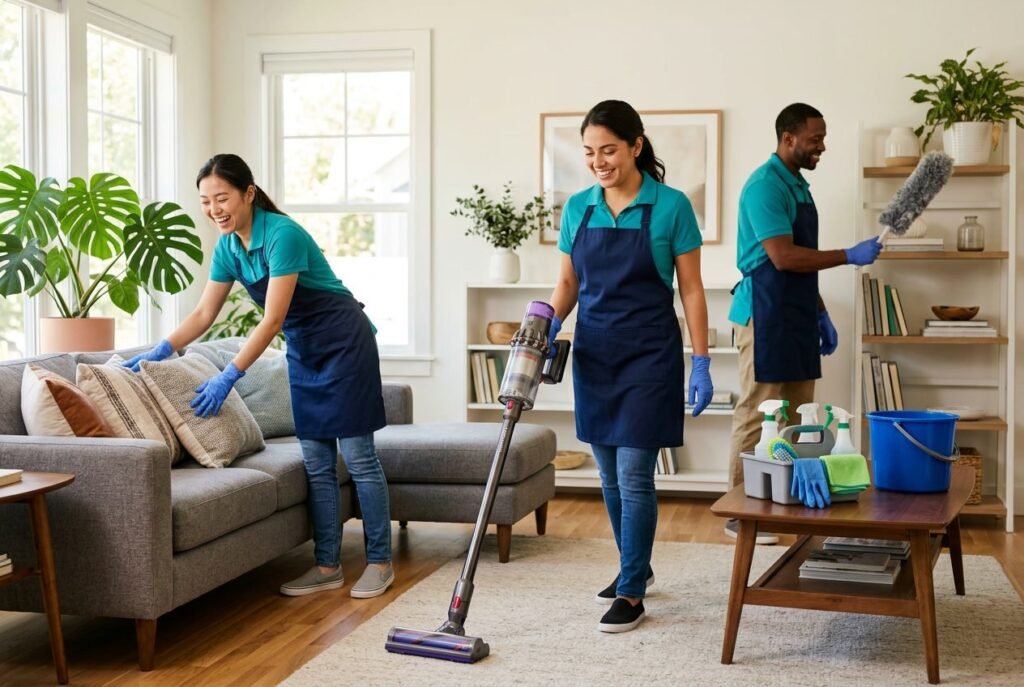
While starting a house cleaning business might look as simple as grabbing a mop and bucket, it’s actually a highly strategic path to building a thriving, reliable company.
A house cleaning business provides professional cleaning services to homes, acting as a complete home management solution for busy families, working professionals, and anyone who needs help keeping their spaces organized.
The best part is that you don’t need a specialized license, expensive equipment, or years of training to get started.
Because of the low barrier to entry and the high demand for recurring weekly services, house cleaning is widely considered one of the best low-cost business ideas with high profit for beginners.
You can start small as a solo cleaner, learn as you go, and eventually build a team.
What Is A House Cleaning Business?
A house cleaning business provides professional cleaning services to people’s homes. You visit clients’ houses and handle tasks like dusting, vacuuming, mopping floors, and cleaning bathrooms and kitchens.
When you run a residential cleaning business, you work directly with homeowners and renters. Some entrepreneurs eventually expand into commercial cleaning services to serve local retailers and professional offices.
Others focus on office cleaning or providing specialized janitorial services for medical facilities. Some clients want you to come weekly, while others prefer visits once a month.
Common types of cleaning services you might offer:
- Regular maintenance cleaning
- Deep cleaning for special occasions
- Move-in or move-out cleaning
- Cleaning for Airbnb properties or short-term rental turnovers between guests
You can start as a solo cleaner working by yourself, or you can build a team. Many people begin their maid service on their own and hire help as they get more clients. Launching a professional maid service allows you to build personal relationships with homeowners while maintaining their private spaces.
A residential cleaning service is pretty straightforward. You bring your own supplies and equipment to each job. Your clients tell you what areas they want cleaned, and you do the work while they’re at home or away.
The nice thing about a cleaning business is that you can keep things simple at first. You don’t need fancy equipment to get started. Basic supplies like a good vacuum, mops, cleaning solutions, and cloths will get you going. Having a complete kit of cleaning business supplies ensures you are prepared for any task.
Most cleaning businesses make money through repeat customers who schedule regular visits. This gives you steady income instead of always looking for new clients.
What Does A House Cleaning Business Do?
A house cleaning service takes care of tasks that keep homes clean and healthy. These businesses handle everything from weekly tidying to intensive deep cleaning projects.
Regular Cleaning Tasks
Regular upkeep services form the backbone of most cleaning businesses. Your cleaner will dust surfaces throughout your home, including furniture, shelves, and countertops. They vacuum carpets and rugs in all rooms and mop hard floors like tile, hardwood, and laminate.
Bathroom cleaning covers scrubbing sinks, showers, and tubs with a heavy-duty bathroom cleaner and disinfectants. Using a squeegee and a professional-grade glass cleaner on shower doors prevents water spots. A dedicated toilet bowl cleaner maintains hygiene throughout the week.
Kitchen work includes wiping down appliances, cleaning counters, and sanitizing sinks. Professional cleaners always keep a versatile glass cleaner on hand for stovetops and microwave doors. Selecting the right cleaning products ensures that every surface is sanitized without being damaged.
A powerful degreaser helps remove stubborn oil and grime from stovetops and backsplashes. Many services also empty trash bins and replace liners while using effective products to ensure freshness.
These tasks typically happen on a set schedule. You might book recurring cleaning services weekly, biweekly, or monthly depending on your needs.
Deep Cleaning Services
Deep cleaning goes beyond surface-level work to tackle areas that regular cleaning misses. Cleaners scrub baseboards, door frames, and window sills. They clean inside appliances like ovens and refrigerators.
Move-out cleaning handles everything before someone leaves a property. This includes washing walls, cleaning inside cabinets and drawers, and scrubbing grout. Light fixtures get dusted and wiped down.
Spring cleaning, post-construction cleaning, and general construction cleaning fall into this category too. These services take more time and cost more than regular visits. Many people schedule deep cleaning services once or twice per year.
Add-On Services People Often Request
Beyond basic cleaning services, many companies offer specialized extras. Window cleaning makes glass sparkle inside and out. Providing professional carpet and upholstery cleaning is another high-demand service that can increase your revenue significantly.
Adding upholstery cleaning to your list of services allows you to refresh furniture and remove allergens for your clients. Specialized upholstery cleaning requires specific tools but offers great returns.
Some businesses provide eco-friendly cleaning with non-toxic products. Laundry and linen services wash and fold your clothes or bedding. Organization help keeps closets and storage areas tidy.
Some providers even offer intense services like hoarding cleanup for clients who need major structural help.
Outdoor add-ons might include pressure washing for driveways and siding or gutter cleaning to prevent water damage. You can mix and match these services based on what your home needs most.
Who Are Your Ideal Customers?
Identifying your target market is the first step toward building a sustainable client base. As a business owner, you should focus on segments that offer recurring revenue and high customer lifetime value.
While most startups focus on residential homes, many eventually expand into commercial cleaning for local offices or medical suites. These contracts often provide larger margins and more consistent daytime hours.
Busy Working Professionals
High-earning professionals are the backbone of many cleaning businesses. These clients value their free time and are willing to pay a premium for convenience and reliability.
Single professionals and dual-income couples often prefer recurring weekly or bi-weekly schedules. They typically want a consistent cleaner they can trust with their private space while they are at work.
Families With Children
Parents are among the most loyal clients because maintaining a tidy home with kids is an uphill battle. This demographic often provides stable, long-term business and is an excellent source of local referrals.
Families might start with specific task-based help, like laundry or bathroom scrubbing, but often upgrade to full-service cleaning. Their needs often peak during high-stress periods like the holiday season or back-to-school weeks.
The Elderly and Their Families
Seniors often need help with physically demanding tasks like vacuuming and scrubbing bathtubs. This market is growing rapidly as more people choose to age in place safely.
Interestingly, the “buyer” in this segment is often the adult children of the elderly resident. They hire professional services to ensure their parents live in a clean, healthy environment without the physical strain.
Short-Term Rental Hosts
The rise of platforms like Airbnb has created a massive demand for “turnover” cleaning. These clients require high speed and absolute reliability to prepare for incoming guests.
Rental owners often provide high-volume work, needing services multiple times per month. Real estate agents also fall into this category, requiring “show-ready” deep cleans to help sell properties faster.
What Problems Does This Business Solve?
To build a successful business, you must understand the value you provide. House cleaning services solve fundamental problems for homeowners, ranging from simple time management to improving their overall quality of life.
Giving Back Time and Energy
For most clients, time is their most valuable asset. The average homeowner spends several hours each week on cleaning tasks like vacuuming, mopping, and dusting.
Your business solves this by giving those hours back to the client. Instead of spending weekends scrubbing floors, they can focus on family, hobbies, or rest. You are selling convenience and freedom, not just a clean room.
Cleaning is also physically taxing. Many clients, particularly the elderly or those with physical limitations, simply cannot perform the deep scrubbing or heavy lifting required. Your service fills this physical gap safely and professionally.
Providing Consistency and Maintenance
Consistency is a major pain point for homeowners. Many people fall into a cycle of “panic cleaning” followed by weeks of neglect. This allows dirt and grime to build up, eventually damaging surfaces.
Professional residential cleaning services solve this through predictable scheduling. By visiting on a set timeline, you ensure the home never reaches a state of chaos.
Regular maintenance also preserves the property’s value. Professional cleaners can spot early signs of mold or equipment wear that a busy homeowner might miss, saving them money on long-term repairs.
Eliminating Stress and Mental Overwhelm
A cluttered or dirty environment often leads to mental stress and anxiety. When a client walks into a messy home after a long workday, it adds to their mental load.
By taking over these chores, you remove a significant source of guilt and overwhelm. You are providing peace of mind and a sanctuary where the client can truly relax without thinking about their to-do list.
Managing a household is complex. Your business simplifies the client’s life by handling the logistics—gathering supplies, choosing products, and executing the work—so they don’t have to think about it.
Ensuring Social and Professional Readiness
Many people feel embarrassed to host guests if their home isn’t spotless. Your service ensures their space is always “guest-ready,” removing the social anxiety of unexpected visitors.
This is increasingly important for the growing number of people who work from home. A clean, organized background for video calls projects a professional image and helps them focus better on their own work.
What Is The Work Actually Like?
House cleaning work involves physical labor, time management, and adapting to different spaces throughout your day. You’ll spend most of your time on your feet moving between tasks and homes.
A Typical Workday
Your day usually starts early, between 7 and 9 AM, when you load your vehicle and put on your uniforms. Professional attire helps you look the part when arriving at a client’s home. Most residential cleaners schedule 2-4 homes per day depending on the size and type of cleaning.
A standard clean typically takes 2-3 hours per home. You’ll arrive, do a quick walkthrough with the homeowner or use their entry instructions, then work through your checklist room by room.
Between appointments, you drive to the next location. This travel time adds up, which is why many cleaners focus on a specific neighborhood or area when starting out.
Your schedule might look like this: clean a small apartment from 8-10 AM, drive 15 minutes to a larger home for a deep clean from 10:30 AM-1:30 PM, take a lunch break, then finish with an evening cleaning from 3-5 PM.
You’ll also spend time responding to customer messages, booking new appointments, and managing general business administration tasks. Many owners use invoicing software to streamline their billing while keeping records organized.
Physical Demands Of The Job
Cleaning is physically demanding work. You’ll bend, kneel, reach overhead, and lift equipment throughout the day.
Expect to be on your feet for most of your working hours. You’ll vacuum multiple rooms, scrub bathtubs while kneeling, stretch to clean ceiling fans, and move furniture to clean behind it.
The repetitive motions can strain your back, knees, and shoulders. Many cleaners wear knee pads and use ergonomic tools to reduce injury risk. You’ll carry vacuum cleaners up and down stairs and haul buckets of water and supplies from room to room.
Some jobs may require specialized cleaning equipment like industrial floor buffers or steam cleaners, which can be heavy to transport.
The work builds stamina over time. Most people feel exhausted after their first few weeks, but your body adapts as you develop efficient techniques and strengthen the muscles you use most.
Working In Different Homes And Environments
Every home presents unique challenges and conditions. Some clients keep tidy spaces that just need maintenance cleaning, while others need deep cleaning in cluttered or heavily soiled areas.
You’ll encounter homes with pets, which means dealing with fur, dander, and occasional accidents. Some homes have strong odors from cooking, smoking, or poor ventilation that you’ll work to eliminate.
Temperature varies too. You might work in a stuffy apartment with no air conditioning in summer or a drafty house in winter. Not all homes are well-maintained, so you’ll sometimes clean around broken fixtures or outdated appliances.
Client preferences differ greatly. Some want you to use specific products or avoid certain rooms. Others give you complete freedom to clean as you see fit. Adapting to these different expectations is part of the job.
Solo Work Vs Small Teams
Many new cleaners start as solo operators to keep costs low and maintain full control over their schedule. Working alone means you set your own pace and keep all the profits.
Solo cleaning gives you flexibility but limits how many homes you can service in a day. You handle everything yourself, from the actual cleaning to customer communication and scheduling.
Small teams of 2-3 people can complete larger jobs faster and take on commercial properties or move-out cleans that would overwhelm one person. Teams split the physical work, making deep cleans less exhausting.
However, teams require coordination, reliable staff, and shared earnings. You’ll need to train team members on your methods and maintain quality control across all jobs.
Who Might Be A Good Fit For This Kind Of Work?
House cleaning work suits people who enjoy physical activity and take pride in making spaces look their best. This job works well for those who like working independently and prefer seeing immediate results from their efforts.
People Who Like Hands-On Work
House cleaning is very physical work. You’ll spend hours bending, kneeling, reaching, and lifting throughout the day. Starting a cleaning business requires good physical condition to handle repetitive movements over long periods.
You need to be comfortable doing manual labor. This means scrubbing floors, wiping down surfaces, carrying supplies, and moving furniture when needed. If you’ve had past injuries, talk to your doctor before starting this type of work.
The job keeps you moving constantly. You won’t sit at a desk or stay in one spot. People who get restless sitting still often find this work satisfying because it keeps them active and engaged.
Detail-Oriented Personalities
Clients expect their homes to be spotless when you finish. You need to notice small things like dust on baseboards, smudges on mirrors, or dirt in corners. Missing these details can hurt your reputation.
Being thorough matters more than being fast. You have to check your work in each room and make sure nothing gets overlooked. Clients pay for professional results, not just a quick run-through with a vacuum.
Organized people do well in this business. You need systems to track appointments, manage supplies, and remember each client’s preferences. Some homes have special cleaners for certain surfaces that you must use correctly.
Those Who Enjoy Routine Tasks
Cleaning follows similar patterns at each job. You’ll dust, vacuum, mop, and scrub bathrooms repeatedly throughout your week. If you find comfort in predictable work, this fits your style.
Many clients want the same tasks done during each visit. You might clean the same homes weekly or biweekly using their preferred methods. This repetition helps you get faster and more efficient over time.
The work itself doesn’t change much from house to house. Basic cleaning skills apply everywhere, though room layouts and client requests vary. You’ll develop your own system that works across different homes.
People Who Prefer Flexible Schedules
Starting a cleaning side hustle lets you control your hours. You can work part-time while keeping another job or build a full-time schedule based on client needs.
You choose which clients to take on and when to schedule them. Some cleaners work only weekdays, while others fit in weekend appointments. This flexibility helps if you have kids, school, or other commitments.
Your schedule grows with your business. Starting out, you might have just a few clients per week. As you get more referrals, you can add more appointments or keep your workload light. The choice stays in your hands.
What Are The Pros And Cons?
Starting a house cleaning business comes with clear benefits like low startup costs and flexible schedules, but you’ll also face challenges like physical demands and competition.
Pros
You can start a residential cleaning business with very little money, typically between $62 and $35,923. This makes it one of the most affordable businesses to launch.
You control your own schedule. You decide when to work, which clients to accept, and how many hours to put in each week. This flexibility lets you balance work with your personal life.
The work gives you steady income once you build a client base. Recurring revenue helps you predict your monthly earnings. You should also look into cleaning business insurance to protect your assets and equipment.
Securing general liability insurance is essential for covering any accidental damage that might occur on a client’s property. Most clients will ask if you have general liability insurance before they hire you.
This might also include commercial auto insurance if you are using a dedicated vehicle to transport your team.
You’ll stay active throughout your workday. The physical movement keeps you healthier than sitting at a desk. Plus, you see immediate results from your work, which many people find rewarding.
Referrals come naturally in this business. Happy customers tell their friends and family, helping you grow without spending money on advertising.
You can also choose whether to stay independent or join a cleaning franchise for built-in support and brand recognition.
Cons
The work is physically demanding. You’ll spend hours bending, lifting, scrubbing, and being on your feet. This can wear you down over time and may cause injury if you’re not careful.
Your income depends entirely on you working. If you get sick or take vacation, you don’t earn money unless you hire employees. Building a team adds management responsibilities and costs. You may also need employment practices liability insurance to protect against worker-related claims.
You’ll face competition from other cleaners in your area. Standing out requires excellent service and smart marketing. Some clients also expect low prices, which can squeeze your profit margins.
The work involves exposure to cleaning chemicals and dirty environments. You need to protect yourself with proper equipment and techniques. You also enter people’s homes, which requires building trust and maintaining professional boundaries at all times.
Final Thoughts
Starting a house cleaning business is a practical and rewarding path for those willing to work hard. With low startup costs and a focus on quality, you can build a stable company that grows at your own pace.
Focus on the essentials: legal compliance, proper insurance, and exceptional customer service. Building trust takes time, but happy clients are your best marketing tool. Start small, learn from each job, and use modern tools to stay organized as you scale.
The cleaning industry offers ample opportunity for professionals who are reliable and detail-oriented. Whether you start as a side hustle or jump in full-time, your success depends on your commitment to helping clients reclaim their time and peace of mind.
Frequently Asked Questions
Starting a house cleaning business brings up a lot of practical questions about money, paperwork, and what you actually need to get going. Here are answers to the most common questions beginners ask.
Yes, house cleaning is highly profitable due to low overhead costs and high demand. Most businesses generate consistent revenue through recurring weekly or bi-weekly clients.
You can start a basic cleaning business for as little as $500 to $1,000. This covers essential supplies, basic marketing, and initial insurance premiums.
Most areas require a general business license and a DBA if you aren’t using your legal name. Check with your local city or county clerk for specific permit requirements in your zip code.
Start by offering services to friends and family to build a portfolio. Use local social media groups, Nextdoor, and professional business cards to spread the word in your target neighborhoods.
General liability insurance is the most important coverage to protect against accidental property damage. You may also want to consider a janitorial bond to build extra trust with new customers.
New cleaners often start with an hourly rate to ensure they are covered for the time spent. As you gain experience, transitioning to flat-rate pricing based on square footage or room count can increase your profit margins.