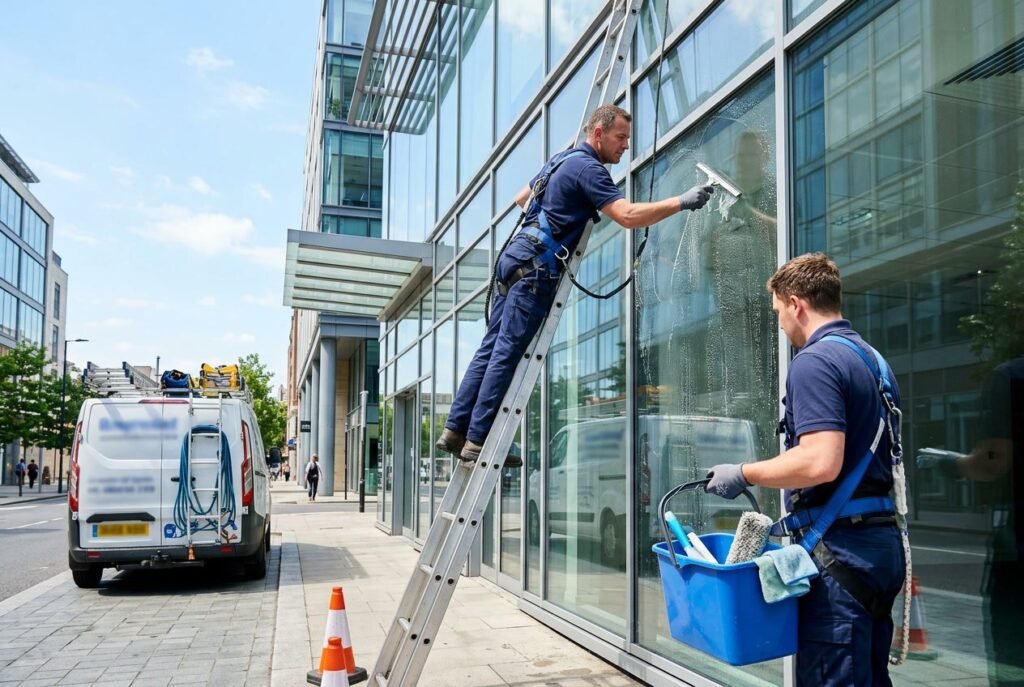
Window cleaning might sound simple, but it is not just about grabbing a rag and some spray.
A window cleaning business works by offering professional cleaning services to homes and businesses, using specialized tools and techniques to deliver streak-free results.
Most window cleaners start small, maybe just a bucket and a squeegee, and build up a route of regular customers who need monthly or seasonal cleanings.
What makes this industry so appealing is the incredibly low barrier to entry. Because you can start with just a few hundred dollars in basic equipment, window cleaning is widely considered one of the best low-cost business ideas with high profit margins.
Whether you want a simple side hustle or a full-time operation with a crew, the recurring revenue from loyal clients makes it a highly reliable business model.
What Is a Window Cleaning Business?
A window cleaning business provides professional cleaning for glass surfaces like homes, offices, and storefronts. These businesses handle everything from simple residential jobs to tricky commercial work that needs special equipment and safety training.
Types of Window Cleaning Services
Window cleaning services usually fall into two buckets. Residential window cleaning services cater to houses, apartments, and condos. These residential window cleaning services often include cleaning exterior and interior glass, screens, tracks, and sills.
Commercial window cleaning services cover office buildings, retail stores, restaurants, and other business spaces. These commercial window cleaning services often require specialized tools and regular service schedules to maintain a professional appearance.
Some window cleaning businesses offer additional services like hard water stain removal, gutter cleaning, and pressure washing. Specializing in high-rise window cleaning is a whole different beast. High-rise window cleaning requires specialized training, heavy-duty safety equipment, and nerves of steel to work at extreme heights.
Who Hires Window Washers?
Homeowners are a huge part of the residential market. Residential window washing is particularly popular in neighborhoods where curb appeal is a top priority. Customers usually book residential window washing once or twice a year, especially before holidays or big events.
Business owners hire commercial window cleaners to keep their properties looking sharp. Retail stores, restaurants, and offices often get regular cleanings to maintain that polished look.
Property managers who run apartment complexes and commercial buildings also bring in window washers on a set schedule. Sometimes real estate agents hire window cleaners to prep homes for sale—clean windows just make everything look better in photos and showings.
Industry Trends and Growth
The window cleaning industry remains steady because, well, glass gets dirty. With more buildings using huge windows and glass walls, there’s always work for pros.
Technology is changing the game. Water-fed poles with purified water systems let cleaners reach high windows from the ground. This is much safer and faster.
Lots of customers now want eco-friendly cleaning solutions. Businesses that use green products and pure water systems are getting more attention from environmentally aware clients.
Online booking and scheduling tools are making it easier for window cleaning businesses to stay organized and serve more customers. It’s honestly a good time to get into the field if you’re tech-savvy and like working outside.
How to Start a Window Cleaning Business
Starting a window cleaning business means figuring out your local market and deciding if you’ll serve homes, businesses, or both. Learning how to start a window washing business effectively requires sketching out a realistic plan for your first year.
It sounds like a lot, but you don’t have to overthink it. Most people who start a window washing business begin by focusing on their own neighborhood to minimize travel costs.
Market Research and Competition
Before buying gear or printing business cards, check if people in your area actually need window cleaning. Drive around, look at storefronts, and see how many places could use a good wash.
Scope out the competition. Search Google for window cleaning businesses nearby and read their reviews.
Watch what they charge, what services they offer, and what folks complain about. If everyone’s charging $6 per window pane, that’s your baseline. If reviews mention streaks or missed appointments, that’s your opening.
Think about your area’s buildings. Coastal towns fight salt buildup. Sunny spots with tons of pollen? That’s steady work right there.
Growing neighborhoods with new construction might need post-construction window cleaning. Cities with lots of offices and shops need commercial cleaners.
Check with your local licensing office for permits or insurance requirements. Some cities want special certifications if you’re working near power lines or on tall buildings.
Choosing Your Target Customers
You’ve got to decide: residential, commercial, or both? Homeowners and business owners definitely want different things.
Homeowners usually want windows cleaned once or twice a year, mainly for curb appeal. They care about the view and how their place looks from the street.
You might end up cleaning living room windows, second-story bedrooms, or sliding glass doors. Extras like screen and track cleaning are common for residential jobs.
Commercial clients are after regular maintenance. Retail stores want spotless windows to draw in customers, while offices might want monthly or even weekly service.
Commercial jobs often pay more and can mean steady income with maintenance plans and contracts.
Honestly, most new window washers start out with residential work—it’s just easier to break into. Knock on doors, leave flyers, and build up your base. When you’ve got some experience and better gear, you can chase those bigger commercial accounts.
Crafting a Window Cleaning Business Plan
A business plan helps you sort out pricing, costs, and some goals for your first year. If you need initial funding, you might research small business loans to cover your equipment and marketing.
Some founders also look into sba loans to help scale their operations more quickly. Don’t stress about making your plan perfect. Just get something on paper to guide your growth.
List what services you’ll offer and your prices. Most window cleaners charge $4 to $8 per window pane instead of hourly, which keeps things simple for everyone.
Figure out your startup costs: squeegees, ladders, cleaning solution, maybe a vehicle. Don’t forget ongoing stuff like gas, insurance, and marketing.
Jot down your marketing plan for finding customers. Door-to-door? Website? Google listing? Pick a few, set a budget, and see what actually works.
Add some growth plans. When will you hire your first helper? What extra services, such as gutter cleaning or pressure washing, might you add later?
Even a rough 12-month timeline can keep you focused and moving in the right direction.
Business Setup and Legal Essentials
Getting your window cleaning business registered and licensed isn’t just paperwork. It protects you legally and helps customers trust you. You’ll need to pick a business structure, get the right permits, and open a separate bank account to keep things tidy.
Registering Your Business
When you register, you’ll choose a structure that fits your goals. Most window cleaners start as a sole proprietorship or an LLC.
Sole proprietorship is the simplest. Usually no special paperwork, and you can get rolling right away. Downside? Your personal stuff isn’t protected if something goes sideways.
An LLC formation gives you liability protection without a ton of extra hassle. If a customer sues, your personal assets are usually protected.
Using a service like Zenbusiness can make the registration process much faster and easier. You’ll still need to file paperwork with your state, which typically costs between $50 and $500.
You’ll also need an Employer Identification Number from the IRS. It’s free and easy to get online, and you’ll use it for a bank account, taxes, and hiring down the road.
Licenses and Permits
Most places require at least a basic business license to operate legally. Check with your city or county office to see what’s needed.
Some cities have extra rules for window cleaning, especially for tall buildings or using ladders in public spaces. A few spots want special permits for commercial or multi-story jobs.
Your window cleaning business license requirements depend on where you live. You should contact your local government to ask about specific business licenses and permits required for service-based companies.
Some states are relaxed and only require a general business license. Others want proof of insurance and specific business licenses and permits before you can legally begin working.
Opening a Business Bank Account
Open a business bank account as soon as you’re registered. Mixing personal and business money is just asking for headaches at tax time.
To set up your business bank account, bring your registration papers and EIN to the bank. Most banks offer free checking for small businesses, but shop around for fees and perks.
Keep all business income and expenses separate from day one. It’ll save you time and stress while showing the IRS you’re running a real operation and not just a hobby.
Buying the Right Equipment and Supplies
Start with good squeegees and basic tools to get working fast. As you grow, adding specialized gear like water-fed poles can help you land bigger, more profitable commercial jobs.
Essential Window Cleaning Tools
You’ll need a few core items to clean windows professionally. High-quality window cleaning equipment is the foundation of a successful business. Squeegees are essential window cleaning equipment, and they come in different sizes for different window types.
Pick up squeegees in 10-inch, 14-inch, and 18-inch sizes to handle most jobs. Go for ones with replaceable rubber blades, so you aren’t tossing out the whole thing when the edge gets worn out.
A t-bar or window scrubber helps you apply cleaning solution and loosen grime before you squeegee. Pair these with extension poles to reach second-story windows without risking a climb.
Telescopic poles adjust to different heights and honestly, they just make the work faster. They’re a must if you want to avoid ladders as much as possible.
Don’t skip microfiber towels. They’re perfect for wiping edges and doing detailed work. You’ll also want sturdy buckets with measurement marks for mixing your solutions right.
Budget around $500 to $1000 for your initial window cleaning supplies. That should cover everything you need to start taking jobs.
Advanced Equipment for Commercial Jobs
Commercial buildings often need a different approach than typical homes. Using a water-fed pole system is a major game-changer for modern cleaners.
A water-fed pole system lets you clean high windows safely from the ground. It uses purified water that dries spot-free without needing a squeegee.
Some of these telescopic systems reach up to 60 feet, so you can skip the ladder for many jobs. It’s safer and honestly, a lot less stressful.
For high-rise work, you’ll need safety harnesses and personal protective gear. Make sure harnesses fit well and have secure attachment points.
Look for adjustable models with padded straps. Comfort matters when you’re hanging up there for hours.
Window cleaning software helps you schedule jobs, send invoices, and track which buildings need service. As you take on more commercial clients, this stuff becomes a lifesaver.
Choosing Safe Cleaning Solutions
The right cleaning solution cuts through dirt without damaging windows or frames. Commercial window cleaning solutions usually work better than household products and leave fewer streaks.
Go for eco-friendly options that are non-toxic, especially for indoor jobs. Some pros mix their own using water, a bit of dish soap, and maybe a splash of vinegar.
Always test new solutions on a small spot first. You don’t want to find out too late that something leaves residue or damages the glass.
Store your solutions in clearly labeled bottles. Keep concentrated formulas separate from ready-to-use mixes to avoid mix-ups on the job.
Pricing Your Services and Getting Paid
Setting the right prices keeps your window cleaning service profitable. Payment systems help you get paid faster and track your income without the hassle.
How to Set Prices
Most window cleaners charge between $4 and $15 per window for homes. Some price by the pane at $4 to $8 each, or charge $40 to $75 per hour.
Commercial window cleaning typically costs $0.50 to $2.50 per square foot. A small storefront might run $150 to $250, while bigger buildings can hit $650 or more.
Start by figuring out your real costs. Add up your time, cleaning supplies, gas, and equipment. Then tack on 20% to 35% profit. If a job costs you $120 in time and materials, charging $150 gives you a 25% profit margin.
Basic pricing factors to consider:
- Window size and number of panes
- Height and ladder work needed
- Hard water stains or heavy dirt
- Screen cleaning or track wiping
New cleaners sometimes charge too little, hoping to win jobs fast. If you win every bid, you’re probably underpricing.
Payment Methods and Tracking Income
Offer a few payment options so customers can pay however they like. Cash and checks work, but digital payments get you your money faster.
Set up a business credit card to keep personal and business expenses separate. It makes tax time way less painful and helps you track your real costs.
Common payment methods:
- Mobile payment apps
- Credit and debit cards
- Cash or check
- Online invoicing
Use QuickBooks or similar software to track every job and payment. Log each invoice when you finish a job and mark it paid when the money comes in.
This keeps you on top of who still owes you and how much you’re actually making each month. Send invoices right after the work’s done. Customers who get billed quickly usually pay faster.
For commercial clients, be prepared to wait 30 to 90 days for payment. That’s just how it goes sometimes.
Expanding and Marketing Your Window Cleaning Business
Once your business runs smoothly, you can focus on reaching more customers and adding services that bring in extra income. Building a strong brand and promoting what you do helps you stand out and grow.
Building Your Brand
Your brand is how people remember you. Start with a name that sticks and a simple logo. It should look good on your truck, uniforms, and business cards.
Consistency matters, so keep your message the same everywhere. A professional website is a must these days.
You can build one yourself with platforms like Wix or hire someone if you’re not into tech. Make sure it lists your services, shows off your work, and lets people get quotes easily.
Set up a Google Business Profile so you show up in local searches. You should also list your company on various local business directories to improve your online visibility.
Directories like Yelp, Angi, and local business directories help customers find you when they need help. Positive feedback on these platforms helps new clients trust your services.
Ask happy customers for reviews. Positive feedback helps new clients trust you. It’s awkward at first, but it works.
Promoting Your Services
Getting your name out there takes effort, but it doesn’t have to be expensive. Pass out flyers in neighborhoods you want to work in.
Leave door hangers with special offers or before-and-after photos. Social media is free and surprisingly effective.
Post photos of clean windows, share tips, and reply to comments. Facebook and Instagram work well for showing off results and running ads.
Start a referral program. Give customers a discount if they recommend you to friends. Word of mouth is gold in this business.
Partner with real estate agents, property managers, and other home service companies. They often need window cleaners they can trust for their clients.
Growing with Add-On Services
Adding related services means you can earn more from every visit. Gutter cleaning is a natural fit since you’re already up on ladders.
Pressure washing for driveways, siding, and patios appeals to the same folks who want clean windows. Solar panel cleaning is getting popular as more people install panels.
Christmas light installation is another good one for the slow winter months. These extras can turn one-time customers into regulars.
Use scheduling software like Jobber to keep track of who wants which services. See what add-ons are most popular and adjust what you offer as demand changes.
Training yourself or your crew on new services takes a bit of time, but it’s worth it if it means more business.
Staying Safe and Insured
Running a window cleaning business means protecting yourself from accidents and financial risks. You need proper insurance coverage and safety equipment to handle the physical dangers of the job.
Understanding Insurance Needs
Window cleaning insurance protects your business from costly accidents and lawsuits. You’ll need a few different types of coverage to stay safe.
Liability insurance covers you if you damage a client’s property or someone gets hurt because of your work. Most clients won’t hire you without it.
If you drop equipment that breaks a window or damages a car, this policy pays for repairs. You also need commercial auto insurance if you use vehicles for work.
Your personal car insurance won’t cover accidents that happen while you’re driving to jobs or hauling equipment. Workers’ compensation is required in most states if you have employees.
It pays medical bills and lost wages if someone on your crew gets hurt. Equipment coverage protects your ladders, squeegees, and other tools from theft or damage.
Your gear is expensive and essential, so this coverage keeps you working even after a loss. Don’t skip it.
Ladder Safety and Fall Protection
Falls are the biggest danger in window cleaning. The right gear and training are non-negotiable.
Personal protective equipment includes harnesses, helmets, and non-slip shoes. When you’re working above ground level, wear a safety harness attached to a secure anchor point.
This catches you if you slip. Ladders should be in good shape with no cracks or loose parts.
Always place them on stable ground at the right angle. The International Window Cleaning Association recommends the 4-to-1 rule: for every four feet of height, move the base one foot away from the wall.
Fall protection systems include:
- Safety harnesses and lanyards
- Guardrails for roof work
- Safety nets for high-rise buildings
- Anchor points rated for your weight
Don’t lean too far to the side when you’re on a ladder. Climb down and move it instead.
Keep three points of contact at all times, meaning two hands and one foot, or two feet and one hand. It sounds basic, but it prevents a lot of falls.
Frequently Asked Questions
Starting a window cleaning business raises a lot of questions about equipment, earning potential, rates, licensing, and startup costs. Most businesses can launch with basic equipment costing between $500 and $2,000.
Experienced cleaners usually earn $40 to $70 per hour, depending on the market and services offered.
Not too shabby if you ask me.
You’ll need basic cleaning tools to get rolling. The essentials? Squeegees in a few sizes, scrubbers, a bucket-on-a-belt, cleaning solution, and towels.
Ladders are a must for reaching higher windows safely. An extension ladder and a step ladder will cover most residential jobs.
Some cleaners add extension poles so they can reach second and third-story windows without climbing. And don’t forget a reliable vehicle for hauling your gear and getting to jobs.
You should also plan for business essentials beyond equipment. This includes registering your business, getting liability insurance, and making basic marketing materials like business cards or a simple website.
Yeah, you can. Plenty of folks earn a full-time living just cleaning windows.
The profit margins are surprisingly decent compared to some other service gigs.
Your income depends on whether you stick to houses, commercial buildings, or those little storefronts around town.
Residential jobs usually pay more per window, but honestly, it can be slow going at first while you build up regulars.
Commercial accounts? They’re steady, with regular cleaning schedules and recurring income that can feel pretty reassuring.
Some people start part-time and ramp up as they find more clients.
Others mix different types of customers to keep things stable year-round.
Having a solid route with customers who need service a few times a year makes your income a lot more predictable, which is always nice.
Most window cleaners charge by the job, not by the hour. That’s actually a good thing because it rewards you for getting better and faster over time.
Residential pricing is usually anywhere from $4 to $15 per window, depending on where you live and if you’re cleaning both sides.
For an average home with 20 to 30 windows, you’re looking at $150 to $400 in total. Storefront jobs for businesses are cheaper per window, usually ranging from $2 to $5 each.
Most residential jobs take one to three hours, depending on the size and how picky the client is.
Storefronts usually go faster, but you might do a bunch in a day. As you get the hang of things, your hourly earnings can really start to climb.
In most places, there is no special certification just for window cleaning.
Usually, you just register your business and grab a basic business license if your city or county wants one. It’s not rocket science.
The big thing is liability insurance. That protects both you and your customers if something goes sideways.
Honestly, some commercial clients won’t even consider you unless you show proof of insurance.
If you’re thinking about tackling tall buildings or high-rise jobs, you might need extra training for rope work or aerial lifts.
Local rules can vary, so it’s smart to check what’s required for the specific buildings you want to clean.
Business registration rules are all over the place depending on your state.
Some states make it pretty simple and cheap to start an LLC, while others pile on the fees and paperwork. You’ll need to dig into your own state’s process.
Insurance rules aren’t the same everywhere, either. Some places set minimum coverage, and commercial clients sometimes want even more than that.
Sales tax? That’s another headache. A few states want you to collect sales tax on cleaning services. Others don’t care.
Your state’s Department of Revenue site should have the details about whether window cleaning is taxable where you live.
Your startup costs really hinge on how you want to kick things off. A basic setup with professional equipment usually lands somewhere between $500 and $2,000.
This covers quality squeegees, scrubbers, buckets, ladders, and some cleaning supplies. It’s not a huge shopping list, but you don’t want to cheap out on the essentials.
Then there’s business registration and insurance, which can sneak up on you. Forming an LLC might set you back $50 to $500, depending on where you live.
Liability insurance is another chunk. Expect to pay $500 to $2,000 per year. It’s not glamorous, but it’s necessary.
For marketing, you’ll probably want business cards, a simple website, and maybe some door hangers. That’ll likely be $200 to $500 right out of the gate.
If you end up buying a vehicle or fixing up your current ride, that’s a bigger investment. A lot of folks just use what they have at first to keep things affordable.