Thinking about starting a business that gets you outside, pays well, and doesn’t need a college degree? A gutter cleaning business might be exactly what you’re looking for.
You can launch a profitable gutter cleaning business with just $2,000 to $5,000 in basic equipment, and many owners earn profit margins between 20% and 30%.
Because the startup costs are so manageable, it is widely considered one of the best low-cost business ideas with high profit for beginners.
Over 80 million homeowners need their gutters cleaned at least twice a year. That is a lot of clogged gutters waiting for someone like you to fix them.
You’re solving real problems for people who dread getting on roofs or simply don’t have the time for messy maintenance work.
What Is A Gutter Cleaning Business?
A gutter cleaning business is a service company that removes leaves, debris, and blockages from residential and commercial gutters. You visit properties, clean out the gutters, and make sure water can flow properly through the system.
When you start a gutter cleaning business, you’re helping homeowners protect their properties from water damage. Clogged gutters can cause serious problems like roof leaks, foundation issues, and landscape erosion. Your job prevents these expensive repairs.
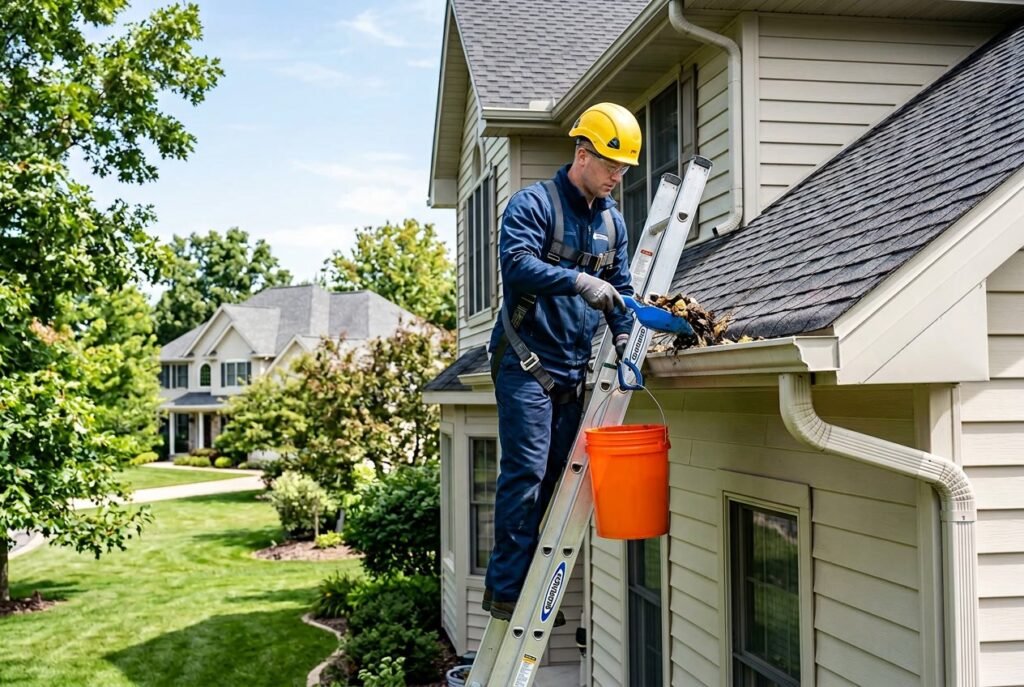
The work itself is pretty straightforward. You climb a ladder, scoop out the debris, flush the gutters with water, and check for any damage. Most homes need this service twice a year, especially in areas with lots of trees.
What makes this business appealing:
- Low startup costs of $2,000 to $5,000
- Simple equipment requirements
- Steady customer demand year-round
- Potential for recurring clients
- No special certifications needed in most areas
A gutter cleaning company can operate as a solo business or grow into a team. You can work part-time as a side income or build it into a full-time operation. Many business owners start with basic hand tools and upgrade to professional vacuum systems as they expand.
The business model works well because homeowners need regular maintenance but often can’t or don’t want to do this work themselves. It’s physically demanding and requires working at heights, which makes professional services valuable. Property managers and real estate agents also need reliable gutter cleaners for the properties they manage.
What Does A Gutter Cleaning Business Do?
A gutter cleaning business removes debris from gutters, flushes the system to ensure proper water flow, and checks for any issues that could cause problems. The work keeps homes protected from water damage and helps gutters function the way they’re supposed to.
Cleaning Out Leaves And Debris
The main job of any gutter cleaner is pulling out all the stuff that’s blocking your gutters. Leaves, twigs, pine needles, and dirt pile up over time and stop water from flowing through the system.
Most gutter cleaning professionals use a gutter scoop or their gloved hands to remove the debris. They work section by section, moving along the entire length of your gutters. Some pros use a leaf blower for dry debris, which speeds up the process.
The debris gets collected in buckets or bags so it doesn’t end up all over your yard. Professional services that focus on gutter maintenance know that thorough removal means getting into every corner and section. Missing spots can lead to clogs forming again quickly.
Tree-heavy neighborhoods require more frequent cleaning. Homes near pine trees need extra attention since pine needles pack together tightly and create stubborn blockages.
Flushing Gutters And Downspouts
After removing the visible debris, gutter cleaning includes flushing the entire system with water. This step reveals any remaining clogs and confirms that water flows properly through your gutters and downspouts.
A garden hose with a spray nozzle gets used to rinse out fine particles and check drainage. The water should flow smoothly toward the downspouts and exit freely at the bottom. If water backs up or overflows, there’s still a blockage somewhere.
Downspouts need special attention since they’re where most serious clogs happen. A gutter cleaning business will use a plumber’s snake or high-pressure water to clear stubborn downspout clogs.
Some professionals use specialized equipment like gutter vacuum systems or water-fed poles that allow them to work from the ground. This makes the job safer and faster for certain properties.
Checking For Clogs Or Buildup
During the cleaning process, you’re also looking for problem areas that could cause issues. This means checking the entire gutter system for clogs, improper slope, or sections where water pools instead of flowing.
Professional gutter cleaners spot signs of damage like sagging sections, loose hangers, or separated seams. They note these issues for the homeowner even if repairs aren’t part of the basic service.
Buildup isn’t always just leaves. Asphalt shingle granules, moss, and even wasp nests can accumulate in gutters. Each type of buildup needs a different approach to remove completely.
The inspection part of gutter maintenance helps homeowners avoid bigger problems down the road. Catching a small issue during routine cleaning saves money compared to major water damage repairs later.
Basic Cleanup After The Job
The final step in any gutter cleaning job is leaving the property clean. This means picking up any debris that fell to the ground and making sure the area around the house looks neat.
All collected debris gets bagged and removed from the property. Most homeowners don’t want piles of wet leaves sitting in their yard after paying for a cleaning service.
Professional companies often rinse off any dirt or stains from the outside of the gutters too. This small touch makes the whole house look better and shows attention to detail.
Many gutter cleaning services take before and after photos to document their work. This gives you proof the job was done right and helps you see the difference the service made.
Who Typically Hires A Gutter Cleaning Business?
Your customer base spans from busy homeowners to property investors managing multiple buildings. Each group needs regular gutter maintenance but for different reasons and at different scales.
Homeowners
Individual homeowners make up the largest customer base for any gutter cleaning service. These are people who own single-family homes and need their gutters cleaned at least twice a year.
Most homeowners hire professionals because climbing ladders is dangerous and time-consuming. They’d rather pay someone else to handle the risk and physical work. You’ll find that homes with mature trees nearby need more frequent cleanings.
Two-story homes are your best customers. They can’t easily reach their gutters without tall ladders and safety equipment. Older homeowners especially prefer hiring professionals rather than risking falls.
Homeowners typically search for “gutter cleaning near me” when they notice overflow or see leaves piling up. They want someone local who can respond quickly. Many become repeat customers who book seasonal cleanings year after year.
Landlords And Property Managers
Property managers and landlords need reliable gutter cleaning services for multiple properties. They’re managing buildings they don’t live in and need professionals they can trust.
These clients value consistency and documentation. They want photos proving the work was done properly. Property managers often handle several buildings at once, so they need someone who can service multiple locations efficiently.
Rental properties need regular maintenance to prevent expensive water damage. Clogged gutters can lead to foundation problems, basement flooding, and landscape erosion. Landlords know that spending money on prevention saves thousands in repairs.
Property managers typically sign maintenance contracts for recurring service. They need scheduled cleanings for all their properties, usually twice per year. This gives you predictable income and steady work throughout the season.
Small Commercial Property Owners
Small business owners with their own buildings need professional gutter maintenance too. Retail stores, office buildings, and small warehouses all have gutters that need regular cleaning.
Commercial clients want their properties to look professional. Overflowing gutters create a poor impression for customers and tenants. They also worry about liability if water damage affects their business operations.
These customers often bundle gutter cleaning with other exterior maintenance services. They might need pressure washing, window cleaning, or basic repairs done at the same time. Commercial properties usually have more linear feet of gutters than residential homes.
Your local gutter cleaning business can build long-term relationships with commercial clients. They need reliable contractors who show up on time and work around their business hours.
What Problems Does This Business Solve?
Gutters fail when they get clogged with leaves and debris, creating expensive problems for homeowners. Your gutter cleaning business steps in to prevent damage that most property owners don’t notice until it’s too late.
Preventing Water Overflow
When gutters fill with leaves and debris, water has nowhere to go. It spills over the sides and pools around your home’s foundation.
This overflow causes serious damage. Water seeps into basements and crawl spaces. It creates cracks in foundations that cost thousands to repair. The ground around the house becomes saturated and unstable.
Common overflow problems include:
- Foundation cracks and settling
- Basement flooding and moisture
- Soil erosion around the property
- Damaged landscaping and walkways
- Ice dams in winter months
Your cleaning service removes blockages before water backs up. You make sure downspouts direct water away from the foundation properly. Many clients don’t realize overflow is happening until they see water stains on siding or puddles in the basement.
Reducing Buildup And Mess
Gutters collect more than just leaves. Pine needles, roof shingle granules, bird nests, and dirt pack into channels over time.
This buildup gets heavy. It pulls gutters away from the house and bends the metal. The weight stresses mounting brackets and can cause sections to collapse entirely.
You remove all this mess safely. Homeowners hate climbing ladders with buckets of wet, rotting debris. The job is physically demanding and time-consuming for someone without proper tools.
Your service handles the dirty work. You bag the debris and clean up completely. Some jobs need gutter repairs after you clear out heavy buildup that damaged sections.
Saving Time For Homeowners
Most people need gutters cleaned twice a year. That’s two afternoons spent on ladders dealing with soggy leaves and mud.
You give them their weekends back. They avoid hauling out ladders and tools. They don’t risk falling or dealing with wasp nests hiding in the debris.
Your clients value convenience. Property managers overseeing multiple buildings can’t personally clean every gutter. Elderly homeowners can’t safely climb ladders anymore. Busy professionals would rather pay you than spend Saturday afternoon on a roof.
You provide reliable scheduling. Clients book spring and fall cleanings, then forget about it. You show up on time and finish the work without them lifting a finger.
Helping Maintain The Home’s Exterior
Clean gutters protect more than foundations. They preserve siding, fascia boards, soffit, and roof edges from water damage.
When water overflows, it runs down exterior walls. This causes paint to peel and wood to rot. Fascia boards behind gutters decay when constantly exposed to moisture. You might spot damage that needs attention and recommend gutter guard installation to reduce future maintenance.
Your service protects:
- Fascia and soffit from rot and insect damage
- Exterior paint from water stains and peeling
- Roof edges from water backup and deterioration
- Window frames from moisture infiltration
You help homes look better and last longer. Regular cleaning prevents small issues from becoming major gutter repair projects. Your documentation with photos shows homeowners the value you provide with each visit.
What Is The Work Actually Like?
The daily work involves physical labor outdoors, moving between properties, and adapting to weather conditions throughout different seasons. You’ll spend most of your time on ladders removing debris by hand or using specialized equipment.
Working Outdoors In Different Weather
You’ll work outside in various conditions throughout the year. Spring and fall bring the busiest seasons, but weather doesn’t always cooperate with your schedule.
Rain makes gutters slippery and dangerous, so you’ll need to reschedule those jobs. Hot summer days mean dealing with heat exhaustion risks while working on roofs. Cold weather creates ice hazards and makes ladder work more dangerous.
Wind above 20 mph makes extension ladder work unsafe. You’ll need to check forecasts daily and be ready to adjust your schedule. Some days you’ll cancel multiple jobs due to sudden weather changes.
Ideal working conditions include:
- Temperatures between 50-75°F
- Clear skies or light clouds
- Wind speeds below 15 mph
- Dry surfaces for ladder safety
Using Ladders And Basic Tools
Most of your day involves climbing up and down ladders carrying gutter cleaning equipment. An extension ladder rated for your weight plus 25% extra is essential for safety.
You’ll use gutter scoops to pull out wet leaves, pine needles, and debris by hand. A gutter scoop costs $15-25 and becomes your most-used tool. Heavy-duty gloves protect your hands from sharp metal edges and rotting organic material.
Basic gutter cleaning tools include stiff brushes, garden hoses, and buckets for debris. Professional gutter vacuum systems let you work from the ground using telescopic poles, which reduces ladder time significantly.
Ladder safety requires proper setup on level ground, maintaining three points of contact, and never overreaching. You’ll climb ladders 20-40 times per day depending on property size.
Some jobs need pressure washing to remove built-up grime after clearing debris. A gutter vacuum can handle both debris removal and final cleaning in one pass.
Traveling Between Job Locations
You’ll drive to different neighborhoods throughout your service area each day. Most businesses start with a 10-15 mile radius to minimize drive time between properties.
Travel time typically takes 30-40% of your workday. You’ll need to load and unload your extension ladder, gutter cleaning tools, and supplies at each stop. Efficient route planning helps you complete more jobs per day.
Your vehicle becomes a mobile workspace. You’ll need secure storage for ladders, a gutter vacuum system if you use one, and all your cleaning equipment. Roof racks or ladder racks keep equipment accessible and safe during transport.
Daily driving considerations:
- Fuel costs average $20-40 per day
- Vehicle wear increases with heavy equipment
- Professional vehicle wraps generate visibility
- Traffic affects scheduling accuracy
Handling Seasonal Demand
Your workload fluctuates dramatically throughout the year. Fall brings peak demand as leaves clog gutters, with some weeks completely booked.
Seasonal breakdown:
- Fall (September-November): 40-50% of annual revenue
- Spring (March-May): 30-35% of annual revenue
- Summer (June-August): 10-15% of annual revenue
- Winter (December-February): 5-10% of annual revenue
You might work 60-hour weeks during October and November to handle demand. Spring cleanup brings another busy period after winter storms and debris accumulation.
Summer and winter require different strategies to maintain income. Some businesses add pressure washing or window cleaning during slower months. Others use downtime for equipment maintenance and marketing preparation.
Building a base of maintenance contract customers helps smooth out seasonal variations. These customers schedule regular cleanings twice yearly, creating predictable revenue even during typically slow periods.
Who Might Be A Good Fit For This Kind Of Work?
Gutter cleaning suits people who don’t mind ladder work and can handle the physical demands of climbing and bending throughout the day. It’s ideal if you enjoy outdoor work, value straightforward tasks with clear results, and want control over your schedule in your local area.
People Comfortable With Physical Work
You’ll spend most of your time on ladders reaching into gutters and scooping out wet debris. This means climbing up and down repeatedly, often carrying buckets of leaves and muck. Your arms, shoulders, and legs will get a workout.
The work isn’t extremely strenuous, but it requires decent fitness. You need steady balance for ladder work and enough strength to handle a 24-foot extension ladder. Most jobs take 30 to 90 minutes of continuous movement.
If you have back problems, knee issues, or fear of heights, this probably isn’t for you. But if you’re reasonably fit and prefer active work over sitting at a desk, it’s manageable. Many people find the physical nature of gutter cleaning less demanding than construction or landscaping.
You don’t need to be an athlete. Average fitness is enough for most single-story homes.
Those Who Like Working Outdoors
You’ll work outside in all kinds of weather during peak seasons. Spring and fall bring the busiest schedules, which means you’re out there when it’s cool, sometimes cold, and occasionally wet.
There’s no climate-controlled office or indoor workspace. You’re exposed to sun, wind, and temperature changes. Some people love this aspect because every property offers different scenery and you’re never stuck inside.
The seasonal nature means you can take breaks during extreme weather. Most operators avoid working in rain, high winds, or icy conditions for safety reasons. You control your schedule, so you pick the pleasant days.
If you enjoy fresh air and changing environments, this beats being cooped up indoors. But if you hate cold mornings or getting dirty, you might struggle during peak fall season when leaves are dropping and temperatures drop.
Individuals Who Prefer Simple, Repeatable Tasks
Every job follows basically the same process: climb up, scoop out debris, clear downspouts, flush with water, clean up. There’s no complicated training or constantly changing requirements.
You learn the system once and repeat it on every property. This simplicity means you can get efficient quickly. After a few jobs, you’ll develop your rhythm and know exactly how long each home size takes.
Some people find this repetitive work boring. Others appreciate the clarity and predictability. You know what you’re doing each morning, and there’s satisfaction in seeing immediate results.
The straightforward nature makes starting a gutter cleaning business easier than services requiring technical skills or certifications. You won’t spend years learning the trade or keeping up with complex industry changes.
People Who Want Flexible, Local Work
You set your own schedule and choose which jobs to accept. Need to work around another job or family commitments? You can book appointments that fit your availability.
The work stays within your local area. You’re not commuting long distances or traveling for jobs. Most customers are within a 10 to 15 mile radius of your home, which means short drives between appointments.
Peak seasons bring intense work if you want it. You could work every weekend in October and November and make substantial income. Or you could spread jobs throughout the week at a more relaxed pace.
This flexibility appeals to parents, students, retirees, or anyone with a variable schedule. You’re not locked into 40-hour weeks or someone else’s timeline. The seasonal demand patterns let you ramp up during busy months and scale back during slower periods without losing your customer base.
Pros And Cons Of This Business Idea
Starting a gutter cleaning business comes with low startup costs and steady demand, but you’ll face physical work and seasonal income changes. Understanding both sides helps you make a smart decision about whether this business fits your goals.
Pros
You can start a gutter cleaning business with costs ranging from $62 to $35,923, making it one of the most affordable service businesses to launch. You won’t need equipment financing for expensive machinery right away.
The work brings high customer retention rates because homeowners need regular gutter maintenance. Once you clean someone’s gutters, they’ll likely call you back every season. This creates repeat customers who provide predictable income throughout the year.
You control your own schedule and workload. Want to work three days a week? You can do that. Need to take a vacation? You choose when to book jobs and which clients to accept.
The business model is simple to understand. You clean gutters and get paid. You can use flat rate pricing or linear foot pricing depending on what works in your market. Most jobs earn between $100 to $300, giving you strong hourly pay rates.
Marketing doesn’t require a huge budget. Set up your Google My Business profile and ask happy clients for reviews on Yelp. Before-and-after photos on social media marketing platforms show your work quality. A referral program encourages customers to send friends your way. Vehicle graphics turn your truck into a moving billboard.
You’ll build a solid local reputation quickly. The business is relatively recession-proof because clogged gutters cause expensive home damage that people can’t ignore.
Cons
The work is physically demanding. You’ll spend hours on ladders carrying heavy equipment in all weather conditions. Your body takes a beating, especially during busy seasons.
Income fluctuates with seasons. Fall is your busiest time when leaves clog gutters. Spring brings another rush. But winter and summer can be slow, making seasonal marketing essential to fill gaps.
You need proper insurance before your first job. Commercial auto insurance protects your vehicle while driving between jobs. Liability coverage protects you if something goes wrong at a customer’s property. These costs add up quickly.
Getting started requires handling boring paperwork. You need business registration in your state and must choose a business name. You’ll open a business bank account and set up payment processing so customers can pay easily.
Competition exists in most areas. Other gutter cleaners are already established with loyal customer bases. You’re starting from zero with no reviews or reputation.
Weather controls your schedule more than you do. Rain cancels jobs. You can’t work safely during storms. This unpredictability makes planning difficult and can frustrate customers waiting for service.
Final Thoughts
A gutter cleaning business rewards consistency and professionalism more than fancy branding or expensive tools. You can start with basic equipment and grow as you gain more customers.
Focus on these key areas as you build your business:
- Safety should always come first when working on ladders
- Quick responses to customer inquiries help you win more jobs
- Before and after photos build trust and work great for marketing
- Recurring maintenance plans create steady income throughout the year
The real money comes from building route density. When you can line up several houses on the same street, you spend less time driving and more time earning. This is how you turn a high-margin, low-overhead business into something really profitable.
Start by doing excellent work for your first customers. Ask them for reviews and referrals. Word of mouth in neighborhoods spreads fast when homeowners see your truck parked down the street.
You don’t need everything figured out on day one. Get your insurance, buy the essential gear, and book your first few jobs. You’ll learn what works in your market as you go.
The beauty of this business is that gutters need cleaning whether the economy is good or bad. Homeowners can’t ignore clogged gutters without risking real damage to their property. That creates demand you can count on year after year.
Frequently Asked Questions
Starting a gutter cleaning business raises common questions about earnings, requirements, and operations. The answers below address the most practical concerns you’ll face when launching your service.
Your income potential depends on your pricing, efficiency, and how many jobs you complete each week. Most gutter cleaning businesses charge between $100 and $300 per residential job.
If you complete 10 jobs per week at an average price of $150, you’d earn $1,500 weekly or about $6,000 monthly. Profit margins typically range from 20-30% after accounting for equipment, insurance, and fuel costs.
Your earnings increase as you build efficiency and add crew members. Solo operators working part-time might earn $20,000 to $40,000 annually, while full-time businesses with employees can generate $75,000 to $150,000 or more.
Seasonal demand affects your income throughout the year. You’ll earn the most during fall and spring when homeowners schedule regular cleanings.
You need basic equipment, proper insurance, and legal business registration to get started. Initial equipment costs typically range from $2,000 to $5,000 for essentials like ladders, safety gear, and hand tools.
Insurance is your most important investment. General liability coverage costs between $800 and $2,000 annually and protects you from property damage and injury claims.
You’ll need to register your business with your state and local government. Most areas require a general business license that costs $50 to $300 per year.
A reliable vehicle with ladder racks completes your basic setup. Many people start with their personal truck or van before upgrading to a dedicated work vehicle.
Most areas don’t require special certifications to clean gutters. You typically only need a general business license and proper insurance coverage.
Some states classify gutter cleaning as contractor work if you offer repairs or installations. These states may require a contractor’s license that involves passing an exam and providing proof of insurance.
Check with your local city clerk’s office about specific requirements in your area. Requirements vary significantly between states and municipalities.
Safety training certifications aren’t legally required but demonstrate professionalism to customers. Organizations offer ladder safety and fall protection courses that boost your credibility.
Your essential toolkit starts with a quality 24-foot extension ladder rated for your weight plus equipment. Aluminum ladders offer the best balance of strength and portability.
Hand tools include gutter scoops, stiff-bristled brushes, garden trowels, and heavy-duty rubber gloves. You’ll spend about $50 to $100 on these basic cleaning tools.
A garden hose with adjustable spray nozzles helps flush debris and check for proper water flow. Add tarps to protect landscaping and buckets for debris collection.
Safety equipment is non-negotiable. Invest in non-slip footwear, safety glasses, ladder stabilizers, and a first aid kit.
Gutter vacuum systems cost $2,000 to $8,000 but let you work from the ground instead of ladders. These professional upgrades make sense once you’ve established steady income.
You can absolutely start and run a gutter cleaning business part-time. Many successful owners began by working evenings and weekends while keeping their regular jobs.
Part-time schedules work well because most residential customers are flexible about appointment times. You can book jobs for Saturdays or after work hours during peak seasons.
The seasonal nature of the business actually suits part-time operators. You’ll stay busy during fall and spring when demand peaks, then scale back during slower winter months.
Starting part-time reduces your financial risk. You can test the market and build a customer base before committing to full-time operations.
Direct marketing in target neighborhoods works extremely well for gutter cleaning services. Walk door-to-door in areas with mature trees and two-story homes, introducing yourself and leaving business cards.
Claiming and optimizing your Google My Business listing helps local customers find you when searching online. Encourage satisfied customers to leave reviews that boost your visibility.
Seasonal direct mail campaigns remind homeowners about gutter maintenance before peak seasons. Send postcards in early September for fall cleanings and February for spring services.
Referral programs turn happy customers into your sales team. Offer discounts for referrals that result in new jobs.
Vehicle signage with your company name and phone number generates awareness as you drive through neighborhoods. This passive advertising reaches potential customers throughout your service area.